

DSS Denies Involvement In Nnamdi Kanu’s Controversial Arrest In Kenya.
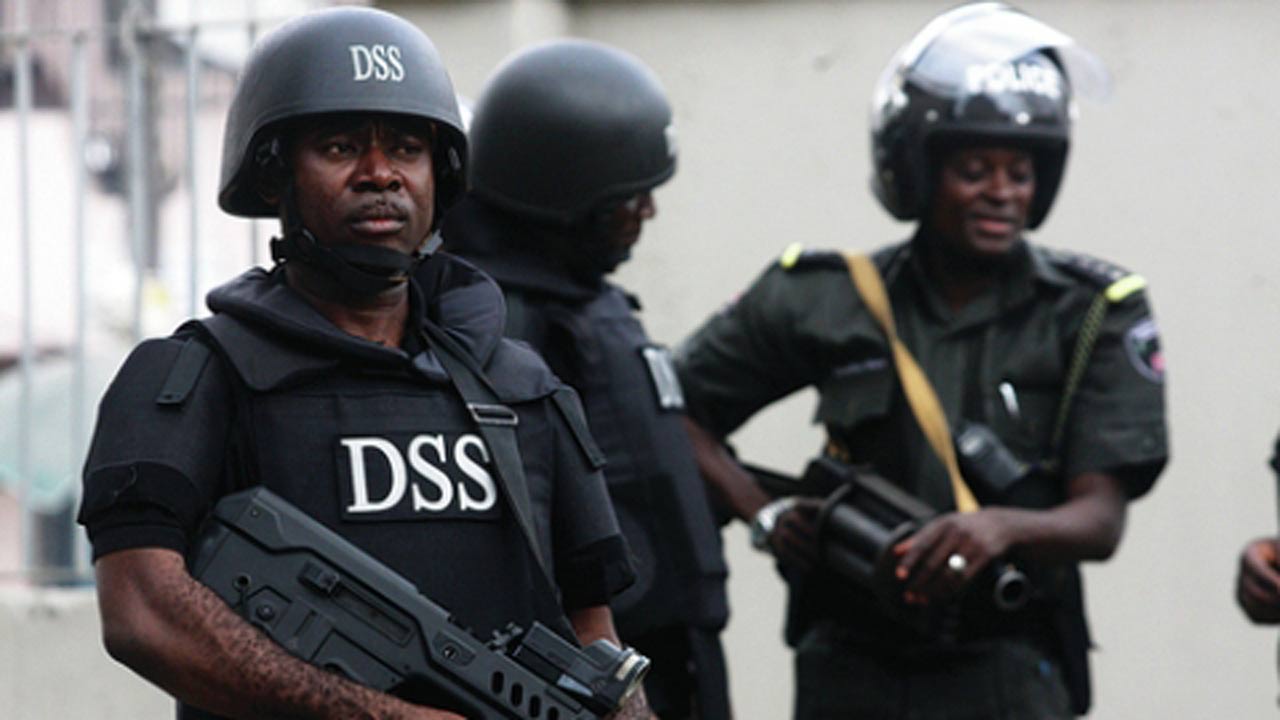
The Department of State Services (DSS) has categorically denied any role in the contentious arrest of Nnamdi Kanu, the leader of the proscribed Indigenous People of Biafra (IPOB), in Kenya in 2021. The agency, Nigeria’s secret police, clarified during a Federal High Court hearing in Abuja that its operations are strictly confined to Nigeria’s territorial borders, dismissing allegations of involvement in Kanu’s extradition.
The statement came during the cross-examination of a prosecution witness, identified only as “BBB” for security reasons, in Kanu’s ongoing terrorism and treasonable felony trial. The witness, a DSS operative, told the court that the agency lacks the authority to effect arrests beyond Nigeria’s borders, raising questions about the circumstances surrounding Kanu’s detention in Kenya and subsequent return to Nigeria. “The DSS operations are limited strictly to Nigeria’s territorial borders,” the witness stated, according to court proceedings.

Kanu, a British-Nigerian citizen and prominent separatist advocating for the secession of south-eastern Nigeria to form the Republic of Biafra, was first arrested in Lagos in 2015. He fled the country in 2017 while on bail, following a military operation at his residence in Umuahia, Abia State. His rearrest in Kenya in June 2021, described by his legal team and a Nigerian court as an “extraordinary rendition,” has sparked widespread controversy, with Kanu claiming he was “kidnapped” and forcibly returned to Nigeria.
The DSS’s denial has reignited debate over who orchestrated Kanu’s arrest in Kenya. Posts on X reflected public scepticism, with some users questioning how Kanu was renditioned if the DSS was not involved. One user remarked, “So Mazi Nnamdi Kanu kidnapped and renditioned himself?” highlighting the contentious nature of the case.
During the court session, presided over by Justice James Omotosho, the prosecution linked Kanu’s Radio Biafra broadcasts to incitement of violence, including during the 2020 EndSARS protests. Certified true copies of judgements from three fundamental rights lawsuits filed by Kanu were admitted as evidence, though the defence requested an adjournment to present a video clip as part of their case. The court granted the request, scheduling further hearings for 21 and 22 May 2025.
Kanu’s legal team has repeatedly accused the DSS of obstructing access to their client, with a recent incident on 12 May 2025 prompting Kanu’s lead counsel, Aloy Ejimakor, to demand an explanation after the agency barred Kanu’s lead counsel, Kanu Agabi, from meeting him. Ejimakor described the move as a “flagrant interference with fair trial.”
The case continues to draw international attention, with Kanu’s brother, Kingsley Kanu, accusing the UK government of failing to intervene despite Nnamdi’s British citizenship. A UN opinion and a Nigerian court have previously declared the 2021 rendition unlawful, calling for Kanu’s release and return to either Kenya or the UK.
Justice Omotosho, who took over the case as the fourth judge, has emphasised an accelerated hearing to ensure a fair and timely resolution, noting that Kanu has been in custody for an extended period.
As the trial progresses, the DSS’s denial of involvement adds a new layer of complexity to a case already fraught with legal and political implications, both in Nigeria and beyond.
