

Summary of Passing
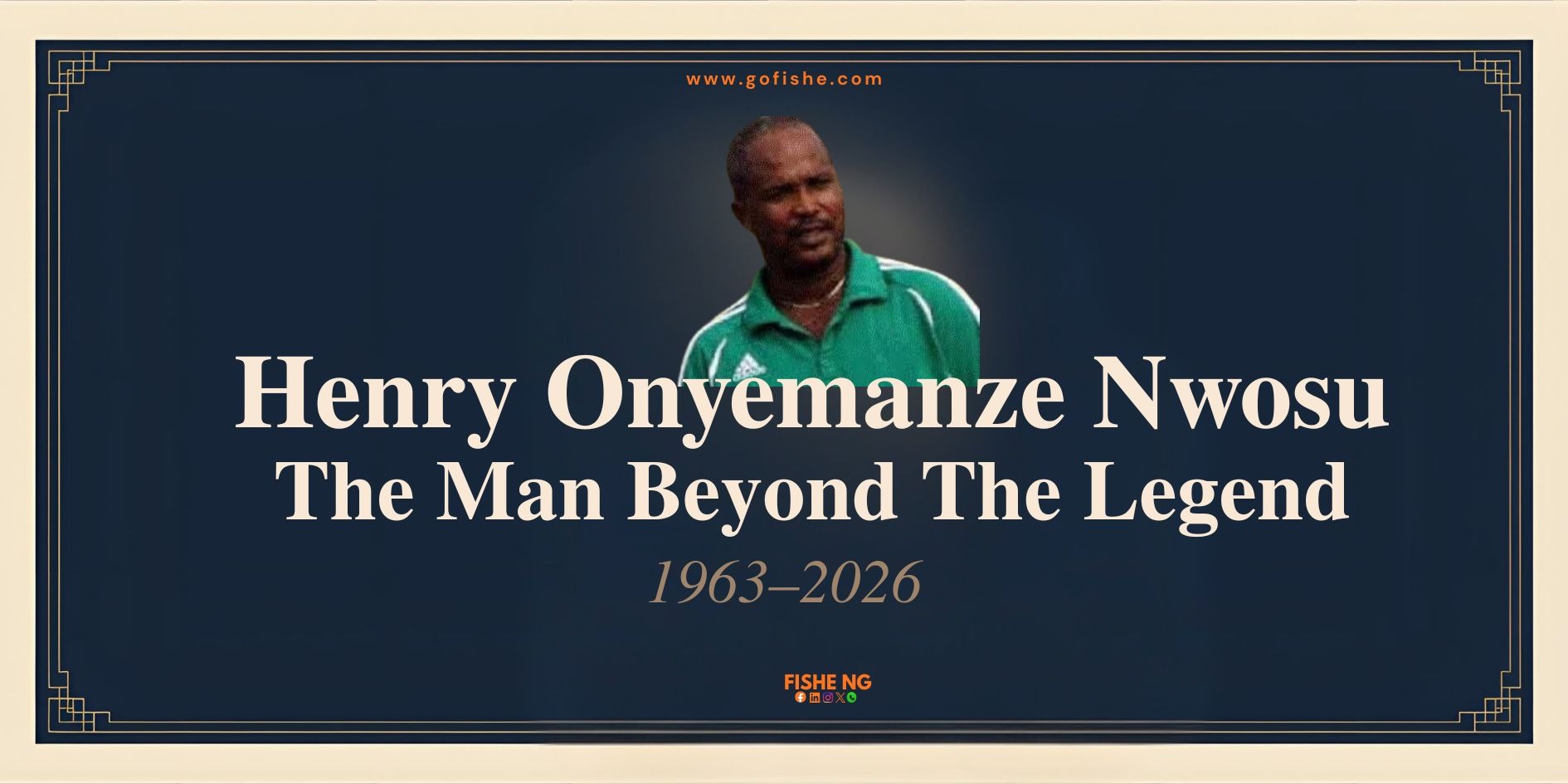
Legendary Nigerian football icon, Henry Onyemanze Nwosu, passed away on 14 March 2026 at the age of 62, after what reports describe as a prolonged illness, at Lagos State University Teaching Hospital in Ikeja, Lagos State, Nigeria. His death was publicly confirmed by close friend and former teammate, Segun Odegbami early Saturday morning.
While formal news reports emphasize the fact of his death and reactions from football authorities and the presidency, there are important personal and cultural elements of Nwosu’s life that have not been highlighted widely — elements that shaped not only his career but also his enduring connection with our society.
“Join me in reflection as I explore Henry Onyemanze Nwosu: The Man Beyond the Legend.”
Early Life: From Imo to National Stage
Born 14 June 1963 in Imo State, Nigeria, Henry Nwosu emerged from a modest background where football was both a pastime and a path to opportunity. That journey was emblematic of many young Nigerian lads in the late 1970s — gifted on dusty pitches and driven by dreams larger than their circumstances.
By age 17, Nwosu was already breaking into the senior national team, a remarkable achievement that reflected not just natural ability but deep self‑discipline and an early maturity uncommon for his age. His role in Nigeria’s historic win at the 1980 Africa Cup of Nations — still celebrated as Nigeria’s first continental title — placed him instantly within the sporting consciousness.


This early rise, while often mentioned, belies the psychological pressures of sudden fame on a teenager — something rarely explored in press accounts.
Playing Career: Style and Substance
On the pitch, Nwosu was widely regarded as a midfield orchestrator, a playmaker with vision, precise passing, and an uncanny ability to read the game. Contemporary teammates remember him not merely for technical skill but for his emotional intelligence — the way he could quiet a tense locker room, or inspire confidence in younger players.
He earned more than 60 caps for Nigeria between 1980 and 1991, scoring 8 goals and participating in multiple Africa Cup of Nations tournaments — including finals appearances in 1984 and 1988 after the 1980 triumph.
His club career took him beyond Nigeria — to ASEC Mimosas in Ivory Coast and RC Bafoussam in Cameroon — where he competed against some of the best African club teams of the era. These stints enriched his tactical awareness and exposed him to diverse football cultures, yet he always described his experiences abroad as learning pilgrimages that strengthened his commitment to Nigerian football development.

Coaching and Mentorship: A Quiet Legacy
Post‑playing life for Nwosu was not marked by flashiness but by dedication to nurturing the next generation.
-
He served as an assistant coach during Nigeria’s memorable 2008 Olympics Silver Medal run in Beijing, working alongside Samson Siasia.
-
He took the helm of Nigeria’s U‑17 squad in 2008–2009 — a role that, while brief, demonstrated his passion for youth development.
-
Later, he contributed at club level, including spells with Union Bank FC and Gateway United F.C., shaping young talents and instilling discipline.
What has been less reported is how Nwosu often worked behind the scenes advising grassroots coaches, offering sessions and mentorship without pay simply because he believed that “our best days must be built from the bottom up.” Several local coaches in Lagos and his home region have privately attested to his influence on their careers — an influence not captured in formal records.
Personal Side: The Human Story
While most reports focus on his footballing achievements, Nwosu’s personal character — humility, quiet generosity, mentorship — is a part of his story seldom shared in headlines.
-
Former teammates describe him as the one who remembered birthdays, who kept contact with junior players long after retirement.
-
He was known in community circles for his support of youth football clinics, often volunteering his time when others might seek publicity.
These are human elements that go beyond public accolades — they resonate with those whose lives he quietly impacted without seeking recognition.
Reflections on His Death and Timing
Henry Nwosu’s passing comes at a moment of significant transition in Nigerian football — following the recent death of another veteran coach and in a period where conversations about the next generation of Super Eagles leadership are intensifying. His exit from the scene invites reflection on how Nigeria remembers its stalwarts, both in life and in death.
Contrary to typical media focus on mourners and statements, a deeper examination shows that Nwosu represented a bridge — connecting the pioneering Golden Generation of the 1980s with younger Nigerians aspiring to international prominence.
National Impact and Legacy
President Tinubu affirmed the nation’s loss, remarking on Nwosu’s role in fostering national pride. Yet beyond official condolences:
-
His influence endures in countless youth players who attribute their early passion to his mentorship.
-
His approach to life — modest yet purposeful — challenges stereotypes of celebrity and redefines legacy in service, not just success.
His death is not just a sporting loss, but a cultural moment for us to reflect on the enduring values of mentorship, humility, and the power of sport to unify and uplift communities.
Final Note
Henry Onyemanze Nwosu will be remembered not only as one of Nigeria’s greatest football talents but also as a quiet architect of Nigerian football’s human capital — a builder of people and not just careers.