


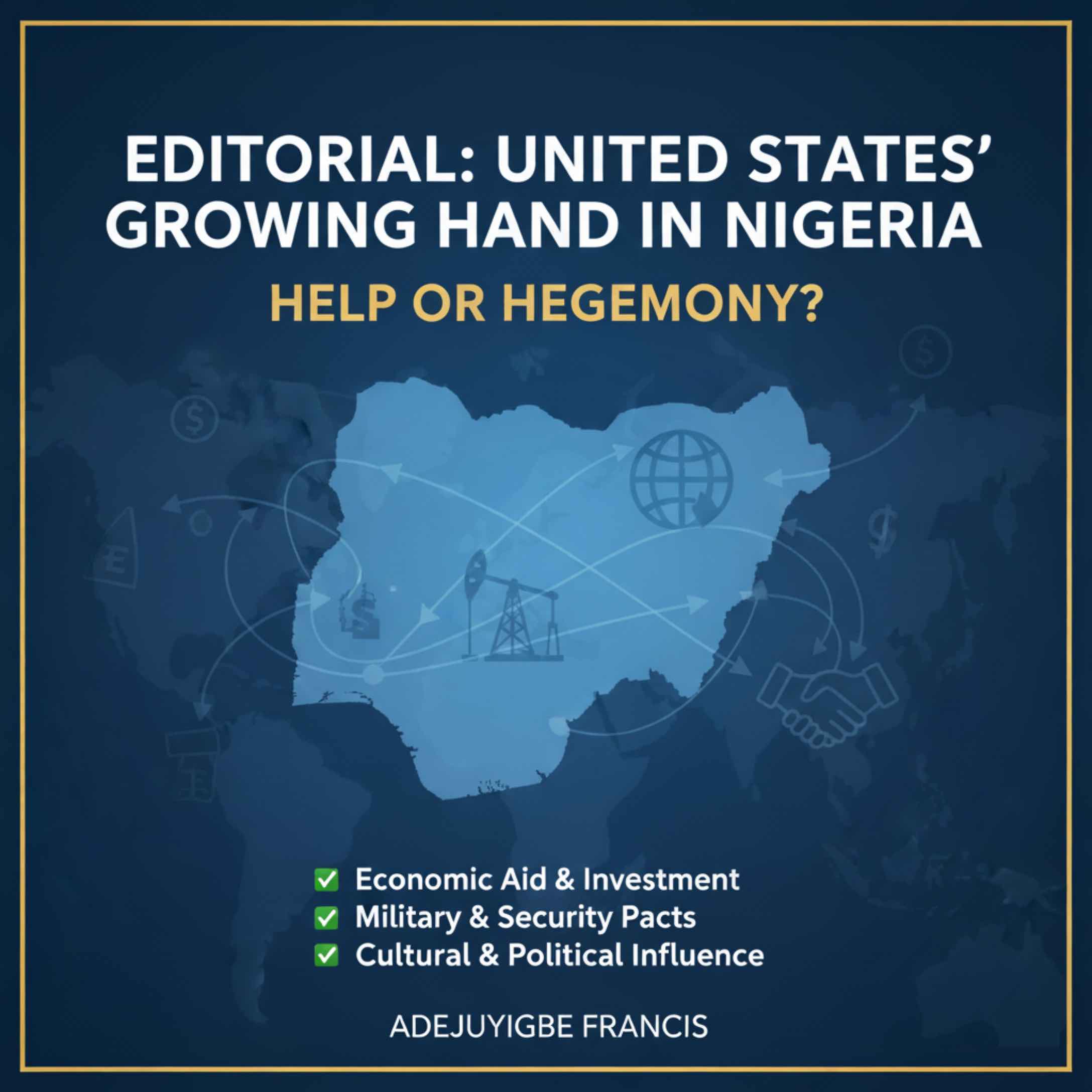
When U.S. President, Donald Trump labeled Nigeria a “Country of Particular Concern” on October 31, 2025, over alleged religious freedom violations, Washington’s intentions came under scrutiny. Was it a principled stand for human rights, or another instance of America flexing its geopolitical muscle under the guise of morality?
Critiquing The Declaration From Policy Summary
The Trump administration’s designation of Nigeria as a Country of Particular Concern (CPC) and its discussions about possible U.S. military involvement in Nigeria’s anti-bandit and counterinsurgency operations reflect a complex interplay between humanitarian concern, counterterrorism strategy, and geopolitical interest.
This policy brief examines the rationale behind these moves, their implications for Nigeria’s sovereignty, and the broader impact on U.S.–Nigeria relations. It concludes that while American engagement can support Nigeria’s stability, unbalanced involvement risks deepening dependency and eroding Nigeria’s policy autonomy.
Background
In October 2025, the United States, under President Donald Trump, designated Nigeria a Country of Particular Concern under the International Religious Freedom Act (IRFA). The designation cited alleged religious persecution and violence against both Christians and Muslims, as well as state failures to prevent such acts.

This marked a significant shift in U.S.–Nigeria relations, moving from strategic partnership to conditional engagement. Simultaneously, discussions within U.S. defense and diplomatic circles considered expanding counterterrorism cooperation, including potential troop deployments or advisory missions to support Nigeria’s fight against Boko Haram, Fulani Herdsmen, ISWAP, and rural banditry.
Analysis
1. U.S. Motivations
-
Religious Freedom and Human Rights: The Trump administration sought to position the U.S. as a global defender of religious liberty, particularly appealing to its domestic evangelical base.
-
Counterterrorism and Regional Stability: Nigeria’s location in the Sahel–West Africa corridor makes it a critical player in the fight against extremism. U.S. engagement aligns with broader regional counterterrorism strategies involving Niger, Chad, and Cameroon.
-
Geopolitical Influence: As China, Russia, and Turkey expand their footprint in Africa, Washington’s assertive posture toward Nigeria serves to maintain U.S. strategic leverage in the region.
2. Security Implications
Direct or indirect U.S. military involvement may enhance Nigeria’s operational capabilities in the short term — particularly in intelligence, surveillance, and logistics. However, the risk of mission creep, civilian harm, and nationalist backlash is high.
Such interventions could also shift Nigeria’s focus from comprehensive security reform to tactical dependence on external actors, undermining the Nigerian Armed Forces’ institutional growth.
3. Sovereignty and Political Legitimacy
Nigeria’s sovereignty, though formally intact, faces practical challenges stemming from external economic and security dependence.
When Washington unilaterally labels Nigeria a CPC or proposes military intervention, it projects an image of Nigerian incapacity — potentially weakening Aso-Rock’s diplomatic standing and public confidence in its governance.
True sovereignty extends beyond juridical independence to encompass the state’s ability to manage its own crises without coercive foreign influence.
Policy Recommendations
For the Nigerian Government
-
Strengthen Domestic Security Institutions: Invest in training, oversight, and anti-corruption measures within the military and police to reduce reliance on external forces.
-
Improve Human Rights Accountability: Address religious and ethnic violence through transparent investigations and judicial processes to remove the pretext for foreign intervention.
-
Diversify Diplomatic Partnerships: Engage multilaterally — through ECOWAS, the African Union, and non-aligned partnerships — to balance great-power influence.
For the United States
-
Prioritize Capacity-Building Over Intervention: Support Nigeria through training, intelligence sharing, and institutional reform rather than direct troop deployment.
-
Respect National Sovereignty: Calibrate policy language to emphasize partnership, not paternalism.
-
Integrate Regional Strategy: Coordinate actions with African-led initiatives to ensure legitimacy and sustainable impact.
Conclusion
The Trump-era policies toward Nigeria highlight enduring tensions in U.S.–Africa relations — between advocacy and interference, partnership and control. Nigeria’s long-term stability requires both internal reform and carefully balanced engagement with external partners.
Trump’s designation of Nigeria may have been framed as moral pressure, but it also exposed the fragility of a nation still struggling to control its own destiny. If the U.S. truly seeks to help, it should do so by empowering Nigerian institutions — not by imposing itself as a security guarantor.
Nigeria must confront its internal decay head-on, not through American mandates but through Nigerian solutions. True sovereignty demands more than resistance to foreign interference; it requires building a nation strong enough that no such interference is needed.
