


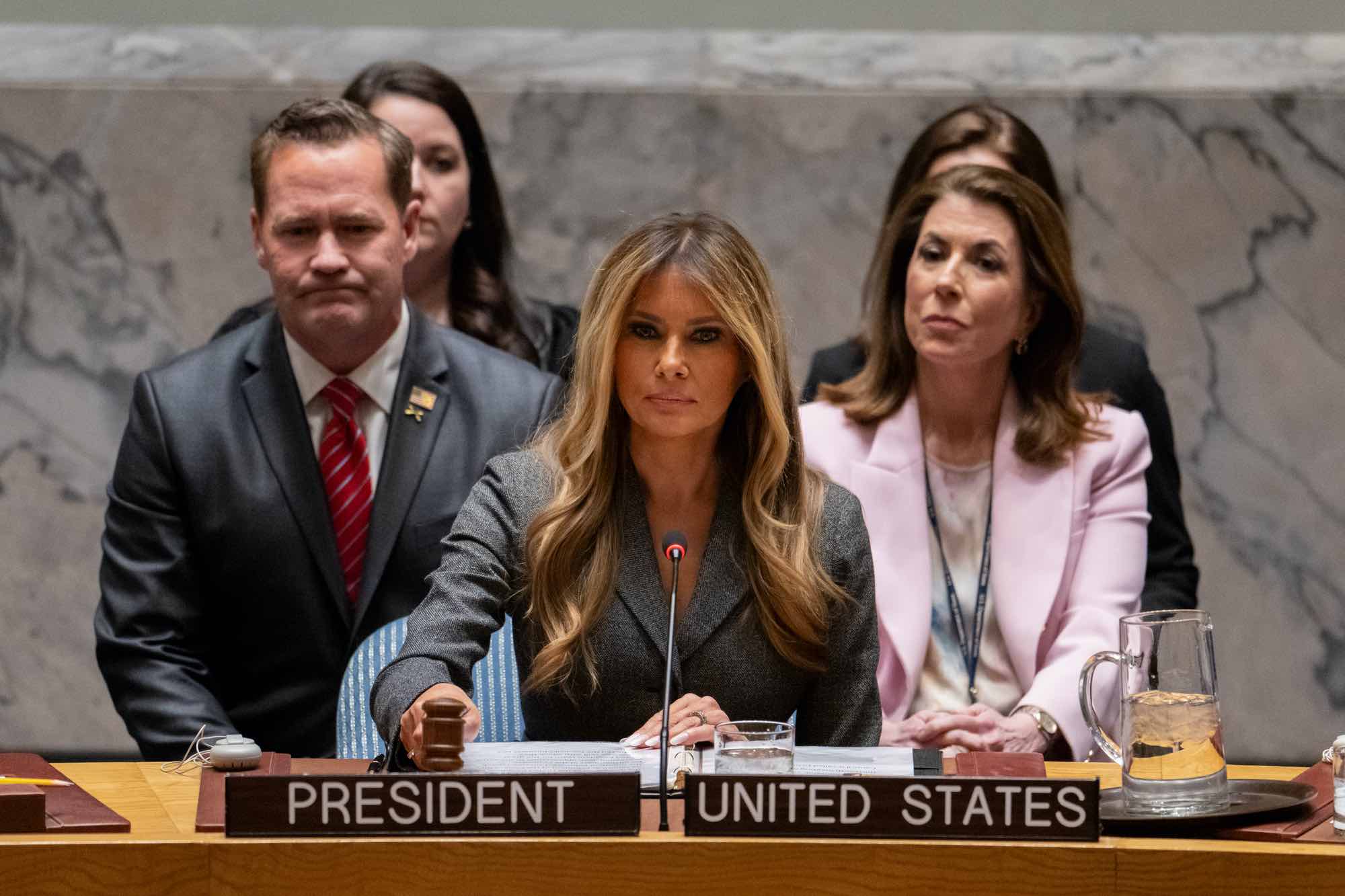
On March 3, 2026, Melania Trump delivered an impactful address at the United Nations Security Council (UNSC), briefing focused on the intersection of children, technology, and education in conflict-affected regions. Speaking from New York City as the United States assumed the presidency of the Council, the First Lady emphasized education, access to technology, and global cooperation as the foundation for sustainable peace and the protection of children worldwide.
Honouring Sacrifice and Extending Compassion
Trump opened her remarks by expressing condolences to families who lost loved ones in conflict and offered support to those injured, highlighting the human cost of instability. She underscored the United States’ commitment to children worldwide, stressing the urgent need for peace to reach the youngest and most vulnerable.
Education as a Pillar of Peace
Central to her address was the idea that education is not merely a societal benefit but a moral imperative. First Lady of the United States argued that nations that cherish education protect their language, literature, and scientific knowledge, creating environments that foster moral reasoning, tolerance, and empathy. Conversely, societies deprived of learning risk stagnation, prejudice, and conflict.
She stated:


“When a nation restricts thought, it restricts its own future.”
Education, she noted, is a fundamental human right, yet millions of children and young adults are denied access to secondary schools and universities—a loss that affects humanity’s collective potential in fields from medicine to technology.
Technology as an Equaliser
First Lady of the United States highlighted the transformative potential of technology, particularly artificial intelligence, in democratising knowledge. She cited that approximately 70% of the global population already has access to the internet through mobile devices.
By leveraging this connectivity, even children in remote locations—whether a farmer on a Greek island or a student in Somalia—can access centuries of human knowledge and educational resources.
The First Lady suggested that AI represents a revolutionary tool, bridging geographic and social divides, allowing for rapid understanding of diverse beliefs, customs, and histories. Technology, she asserted, can redefine participation in the global economy of ideas and cultivate a generation capable of empathy, innovation, and leadership.
A Vision for Global Collaboration
Addressing Security Council members directly, First Lady of the United States urged nations to ensure equitable access to education and technology. She framed this mission as both a moral and practical responsibility: empowering children through knowledge reduces ignorance, diminishes conflict, and fosters long-term security.
She concluded by calling for a shared commitment to elevate education as a tool of peace:
“Conflict arises from ignorance, but knowledge creates understanding – replacing fear with peace and unity.”
Implications for Policy and International Action
The address positioned education and technology as critical levers for global security policy. By investing in educational infrastructure and digital connectivity, nations can help cultivate resilient societies capable of innovation, cooperation, and moral leadership.
The remarks resonated with the broader UNSC mandate to maintain peace while emphasizing the prevention of conflict through human development initiatives.
First Lady of the United States’s remarks at the UNSC highlighted a forward-looking vision where education and technology are central to fostering lasting peace. By linking human rights, digital access, and moral development, the speech underscored the importance of collective action to ensure that every child, regardless of geography, can realise their full potential and contribute to a more harmonious world.