


The Federal Government has announced a major initiative to transform 417 grazing reserves across Nigeria into modern mini-towns, aimed at boosting the livestock sector and addressing long-standing herder-farmer conflicts.
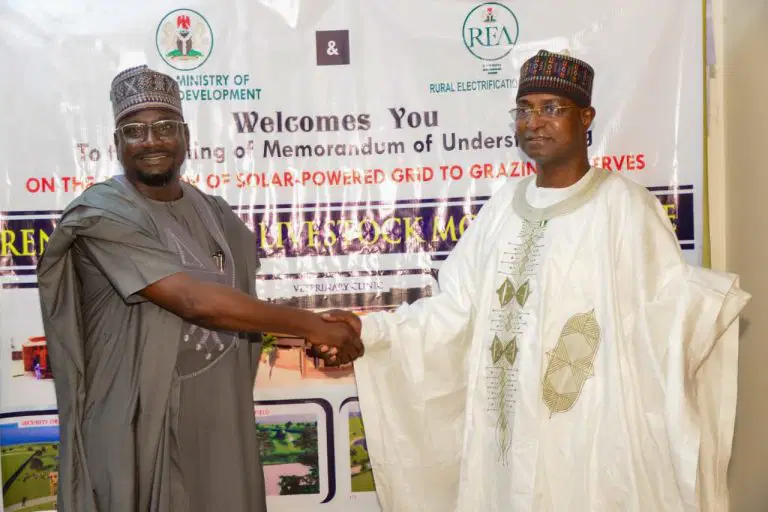
This development was revealed by the Minister of Livestock Development, Idi Maiha, during the signing of a Memorandum of Understanding (MoU) with the Rural Electrification Agency (REA) in Abuja. The partnership will see the deployment of solar-powered mini-grids to grazing reserves as part of a broader rehabilitation and resettlement programme.
Maiha explained that many of the existing grazing reserves have been abandoned for decades, making nomadic livestock rearing increasingly unsustainable due to climate change, resource competition, and a growing national herd.
He said the government has introduced the “Renewed Hope Livestock Village” model, which seeks to equip the reserves with key infrastructure such as clean water, schools, healthcare centres, markets, abattoirs, veterinary clinics, roads, and communication networks.


“We want to improve the quality of life in these areas so that pastoralists are encouraged to settle. By providing schools, clinics, and energy, we can stop the constant migration,” he said.
The solar grid rollout will begin with pilot locations already identified in Gombe, Plateau, Adamawa, and the FCT. These include Wawazangi (Gombe), Wasem (Plateau), Gongoshi (Adamawa), and Ka’u (Bwari, FCT).
Maiha stressed that the intervention goes beyond cattle and grazing reserves. Large-scale animal farmers whether in piggery, goat or sheep farming will also benefit, especially those who are settled in one location.
“We’re working with state governments to ensure livestock producers across the value chain benefit from this initiative, even outside grazing reserves,” he added.
According to the minister, the project will be implemented in phases, starting with pilot reserves. Lessons learned from these initial sites will guide future rollouts nationwide.
REA Executive Secretary, Abba Aliyu, said the agency is committed to powering rural clusters that integrate multiple development elements, including health, education, and commerce.
“When grazing reserves include clinics, schools, abattoirs, and markets, it becomes ideal for us to deploy clean energy solutions. This partnership with the livestock ministry is not just a collaboration, it’s a strategic solution to rural development,” he said.