


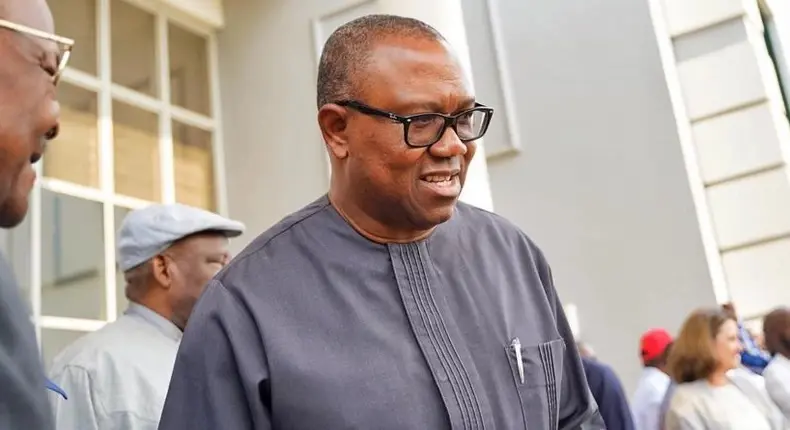
Former SGF Claims Peter Obi Won 2023 Nigerian Presidential Election.
A startling claim has reignited debate over Nigeria’s 2023 presidential election, with former Secretary to the Government of the Federation (SGF), Babachir Lawal, asserting that Peter Obi, the Labour Party (LP) candidate, was the rightful winner, not President Bola Tinubu. Lawal, a prominent figure in the African Democratic Congress (ADC), made the statement during an interview on Channels Television’s *Politics Today* on 11 August 2025, alleging that the Independent National Electoral Commission (INEC) misrepresented the true results of the 25 February 2023 election.

Lawal, a former ally of Tinubu, claimed that data collected by his team and other independent sources showed Obi securing the majority of votes, with Atiku Abubakar of the People’s Democratic Party (PDP) coming second, and Tinubu trailing in third. “We had politicians and agents on the ground. We know the true results, and we can see clearly where they were altered,” Lawal said, though he noted that political dynamics have shifted since 2023, making it uncertain whether Obi could replicate such a result in 2027. His remarks have fuelled widespread discussion, with some Nigerians on social media platforms like X echoing his claims, asserting, “The blind could see Obi won,” while others called for measures to prevent future electoral discrepancies.
The 2023 election, which saw Tinubu declared the winner by INEC, was highly contentious, with both Obi and Atiku challenging the results at the Presidential Election Petition Tribunal. The tribunal upheld Tinubu’s victory, but allegations of irregularities, including vote manipulation and issues with INEC’s result transmission system, have persisted. Lawal’s statement aligns with sentiments expressed by some, including a disputed claim by former Kaduna State Governor Nasir El-Rufai, who reportedly suggested Obi’s win was suppressed due to ethnic bias. However, such claims remain unverified and are contested, with critics arguing they lack concrete evidence and risk inflaming tensions.
Peter Obi, the former Anambra State governor, has remained a polarising figure since the election. Known for his grassroots appeal and focus on economic reform, Obi has dismissed speculation about political alliances for 2027, stating his priority is a “coalition against hunger, poverty, and poor healthcare and education” rather than personal ambition. His recent public appearances, including a donation of ₦50 million to his alma mater, Christ The King College in Onitsha, have kept him in the spotlight as a vocal advocate for systemic change.
Lawal’s comments have drawn mixed reactions. Supporters of Obi, often called “Obidients,” have hailed the statement as vindication, with one X user stating, “Babachir Lawal has stood by this since 2023. The truth is clear.” Others, however, view the claims as divisive, pointing to the tribunal’s ruling and INEC’s official results as settled matters. The controversy has also spotlighted broader concerns about electoral integrity in Nigeria, with calls for reforms to ensure transparency in future polls.
The presidency has not officially responded to Lawal’s claims, but the All Progressives Congress (APC) has previously dismissed similar allegations as baseless. As Nigeria grapples with economic challenges and growing public discontent, the renewed debate over the 2023 election underscores deep divisions and the urgent need for trust in the democratic process. Whether Lawal’s assertions will prompt further scrutiny or fade as political rhetoric remains to be seen, but they have undeniably reignited a national conversation about justice and accountability in Nigeria’s electoral system.
