


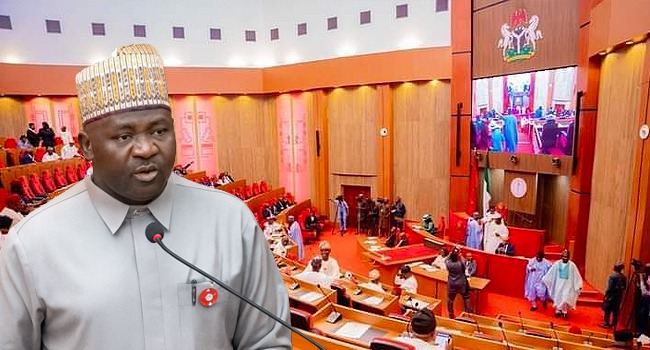
The Nigerian Senate has officially confirmed retired Chief of Defence Staff, General Christopher Gwabin Musa, as the Nigeria’s new Minister of Defence. The confirmation followed an intensive screening during Wednesday’s plenary session, where lawmakers questioned him extensively on national security, defence reforms, and military professionalism.
The screening, conducted publicly, lasted over an hour as senators sought clarity on his strategic approach to tackling Nigeria’s multifaceted security challenges.
Swift Nomination by President Tinubu
General Musa’s nomination came barely a day prior, on Tuesday, when President Bola Ahmed Tinubu forwarded his name to the Senate for confirmation. The nomination letter was read by the Senate President, prompting the lawmakers to fast-track the process given the pivotal nature of the role.
General Musa’s confirmation signals the administration’s urgency in reinforcing the defence leadership structure amid ongoing threats across the country.

A Veteran Officer With Decades of Experience
General Musa retired from military service just 40 days ago, having last served as the Chief of Defence Staff, the highest-ranking military position in military setting.
His career spans more than three decades, during which he played major roles in counterterrorism operations, particularly in the Northeast, and contributed to joint security initiatives aimed at stabilising conflict-prone regions.
Key Issues Raised During the Screening
During the questioning, senators pressed General Musa on several critical issues:
Counterterrorism Strategy
Lawmakers sought his views on strengthening the fight against Boko Haram, ISWAP, and other insurgent groups destabilising the country.
Military Reforms
He was asked to outline his vision for modernising the armed forces, improving intelligence gathering, and strengthening inter-agency collaboration.
Human Rights and Civil-Military Relations
Several senators emphasized the need for improved human rights compliance within military operations and better engagement with civilian populations.
Defence Sector Accountability
Questions also focused on procurement transparency, budget management, and the need to ensure better oversight of military resources.
Musa responded by emphasizing professionalism, transparency, and a renewed focus on operational effectiveness.
A Strategic Appointment During a Critical Period
General Musa assumes office at a time when Nigeria continues to face significant security challenges, including:
-
Terrorism and insurgency in the North-East
-
Banditry and kidnapping in the North-West and North-Central
-
Oil theft and maritime insecurity in the Niger Delta
-
Communal and ethnic conflicts in several regions
His appointment is widely viewed as part of President Tinubu’s broader defence and security restructuring aimed at restoring public confidence.
Next Steps: Swearing-In and Immediate Priorities
Following Senate confirmation, General Musa is expected to be sworn in alongside other members of the Federal Executive Council.
His immediate tasks will likely include:
-
Reviewing ongoing military operations
-
Strengthening joint task forces
-
Reassessing defence spending priorities
-
Rebuilding morale within the armed forces
-
Developing a unified national security strategy
Public and Institutional Reactions
Early reactions from security analysts and stakeholders suggest cautious optimism. Many believe Musa’s field experience and familiarity with current security dynamics make him well positioned to drive meaningful reforms. Others emphasize that the real test will lie in implementing sustainable policies and coordinating effectively with other security agencies.
Congratulations, General Christopher Gwabin Musa!
May Nigeria succeed.
