

The United Nations has issued grave warnings that Nigeria is facing one of the most severe hunger crises in its recent history, with tens of millions of people at risk of acute food insecurity and malnutrition. This looming crisis stems from a complex interplay of conflict, economic pressures, climate shocks, and critically insufficient humanitarian funding — creating shockwaves that threaten both lives and long-term stability across the country.
Scale of the Threat: Tens of Millions at Risk
According to recent United Nations assessments, nearly 35 million Nigerians — including millions of children — are projected to face acute hunger in 2026. This figure represents one of the highest levels of food insecurity recorded in our history, underscoring how deeply the problem has expanded beyond localised hotspots to a nationwide humanitarian emergency.
The Cadre Harmonisé analysis, an authoritative food security classification used across West and Central Africa, indicates that nearly 35 million people could experience severe food insecurity during the upcoming lean season (approximately June–August 2026), without urgent intervention.
Drivers of the Crisis
1. Conflict and Insecurity
Ongoing insurgent attacks in northern Nigeria — particularly by Boko Haram, Islamic State West Africa Province (ISWAP), and armed gangs — continue to disrupt agricultural production and market access.


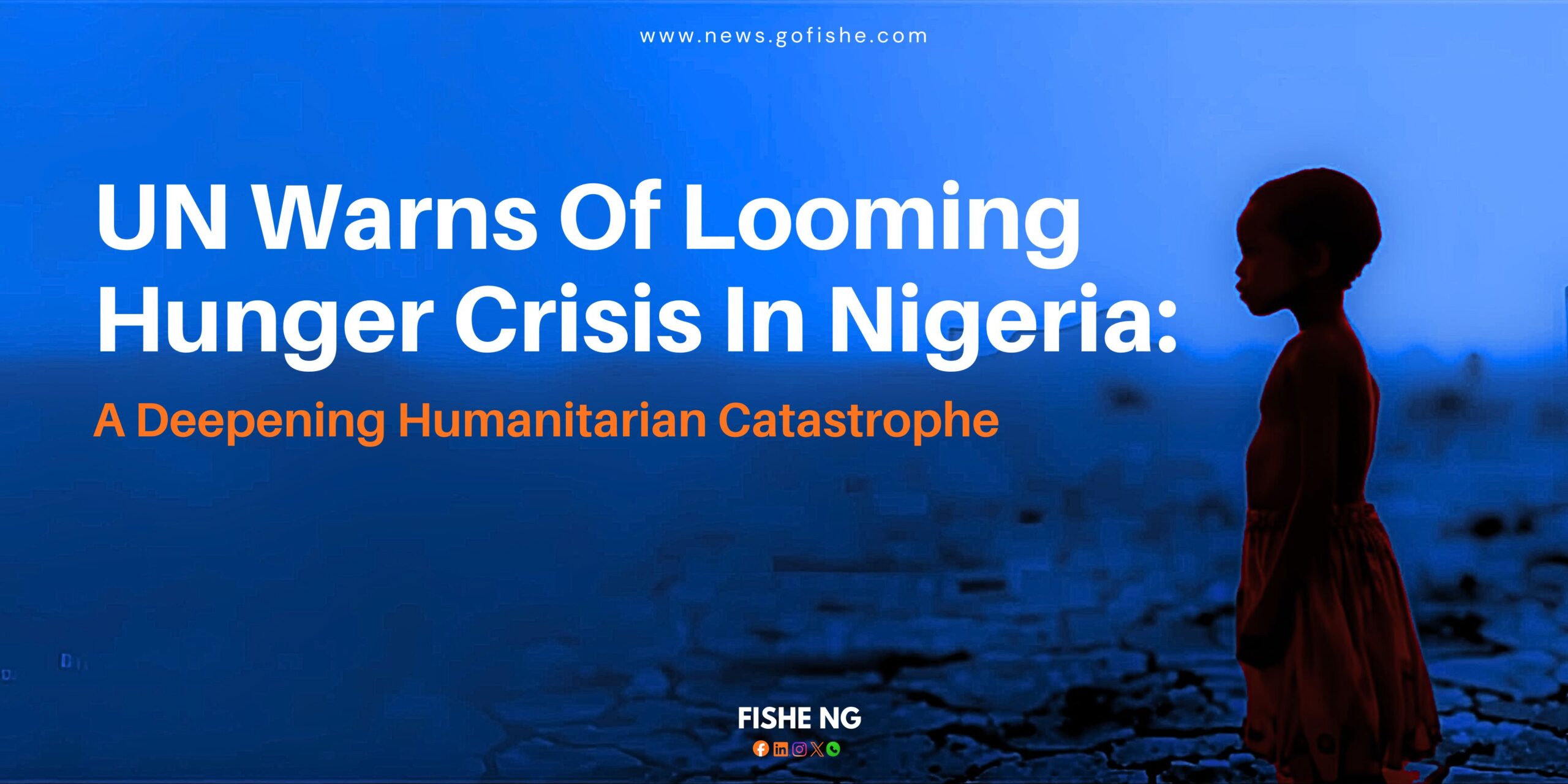

Farmers are displaced, livelihoods are destroyed, and food supply chains are severely weakened, pushing rural communities to the brink of starvation.
These security challenges have not only displaced millions but have also made it difficult to cultivate and harvest crops, further reducing food availability in some of the hardest-hit areas.
2. Funding Shortfalls for Humanitarian Aid
A major contributor to the worsening situation is a sharp decline in international humanitarian funding. The World Food Programme (WFP), and other UN agencies have warned that dwindling donour contributions have forced them to scale back food aid dramatically.
In early 2026, WFP reported it would be able to assist only about 72,000 people — a steep drop from the 1.3 million it reached during previous lean seasons.
Without sufficient funding, emergency food and nutrition programs risk collapsing, leaving millions without essential food assistance.
3. Economic and Climate Pressures
High food prices — driven by inflation and broader economic instability — are squeezing household budgets, making essential food items unaffordable for many families. Meanwhile, climate shocks such as floods and droughts have disrupted farming cycles and reduced yields, compounding the hunger pressure.
Malnutrition and Vulnerable Populations
Children, pregnant women, and internally displaced persons (IDPs), are among those worst affected. Reports highlight that millions of children face acute malnutrition or wasting, with many requiring urgent nutritional support.
In northern states such as Borno, Yobe, Sokoto, Katsina, and Zamfara, malnutrition rates are especially alarming. These areas — already struggling with conflict and poverty — bear the brunt of food shortages, with hundreds of thousands of children at risk of life-threatening nutritional deficiencies.
Consequences Beyond Hunger
The implications of Nigeria’s hunger crisis extend far beyond immediate suffering. Food insecurity contributes to:
-
Mass displacement, as families leave their homes in search of food and safety.
-
Recruitment into armed groups, as individuals with limited survival options may be coaxed into joining insurgent movements.
-
Economic stagnation, as agricultural productivity falls and communities lose means of livelihood.
-
Heightened instability, reinforcing a cycle where insecurity and hunger feed into one another.
Calls to Action
The United Nations and its partners are urgently calling for:
-
Increased international humanitarian funding to sustain food and nutrition assistance.
-
Expanded support for resilience and early-warning systems to prevent escalation.
-
Collaborative domestic and international efforts to address the root drivers of food insecurity, including conflict, economic fragility, and climate change.
WFP and allied agencies assert that with adequate resources and coordinated action, it is still possible to avert the worst outcomes — but the window for intervention is rapidly closing.
Why This Matters
Nigeria’s hunger crisis is not merely a local emergency; it is a humanitarian and security challenge with national and regional ramifications. The unfolding food insecurity situation underscores the fragility of food systems in conflict-affected environments and highlights the consequences when humanitarian needs outpace available resources.
Without decisive, sustained action from both Nigerian government and the global community, millions more could suffer from food deprivation, with long-lasting effects on health, development, and stability.