


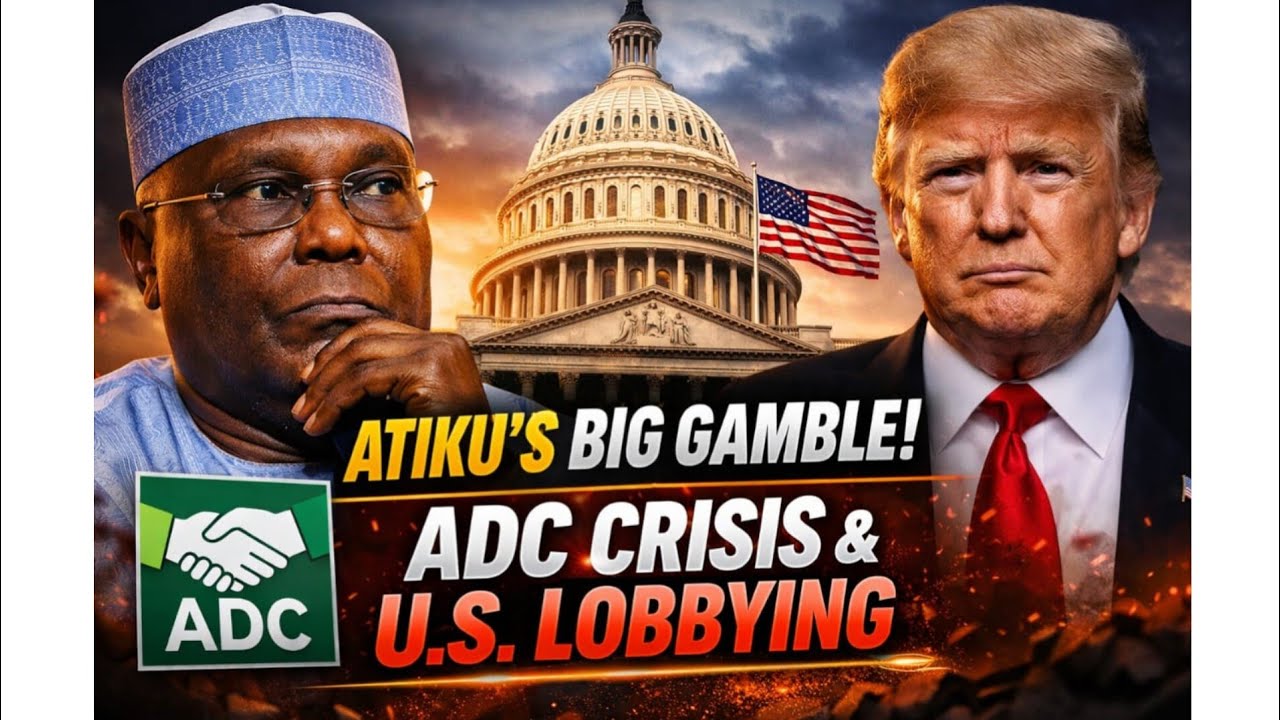
A new political and diplomatic controversy has emerged involving Nigeria’s electoral system, as Washington-based lobbying firm Von Batten-Montague-York L.C. moves to push for sanctions against Independent National Electoral Commission (INEC).
The firm is urging action from the administration of Donald Trump, as well as the U.S. Congress, following INEC’s derecognition of leadership factions within the African Democratic Congress (ADC).
This development highlights the growing intersection between domestic politics and international lobbying efforts, with potential diplomatic consequences.
Background: INEC and the ADC Leadership Crisis
Derecognition and Internal Party Conflict
INEC recently withdrew recognition from rival leadership factions within the ADC, including those associated with David Mark and Nafiu Bala.


This decision:
- Suspends official engagement with the party
- Deepens internal divisions
- Disrupts party organisation ahead of the 2027 elections
The move has effectively stalled the ADC’s operational capacity at a critical political moment.
Strategic Importance of the ADC
The ADC represents a key opposition platform in Nigeria’s multi-party system. Its disruption:
- Weakens opposition competitiveness
- Raises concerns about political pluralism
- May influence coalition-building ahead of 2027
The lobbying firm described the situation as one that has “effectively frozen” a major opposition party during a crucial electoral cycle.
The Lobbying Effort in Washington
Key Actors and Engagement Channels
The lobbying campaign is being spearheaded by Von Batten-Montague-York L.C., acting on behalf of Atiku Abubakar under a reported $1.2 million contract signed in March 2026.
The firm is actively engaging:
- The U.S. Congress (House and Senate)
- The U.S. State Department
- The U.S. National Security Council
Although Congress is currently on Easter recess, the firm says it is already briefing policymakers and plans high-level engagements imminently.
Messaging Strategy
The firm’s messaging focuses on:
- Alleged institutional weaknesses within INEC
- Risks to electoral integrity
- The broader implications for democracy in Nigeria
It echoes prior assessments by the U.S. State Department while amplifying concerns about current developments.
Allegations Against INEC
The lobbying firm acknowledges that INEC has international support but argues it has struggled under pressure:
INEC has the capacity to conduct credible elections but shows “serious weaknesses” when faced with deliberate manipulation by political actors.
Reference to the 2023 Elections
The firm points to the 2023 Nigerian general elections as evidence, claiming:
- Electoral integrity concerns were evident
- Irregularities undermined confidence
- Similar patterns may now be re-emerging
Push for Sanctions Under Global Magnitsky
Proposed Measures
The firm is advocating sanctions under the Global Magnitsky Act, targeting:
- INEC officials
- Nigerian political actors accused of electoral interference
Proposed penalties include:
- Freezing foreign assets
- Blocking access to global financial systems
- Imposing visa bans on individuals and their families
Political Framing in the U.S. Context
A notable element of the campaign is its contrast between U.S. administrations:
- It criticizes the response of Joe Biden to Nigeria’s 2023 elections
- It suggests Donald Trump would respond more aggressively
The firm argues that Trump is unlikely to “remain passive in the face of an election being openly undermined.”
Broader Political and Diplomatic Implications
Domestic Impact in Nigeria
- Intensifies tensions within the ADC
- Raises questions about INEC’s neutrality
- Could reshape opposition strategies ahead of 2027
Internationalisation of Nigerian Politics
This case reflects a broader trend:
- Nigerian political actors engaging foreign lobbyists
- Attempts to influence global opinion and policy
- Increased external scrutiny of Nigeria’s elections
Sovereignty and Diplomatic Risks
The call for U.S. sanctions introduces sensitive issues:
- Perceived external interference in domestic affairs
- Potential strain in Nigeria–U.S. relations
- Questions about the limits of international accountability
U.S. Strategic Considerations
Whether sanctions are imposed will depend on:
- Evidence presented by the lobbying firm
- U.S. geopolitical interests in Nigeria
- Broader democracy and governance priorities
Controversies and Criticism
The lobbying effort itself has attracted scrutiny:
- Questions about the firm’s influence and track record
- Concerns about politicising international diplomacy
- Debate over whether sanctions are appropriate or excessive
At the same time, supporters argue the move could:
- Promote accountability
- Strengthen electoral transparency
- Deter future manipulation
Conclusion
The attempt by Von Batten-Montague-York L.C. to secure U.S. sanctions against INEC officials represents a significant escalation of giant of Africa’s electoral disputes into the international arena.
Key conclusions:
- The ADC crisis is both a legal and political flashpoint
- International lobbying is becoming a strategic tool in Nigerian politics
- The outcome could shape not only Nigeria’s 2027 elections but also its diplomatic relations
Ultimately, the situation underscores the fragile balance between domestic sovereignty and global democratic accountability in an increasingly interconnected political landscape.