


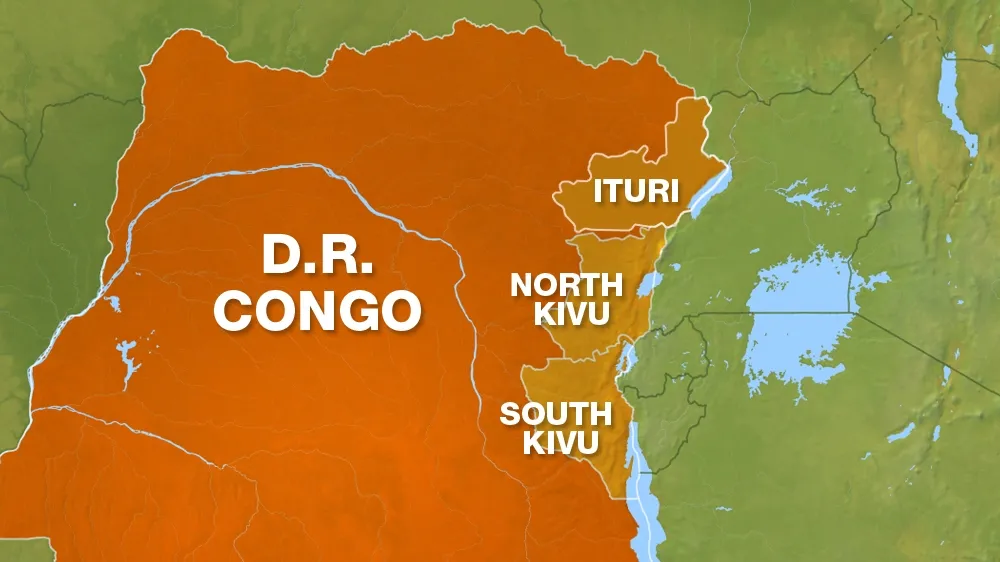
The International Contact Group for the Great Lakes (ICG), has voiced deep concern over a sharp escalation of violence in eastern Democratic Republic of the Congo (DRC), warning that renewed fighting in South Kivu risks destabilising the wider Great Lakes region.
In a joint statement issued on Tuesday, the ICG — comprising the United States, Belgium, Denmark, the European Union, France, Germany, the Netherlands, Sweden, Switzerland, and the United Kingdom, and chaired by Germany — condemned the latest offensive by the March 23 Movement (M23), which it says is supported by Rwanda, around the city of Uvira near the Burundian border.
The group highlighted the growing use of attack and suicide drones in the conflict as a particularly alarming development, describing it as a significant escalation that poses a grave threat to civilians.
The ICG urged the M23 and the Rwanda Defence Force (RDF), to immediately halt offensive operations in eastern DRC, especially in South Kivu. It reiterated calls for the RDF to withdraw from Congolese territory in line with United Nations Security Council Resolution 2773, and for the M23 to honour its commitments under the Declaration of Principles signed in Doha on July 19, 2025.
The statement also called on all parties to respect their obligations under international law, protect civilians, and adhere fully to UNSC Resolution 2773, including respect for the DRC’s territorial integrity. The group stressed the importance of upholding commitments made under the Washington Accords of December 4, 2025, and urged immediate de-escalation.
Warning against inflammatory rhetoric and provocative actions, the ICG cautioned that continued escalation could undermine hard-won diplomatic progress, including the Framework Agreement signed in Doha on November 15, 2025, between the Congolese government and M23.
The group concluded by calling for an urgent and unequivocal recommitment to the ceasefire and demanded full, safe, and unhindered humanitarian access to ensure that lifesaving assistance reaches affected populations.
“The protection of civilians and the preservation of peace efforts must remain paramount,” the statement emphasized.
