


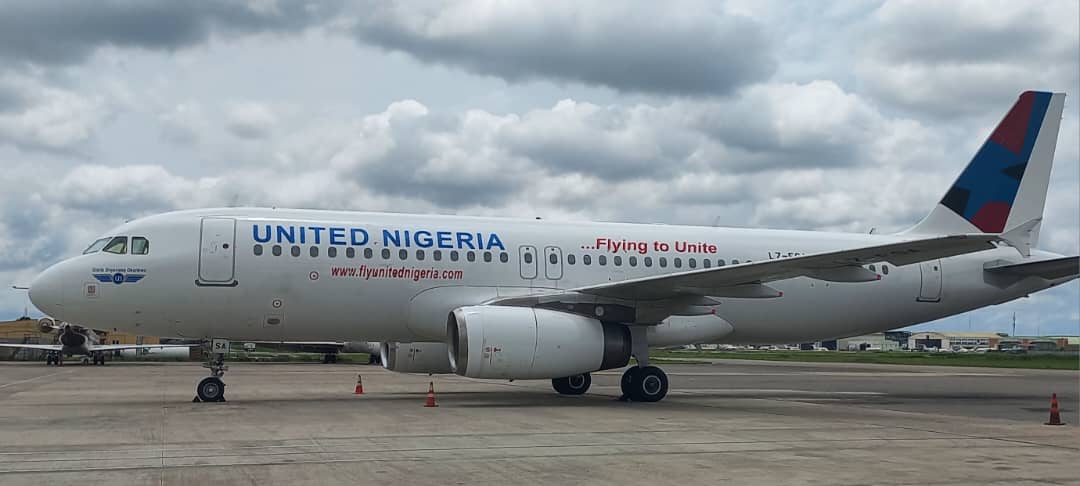
On March 29, 2026, a ground handling incident involving United Nigeria Airlines occurred at Murtala Muhammed International Airport, one of the busiest aviation hubs in West Africa.
The incident, caused by a jet blast from a nearby aircraft, resulted in damage to a parked aircraft at the domestic terminal (MM2). While no injuries were reported, the event has raised concerns about ramp safety, coordination of ground operations, and equipment handling at congested airports.
Overview of the Incident
According to an official travel advisory issued by United Nigeria Airlines, the affected aircraft was an Embraer 190 operating Flight UN0503 from Akanu Ibiam International Airport to Lagos.
After landing, the aircraft was positioned at the domestic terminal and was being prepared for its next scheduled service, Flight UN0500, planned for noon departure.


Sequence of Events
- The aircraft was parked in an open bay between two other aircraft.
- Passenger boarding preparations were underway.
- A nearby aircraft, having completed boarding, commenced taxiing.
- Simultaneously, another aircraft was executing a pushback onto the taxiway.
- These concurrent movements generated a powerful jet blast within the ramp area.
The airline noted that the taxiing aircraft maneuvered in a way that produced significant exhaust force, creating hazardous conditions on the apron.
Cause of the Damage
The direct cause of the damage was secondary impact from displaced ground equipment, not the jet blast itself.
- The jet blast dislodged a baggage trolley belonging to a ground handling company.
- The uncontrolled trolley was propelled into the parked aircraft.
- The collision resulted in structural damage.
This highlights the chain-reaction nature of jet blast hazards, where unsecured equipment becomes a projectile.
Extent of Damage
The airline confirmed that the aircraft sustained damage to critical external components, including:
- The antenna system
- The forward fuselage area near the nose landing gear
Although the aircraft structure remained intact overall, the affected systems required technical inspection and repairs, rendering the aircraft temporarily unserviceable.
Immediate Response by the Airline
In line with aviation safety standards, United Nigeria Airlines implemented immediate measures:
- The aircraft was withdrawn from service (grounded)
- A comprehensive inspection was initiated
- Safety protocols were activated to assess airworthiness
The airline reaffirmed its commitment to safety, stating that it maintains “strict and uncompromising safety standards.”
Passengers scheduled on Flight UN0500 experienced disruptions, and the airline:
- Issued an official apology
- Began efforts to minimise inconvenience
- Provided support and alternative arrangements where necessary
Key Stakeholders Involved
The incident involved multiple aviation stakeholders:
Airline Operator
- United Nigeria Airlines (aircraft owner/operator)
Ground Handling Company
- Owner of the displaced baggage trolley
- Responsible for securing ramp equipment
Flight Crew and Ground Crew
- Pilots of the taxiing and pushback aircraft
- Ramp personnel coordinating aircraft movements
Airport Authorities
- Management of Murtala Muhammed International Airport
- Oversight of apron operations and safety compliance
Air Traffic Control (ATC)
- Coordination of aircraft ground movements
Understanding Jet Blast and Ramp Hazards
Jet blast is the high-velocity exhaust airflow produced by jet engines, particularly during taxiing, takeoff, or high-thrust operations.
Key Characteristics
- Can reach extremely high wind speeds
- Capable of moving heavy equipment
- Dangerous in tight or congested ramp areas
Risks Identified in This Incident
- Unsecured ground equipment becoming airborne
- Close proximity of multiple aircraft
- Simultaneous aircraft movements without adequate spacing
Operational and Safety Implications
Ramp Congestion
The incident reflects:
- High traffic density at Lagos airport
- Limited maneuvering space in the domestic terminal
Coordination Gaps
Simultaneous taxiing and pushback operations suggest:
- Potential lapses in ground movement sequencing
- Need for improved real-time coordination
Equipment Handling Deficiencies
The movement of the baggage trolley indicates:
- Inadequate securing of ground equipment
- Possible non-compliance with ramp safety protocols
Operational Disruptions
Consequences included:
- Flight delays and schedule interruptions
- Aircraft downtime for maintenance
- Passenger inconvenience
Broader Aviation Context in Nigeria
Ground incidents involving aircraft and equipment have occurred periodically in Nigeria’s aviation sector, particularly at busy airports like Lagos.
Such events underline ongoing challenges related to:
- Infrastructure limitations
- Increasing air traffic volume
- Enforcement of safety regulations
Preventive Measures and Recommendations
Improved Ground Movement Coordination
- Better synchronisation between ATC and ramp control
- Controlled sequencing of taxiing and pushback operations
Strict Equipment Safety Protocols
- Mandatory securing of all ground support equipment
- Regular inspection and compliance checks
Infrastructure Enhancements
- Increased spacing between parking bays
- Installation of jet blast deflectors where necessary
Training and Accountability
- Continuous training for ground crew
- Clear accountability for safety breaches
Conclusion
The jet blast incident at Murtala Muhammed International Airport illustrates the complex risks inherent in airport ground operations, especially in high-traffic environments.
Although no injuries were recorded, the damage to the United Nigeria Airlines aircraft highlights the importance of:
- Strict adherence to safety procedures
- Effective coordination among aviation stakeholders
- Proper handling and securing of ground equipment
As Nigeria’s aviation sector continues to expand, strengthening operational discipline and infrastructure will be essential to ensuring safe, efficient, and incident-free airport operations.