


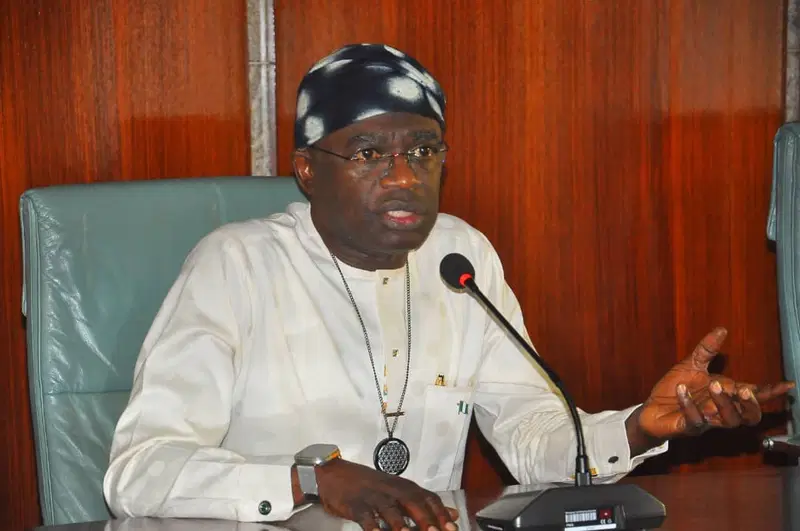
Benue State Governor, Rev. Fr. Hyacinth Alia, has pushed back against allegations that the violence rocking his region qualifies as genocide.
He made his stance clear during a consultative forum on protecting the rights of Internally Displaced Persons (IDPs) and Forcibly Displaced Persons (FDPs), organised by the National Human Rights Commission (NHRC) in Abuja.
Addressing critics, Governor Alia who is also a Catholic priest dismissed recent claims of genocide as “inaccurate” and at odds with internationally accepted definitions. He emphasised that in Benue, there is no religious, ethnic, racial, national, or state genocide. “We do not have that,” he stated.
While acknowledging that communities in Benue have endured repeated security incidents, the governor insisted these attacks do not align with the United Nations’ criteria for genocide. “Do we have insecurity in the state? Yes, we do. But it is not a genocide,” he said, suggesting that people carefully study the UN’s definition before making such claims.


Governor Alia traced the roots of the conflict to longstanding tensions between agro-pastoralists and crop farmers. He explained that over the years, what began as small-scale disputes escalated into more serious violence but that escalation alone does not amount to genocide. “It began like a minor issue and then grew to huge proportions. But that does not fit the parameters of a genocide,” he said.
He warned against exaggerating the situation, especially for political gain, arguing that such mischaracterisation could politicise a grave security concern. “For those who seek to politicise everything, there is no genocide in Benue State. But we do have security challenges,” Alia added.
His remarks come amid sustained international scrutiny. The U.S. government had previously identified Nigeria as a “Country of Particular Concern,” and former President Donald Trump publicly expressed alarm over reports of attacks on Christian communities in the country.