


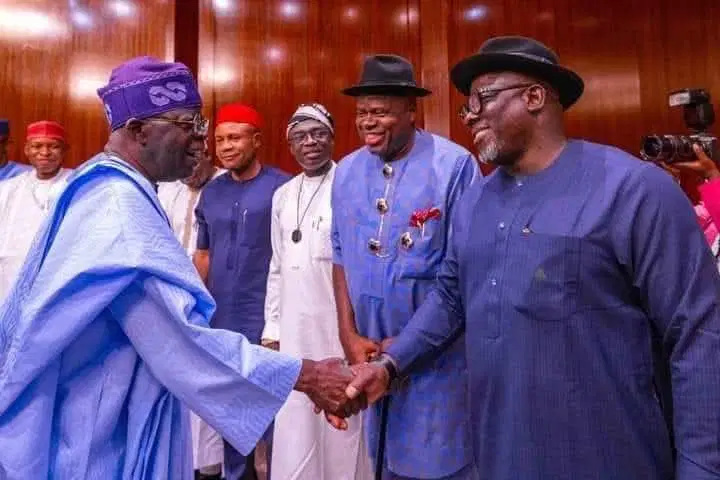
Members of the ruling All Progressives Congress (APC) who helped build the party from its foundation are pushing back against recent moves by high-profile defectors seeking to dominate its structures.
Reports from Abuja reveal that founding loyalists are warning against attempts by newcomers to “hijack” key organs of the party unless proper power-sharing arrangements are clearly outlined.
The growing resistance is evident across several states, including Kano, Delta, Enugu, Plateau, and Osun, where long-serving stalwarts fear being sidelined. In Delta State, loyalists aligned with former Deputy Senate President Ovie Omo-Agege have expressed concern that since Governor Sheriff Oborevwori’s defection from the Peoples Democratic Party (PDP) to the APC, the original structure led by Omo-Agege has been relegated in favour of the new entrant’s camp.
The tension is also high in Kano, where efforts to bring former Governor Rabiu Musa Kwankwaso of the New Nigeria Peoples Party (NNPP) into the APC have unsettled existing members. Reports indicate that Kwankwaso has demanded that his political movement, the Kwankwasiyya Group, be fully accommodated before he can give full backing to the APC.


Some founding members believe that welcoming defectors without defining their limits is causing confusion and tension ahead of the 2027 general elections. They argue that those who have been loyal since the APC’s inception deserve to maintain strong influence in decision-making, saying the current approach threatens to divide the party’s unity.
However, others within the ruling party argue that attracting influential figures from outside remains essential for electoral growth. They insist that such alliances are part of political strategy and that the presence of defectors can help strengthen the APC’s national reach and enhance its chances in future polls.
As the internal struggle continues, political observers warn that the APC’s ability to manage the situation will determine whether it stays united or faces internal fragmentation. The outcome of this power tussle, they say, will influence who controls key party organs, appointments, and campaign structures ahead of the next election cycle.