


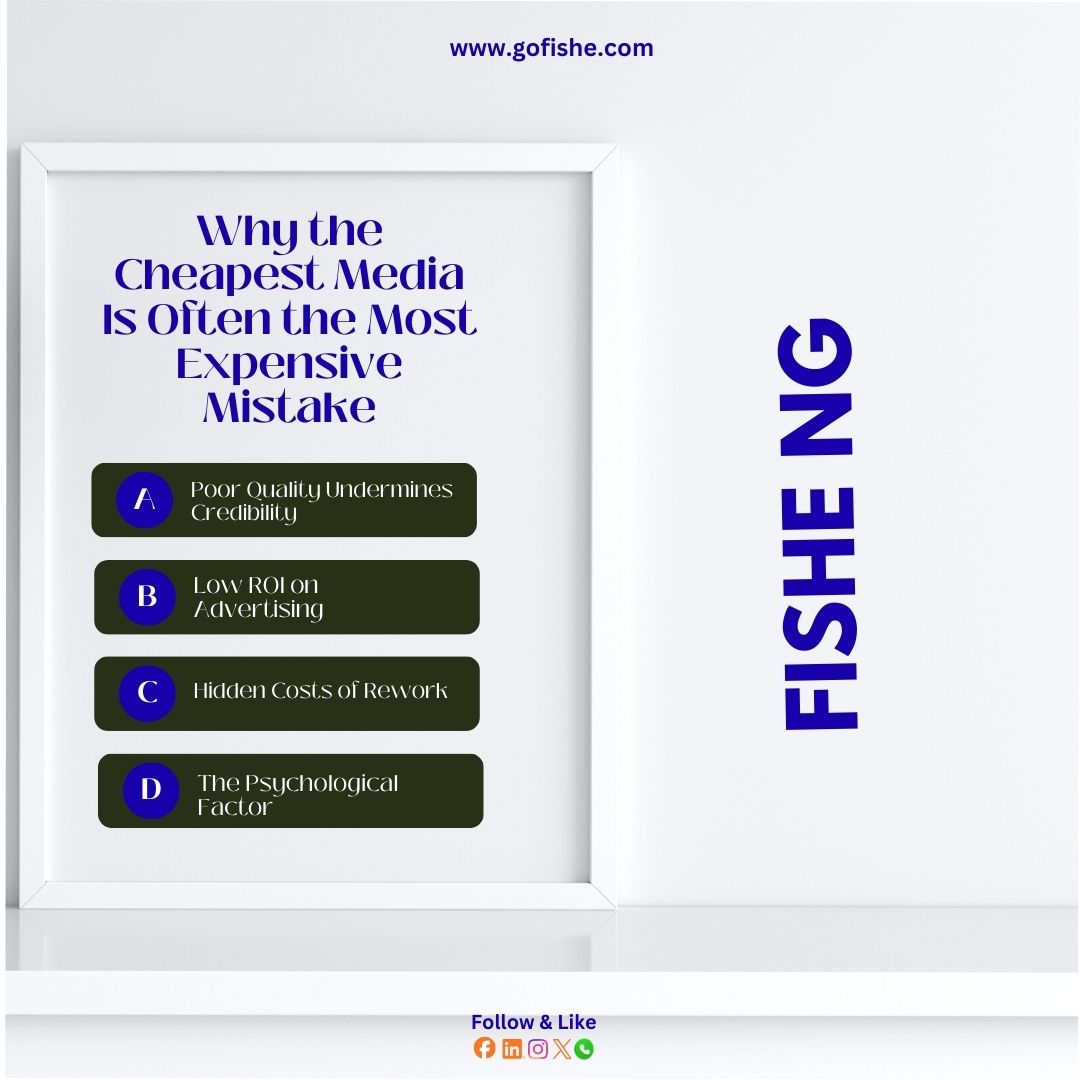
In the fast-paced world of marketing, content production, and media buying, the lure of low-cost options is ever-present. It’s tempting to opt for the cheapest media, whether it’s digital advertising, video production, or social media management.
On the surface, this seems like a prudent decision—after all, why spend more when a cheaper alternative is available? However, the reality is that choosing the lowest-cost media can often become the most expensive mistake a business can make. Here’s why.
1. Poor Quality Undermines Credibility
One of the most immediate consequences of selecting cheap media is compromised quality. Low-cost video production, graphics, or content often lack polish, professionalism, and creativity. In a crowded marketplace, quality signals credibility. Audiences subconsciously judge brands based on the aesthetics and professionalism of their media.
A poorly produced video or low-quality social media post can make a brand appear amateurish, reducing trust and engagement. Over time, this erodes the brand’s reputation—a cost far greater than the initial savings. In marketing, perception often equals reality. Skimping on quality sends the message that your brand does not value excellence.

2. Low ROI on Advertising
When it comes to advertising, cheap media placements often yield subpar results. Budget placements may reach the wrong audience, appear in low-traffic or irrelevant channels, or lack strategic targeting. While the upfront cost is low, the return on investment (ROI) can be disastrous because the campaigns fail to generate meaningful leads or conversions.
For example, a low-cost display ad campaign might reach thousands of viewers but generate few clicks or sales. In contrast, a more strategic, higher-quality campaign targeted to the right audience may cost more initially but deliver exponentially higher ROI. In media buying, “you get what you pay for” is rarely more true than when considering long-term returns.

3. Hidden Costs of Rework
Cheap media often comes with a high probability of errors, omissions, or misalignment with brand messaging. These mistakes are rarely final—they require revisions, corrections, or complete overhauls. The time and resources spent fixing low-cost media can quickly exceed the savings initially achieved.
For instance, a company might commission inexpensive graphic design for a product launch, only to realize the visuals do not comply with brand guidelines. Correcting this involves additional designer hours, delayed timelines, and potentially missed market opportunities. The “hidden costs” of low-cost media can make the initial savings negligible or even negative.
4. Short-Term Savings vs. Long-Term Damage
Cheaper media often delivers short-term savings but may harm long-term business objectives. Brand consistency, audience engagement, and professional storytelling are investments, not expenses. Cutting corners for immediate cost savings can result in a loss of customer loyalty, reduced engagement, and a weakened competitive position.
In contrast, investing in high-quality media supports brand growth, fosters trust, and enhances customer experience. While the upfront cost may be higher, the long-term benefits—including customer retention and reputation—far outweigh the initial outlay.
5. Missed Opportunities for Innovation
Cost-cutting often stifles creativity and innovation. High-quality media production allows experimentation with new formats, storytelling techniques, and interactive experiences. Cheap media typically lacks the resources and expertise to push creative boundaries.
For example, a professional video production company can craft immersive content that resonates with audiences, generates buzz, and encourages sharing. A low-cost alternative might only produce generic content that fails to capture attention. By focusing solely on minimizing costs, brands miss the chance to differentiate themselves and create memorable experiences.
6. The Psychological Factor
Humans are wired to associate quality with value. When a brand consistently delivers high-quality media, audiences perceive it as authoritative and trustworthy. Conversely, low-quality or cheap media can subconsciously signal that a brand is cutting corners or lacks competence. This perception can influence purchasing decisions, engagement, and even word-of-mouth referrals.
Conclusion: Investing Wisely, Not Cheaply
The cheapest media is often the most expensive mistake because it undermines credibility, delivers low ROI, incurs hidden rework costs, damages long-term brand health, limits innovation, and negatively shapes audience perception. In marketing and media, quality is not an optional expense—it is a strategic investment.
The key is not to spend recklessly but to invest wisely. Prioritize media that aligns with brand goals, reaches the right audience, and delivers measurable impact. In doing so, businesses turn media expenditures into growth opportunities rather than costly regrets.
In short: spending a little more upfront can save a lot more down the road—and your brand’s reputation is worth every penny.
Ready to Stop Guessing and Start Winning?
At Fishe Media, we don’t sell cheap impressions, rushed content, or recycled ideas.
We build media partnerships that move brands forward—strategically, creatively, and measurably.
If you’re ready to:
-
Elevate your brand with intentional storytelling
-
Reach the right audience, not just a loud one
-
Invest in media that drives growth, not excuses
Then it’s time to partner with a team that treats your brand like its own.
Let’s create media that works as hard as you do.
Partner with Fishe Media today—and turn every campaign into an asset, not an expense.