


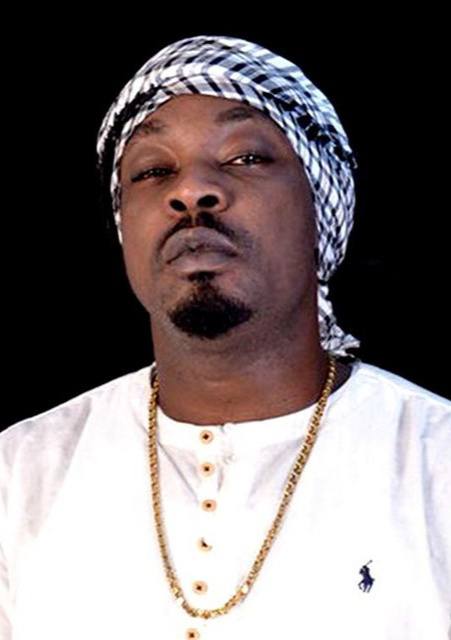
Nigerian rapper and veteran socio-political critic, Eedris Abdulkareem, says his Facebook and Instagram accounts have been suspended—an action he believes is directly linked to the release of his latest protest track, ‘Open Letter to Donald Trump’.
The suspension, which reportedly occurred just days after the song’s debut, has reignited conversations about digital censorship and the increasing suppression of dissenting voices in Nigeria’s political and artistic landscape.
“I Can’t Access My Accounts” — Abdulkareem Raises Alarm
In a statement first reported by SaharaReporters on Sunday, Abdulkareem revealed that both accounts became inaccessible shortly after the new track went live.
“Facebook just suspended my Facebook and Instagram account because of my new song, Open Letter to Donald Trump. I can’t access it,” he said.
Independent checks confirmed that the pages had indeed been taken offline. As of the time of this report, Meta, the parent company of Facebook and Instagram, had not provided the artiste with any official explanation or timeline regarding the suspension.


A Song Addressed to Trump, But Targeting Nigeria’s Political Class
Released in November 2025 under his label, Lakreem Entertainment, Open Letter to Donald Trump is structured as a direct message to the U.S. President. But beneath its framing, the song is an unflinching critique of Nigerian governance.
True to Abdulkareem’s decades-long tradition of confronting power through music, the track denounces Nigeria’s political elite, accusing them of:
-
Enriching themselves at the expense of ordinary citizens
-
Fueling or failing to curb insecurity
-
Allowing kidnappings, killings, and terrorism to fester
In one of the most searing lines, he describes the ruling class as:
“Criminals of all shades and hues”
The song attempts to draw international attention—particularly from the U.S.—to Nigeria’s worsening crises, echoing Abdulkareem’s long-standing advocacy for global accountability in African governance.
A Career Defined by Protest Music and Confrontation With Authority
Sunday’s suspension is not the first time Abdulkareem’s political expression has collided with powerful institutions.
His 2004 hit; Jaga Jaga, a caustic portrayal of corruption and social decay, was infamously banned by the Nigerian government at the time. Despite the backlash, the track became one of the most defining protest songs of the Fourth Republic.
More recently, in 2025, his single Tell Your Papa was banned by the National Broadcasting Commission (NBC), for containing allegedly “objectionable lyrics.” The ban prohibited radio and television stations across Nigeria from airing the track, a move widely criticized by activists as another attempt to silence artistic dissent.
Through such controversies, Abdulkareem has cultivated a reputation as one of Nigeria’s most outspoken musical dissidents, using his music as a tool to challenge authority, confront injustice, and call out what he considers the failures of the political elite.
Longstanding Feuds: Abdulkareem vs. Burna Boy
The rapper’s confrontational streak has not been limited to politics. In 2020, Abdulkareem publicly criticized Grammy-winning Afrofusion star, Burna Boy, accusing him of profiting off Afrobeat pioneer, Fela Anikulapo Kuti without giving due credit.
The clash began after Burna Boy tweeted—before deleting—that no one had “paved the way” for him in the Nigerian music industry. Abdulkareem responded sharply in an interview:
“I think, with due respect, Burna Boy needs to apologise. Fela made it happen for you, and you stole a lot from Fela’s songs to become who you are. You stole from Afrobeats to become who you are.”
He argued that while Fela’s music delivered deep philosophical and political messages, much of Burna Boy’s work draws heavily from Afrobeat’s sound and style without acknowledging its origins.
“Even though Fela’s songs are strictly about messages that add value to the lives of people, what is your song about?” he asked.
The episode added to Abdulkareem’s public persona as a guardian of political consciousness within our nation’s music—someone unafraid to challenge both government and fellow artists.
Censorship or Compliance? The Bigger Implication of Meta’s Action
Meta has yet to clarify its reason for suspending the rapper’s accounts. It remains unclear whether the action stemmed from:
-
A violation of content guidelines
-
Coordinated reporting by users
-
Automated moderation triggered by the song’s political content
-
Or external pressure
Regardless, the incident underscores growing concerns about the shrinking space for dissent, both in Nigeria’s traditional media and in the digital sphere, where many activists and creatives have turned to express views increasingly constrained offline.
A Voice Too Loud to Silence?
Eedris Abdulkareem’s career has shown a consistent pattern: when he releases politically charged music, institutions react. Whether the move by Facebook and Instagram reflects algorithmic enforcement or targeted suppression, the outcome remains the same—one of Nigeria’s boldest protest voices has been temporarily muted on major global platforms.
Yet if history is any guide, the controversy may only amplify the message of his new song—drawing even more attention to the systemic issues he seeks to highlight.