

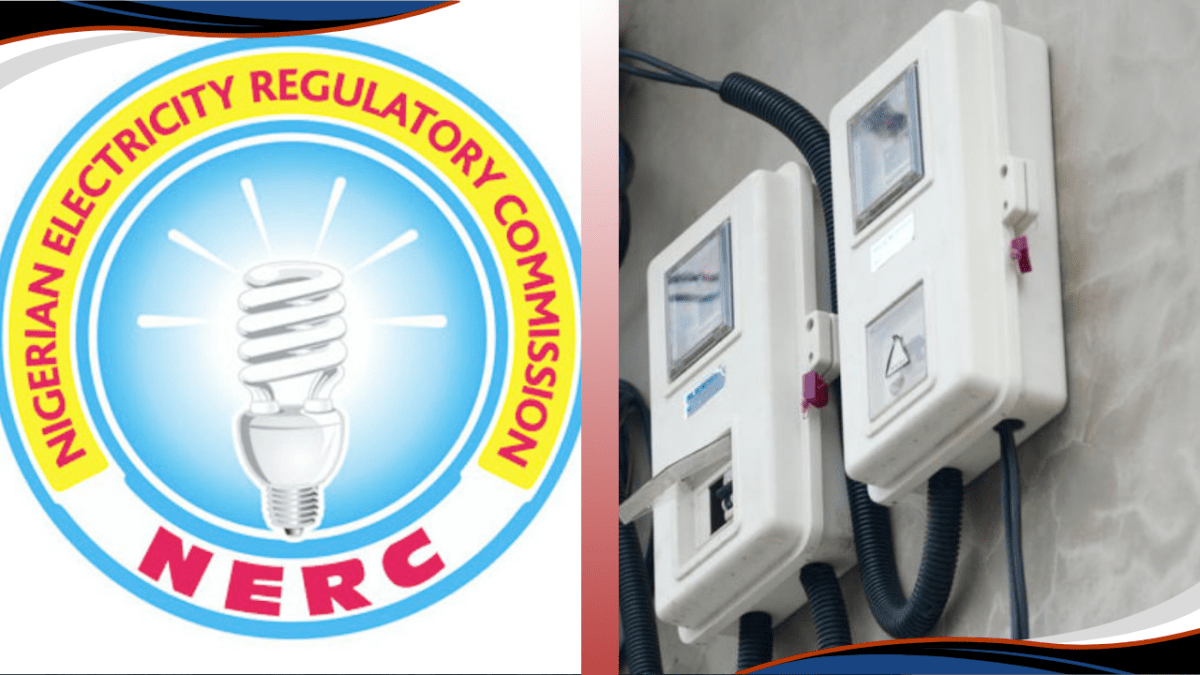
The Nigerian Electricity Regulatory Commission (NERC), has revealed a moderate but meaningful uptick in the number of metered electricity customers in Nigeria for August 2025, signalling progress in a longstanding area of concern for the country’s power sector.
Key Figures To Note
-
As of August 2025, the number of metered customers across all 11 electricity distribution companies (DisCos) reached 6,579,818.
-
This is up from 6,508,611 in July—an increase of 1.09 % month‑on‑month.
-
The total number of active electricity customers rose from 11,897,246 in July to 11,960,101 in August – about a 0.53 % increase.

-
The overall metering rate (i.e., the share of active customers who are metered) for August was 55.01 %, up from 54.71 % in July.
-
In August, DisCos installed metres for 70,888 new customers, compared to 76,783 in July.
What This Means
The numbers reflect incremental but positive movement towards closing Nigeria’s metering gap – a long‑standing challenge in the power sector. Accurately metering customers is crucial because:
-
It reduces reliance on estimated billing, which often leads to disputes, lack of transparency and revenue losses.
-
It helps DisCos improve customer service, billing accuracy and financial viability.
-
A higher metering rate implies greater trust and accountability between consumers and utility operators.
NERC’s report shows that some DisCos are performing significantly better than others. For example:
-
Ikeja Electric: 84.83% metered rate.
-
Eko Electricity Distribution Company: 84.25%.
-
Abuja Electricity Distribution Company: 73.92%.
These serve as benchmarks for other DisCos to strive toward.
But Challenges Remain
Despite the progress, a significant portion of customers remain un‑metered: approximately 44.99% (i.e., about 5.38 million of the 11.96 million active customers) are still either un‑metered or on estimated billing.
This gap underlines several persistent issues:
-
The pace of metering is still modest, as indicated by the drop in new meters installed from July to August (76,783 → 70,888).
-
Disparities among DisCos remain wide: while some are above 80% metered, others are well below-such as Yola Electricity Distribution Company (28.65%), Jos Electricity Distribution Company (29.61%) and Kaduna Electric (33.60%).
-
Meter asset financing, logistics, infrastructure and investment remain hurdles.
Furthermore, while metering expands, the underlying issues of consistent power supply, infrastructure losses, revenue collection and overall grid performance continue to limit the broader impact of metering alone.
Broader Context & Implications
-
The increase in metered customers and the metering rate may improve revenue collection for the power sector-an important goal given the financial stress many DisCos face.
-
For customers, metering should lead to fairer bills and greater confidence that what they pay for corresponds more closely to what they consume.
-
For policymakers and regulators, the data provides measurable progress and allows targeting of lagging DisCos and regions.
-
The continued focus on Band A and Band B customers, those usually higher consumption/high tariff categories—means that closing the metering gap in those segments can deliver larger revenue benefits.
For example, NERC recently approved ₦28 billion under Tranche B of the Meter Acquisition Fund (MAF) specifically for Band A/B metering.
Concluding Thoughts
The August 2025 metering figures from NERC show cause for cautious optimism. The milestone of over 6.57 million metered customers is meaningful-but it is just one part of a much larger equation.
Nigeria’s power sector remains under pressure from infrastructure deficits, systemic losses, financing gaps, and uneven performance across DisCos.
If the momentum on metering can be sustained—and paired with improvements in supply, billing accuracy, collection efficiency and customer service, the gains will become more visible and impactful. For now, the trend is positive, and the challenge is to accelerate it.
