

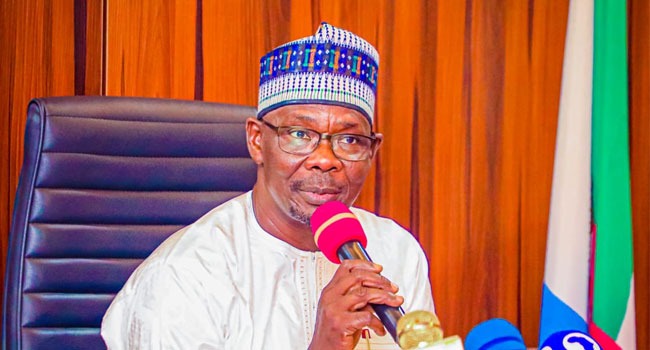
Nasarawa State Governor Abdullahi Sule has urged the National Assembly to establish special courts dedicated to handling corruption cases in the country.
According to Sule, creating such courts would speed up the hearing and determination of corruption cases, which is crucial in the fight against graft.
Sule made this call at the combined passing-out parade of 404 cadets of the Economic and Financial Crimes Commission (EFCC) held at the Nigeria Police Mobile Force Training College in Ende Hills, Akwanga Local Government Area. He commended the EFCC for its rigorous training program and successes in the anti-corruption fight, which resulted in over 4,000 convictions last year.
The governor expressed concern that the impact of the EFCC’s work is being undermined by delays in the justice system, risking the possibility that individuals charged with corruption might escape justice. “I call on the members of the National Assembly to consider a special court to try cases of corruption in the country,” Sule said. “Once we do that, then we can have a country that people are happy with.”

Sule emphasized that demonstrating a serious and efficient judicial process for corruption will significantly enhance Nigeria’s reputation on the global stage, showing the world that the nation is serious about tackling graft. The governor thanked the EFCC Chairman, Ola Olukoyede, for his commitment to integrity and commended the members of the National Assembly for their past support, urging them to take further steps to strengthen the fight against corruption.
The EFCC is presently managing about 18,000 cases of corruption in Nigeria, with thousands of ongoing investigations and petitions yet to be taken to court. According to Sule, the ongoing review of the 1999 Constitution presents a window of opportunity for the National Assembly to consider and enact significant changes to strengthen national institutions.
The establishment of special courts would help to address the delays in the justice system and ensure that corruption cases are handled efficiently. This development is seen as a positive step towards strengthening Nigeria’s anti-corruption efforts and promoting transparency and accountability in governance.
