

NCAA Mandates Passengers Switch Off Phones During Flights.
The Nigeria Civil Aviation Authority (NCAA) has introduced a stringent new regulation requiring all passengers to switch off their mobile phones and other electronic devices during aircraft take-off and landing. The directive, announced today by Michael Achimugu, NCAA’s Director of Public Affairs and Consumer Protection, follows an emergency meeting with aviation stakeholders aimed at bolstering flight safety across Nigeria.
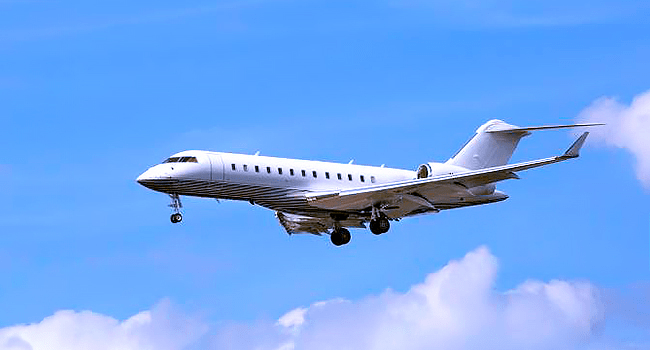
The decision comes in response to recent incidents of unruly passenger behaviour at Nigerian airports, which have raised concerns about safety and compliance with aviation protocols. Captain Chris Najomo, NCAA Director-General, revealed the new rule during a National Civil Aviation Security Committee (NCASC) meeting in Abuja. He emphasised that the measure is designed to prevent potential interference with aircraft systems, particularly during the critical phases of take-off and landing. A memo will be sent to all airlines to update their protocols to reflect this unified regulation, ensuring that no electronic devices are powered on during these periods.

Achimugu stressed the importance of passenger compliance, stating, “It is mandatory for all passengers to obey the instructions of the pilot and cabin crew. While passengers seek to enforce their rights, they must also fulfil their responsibilities to ensure flight safety.” He noted that the NCAA’s approach in Nigeria is relatively lenient compared to international standards, where unruly behaviour is often met with severe consequences, even for cooperative passengers. The authority hopes this directive will deter non-compliance and enhance safety.
The NCAA’s move is grounded in global aviation concerns about electromagnetic interference from mobile phones and other devices. Although modern aircraft are equipped with shielding to minimise disruptions, experts warn that radio signals emitted by phones searching for networks can still pose risks to sensitive cockpit instruments, such as navigation and communication systems, especially below 3,000 metres (10,000 feet). A 2006 analysis cited 77 cases of suspected electronic interference, while the International Air Transport Association recorded 75 incidents between 2003 and 2009 where pilots believed mobile phones were the cause.
Nigeria’s aviation laws, under Section 85(3) of the NCAA Act 2022, explicitly prohibit the use of electronic devices during take-off and landing, with penalties including fines up to N200,000 or imprisonment for at least two months. Legal experts, including Professor Mustapha Adua, Nigeria’s first professor of aviation law, have underscored the legal basis for these rules, noting that non-compliance constitutes a criminal offence. However, passengers may be permitted to use devices in flight mode during cruising altitude, subject to airline discretion.
The directive has sparked mixed reactions. Some passengers argue that the risk of interference is overstated, pointing out that no plane crash has been directly linked to mobile phone use. Others support the measure, citing the need for caution during critical flight phases. The NCAA has urged travellers to comply fully, warning that failure to do so could lead to prosecution or removal from flights.
As Nigeria’s aviation sector works to maintain public trust, the NCAA’s latest regulation underscores its commitment to safety. The authority has also highlighted the importance of ongoing training for airline staff to manage passenger behaviour effectively. For now, travellers are reminded to switch off their devices during take-off and landing, ensuring a safer and smoother journey for all.
