


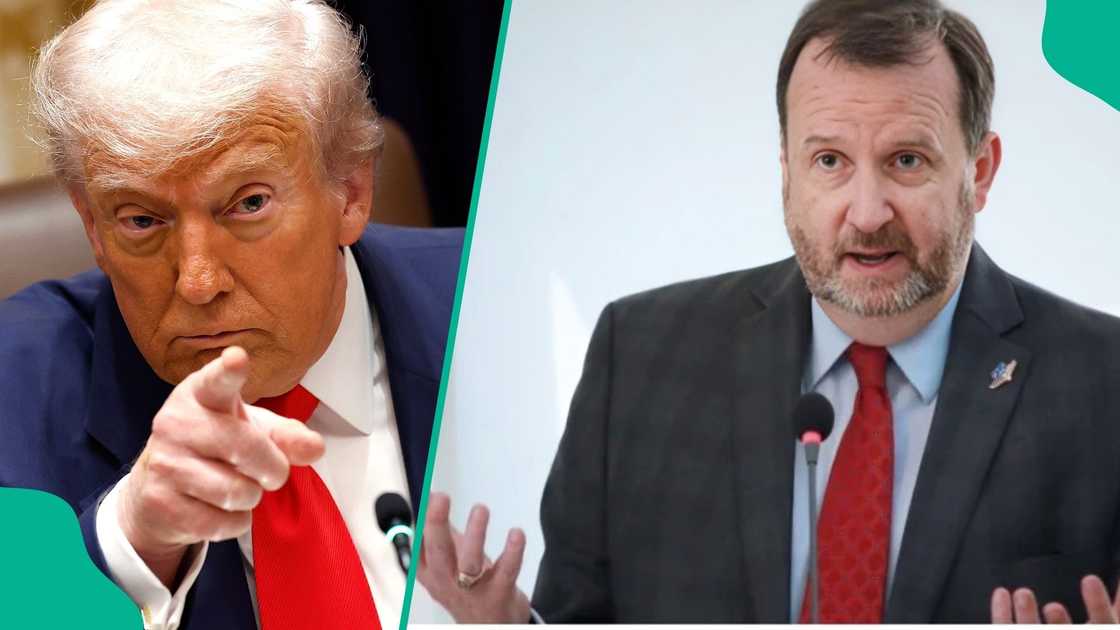
US President, Donald Trump has reportedly recalled the United States Ambassador to Nigeria, Richard Mills, along with a wide slate of other career diplomats, in a decisive move to bring America’s overseas representation firmly in line with his “America First” foreign policy agenda.
The recalls, mark a deliberate effort by the Trump administration to ensure that US ambassadors abroad are unequivocally aligned with the president’s priorities, values, and strategic direction.
Who’s Affected — And When
A State Department official confirmed that the diplomats affected by the shake-up were appointed during the administration of former President Joe Biden. Their tenures as ambassadors and chiefs of mission will formally end in January.
Importantly, the recalls do not amount to dismissals. The officials involved may return to Washington and continue serving in other roles within the State Department, should they choose. What ends, however, is their authority as the president’s personal representatives abroad.


Africa Bears the Brunt
Africa has emerged as the region most affected by the decision. Ambassadors from at least 13 African countries have reportedly been recalled, including those serving in:
-
Nigeria
-
Burundi
-
Cameroon
-
Côte d’Ivoire
-
Senegal
-
Uganda
Beyond Africa, the recalls extend across the Asia-Pacific, Europe, the Middle East, South Asia, and the Western Hemisphere, signaling a global recalibration rather than a region-specific response.
State Department: ‘This Is Standard Practice’
The US State Department moved quickly to frame the action as routine. In a statement, it stressed that ambassadors serve at the pleasure of the president and are expected to advance the administration’s policy agenda.
“An ambassador is a personal representative of the president, and it is the president’s right to ensure that he has individuals in these countries who advance the America First agenda,” the department said.
Officials also emphasized that the recalled diplomats remain valued members of the foreign service.
Nigeria in Focus: Why This Recall Matters
The recall of the US ambassador to Nigeria has drawn particular attention given Nigeria’s strategic importance to Washington. As Africa’s most populous country and a central partner in West Africa, Nigeria plays a critical role in regional security, counterterrorism efforts, economic cooperation, public health, and democratic governance.
A sudden change in diplomatic leadership, analysts note, can influence the momentum of ongoing engagements and negotiations, even if institutional ties remain intact.
Applause and Pushback in Washington
The move has triggered mixed reactions in the US. Some lawmakers and the American Foreign Service Association, which represents US diplomats, have raised concerns about disruption and loss of continuity in US foreign relations.
Supporters of the recalls, however, argue that the president is exercising a core constitutional authority. From their perspective, diplomacy works best when ambassadors are fully aligned with the elected president’s vision rather than operating on inherited mandates.
A Defining Style of Governance
While ambassadorial recalls are not unprecedented, they are uncommon on this scale and outside moments of major diplomatic crisis. The breadth of this action reinforces a defining feature of Trump’s leadership style: direct control, clear lines of loyalty, and an unapologetic willingness to upend convention.
Bottom Line
For Nigeria and other affected countries, the recall underscores a simple reality of US diplomacy: administrations change, priorities shift, but bilateral relationships must endure beyond individual envoys.
For Trump, the message is equally unmistakable — America’s diplomats abroad will reflect his agenda, or make way for those who will.