


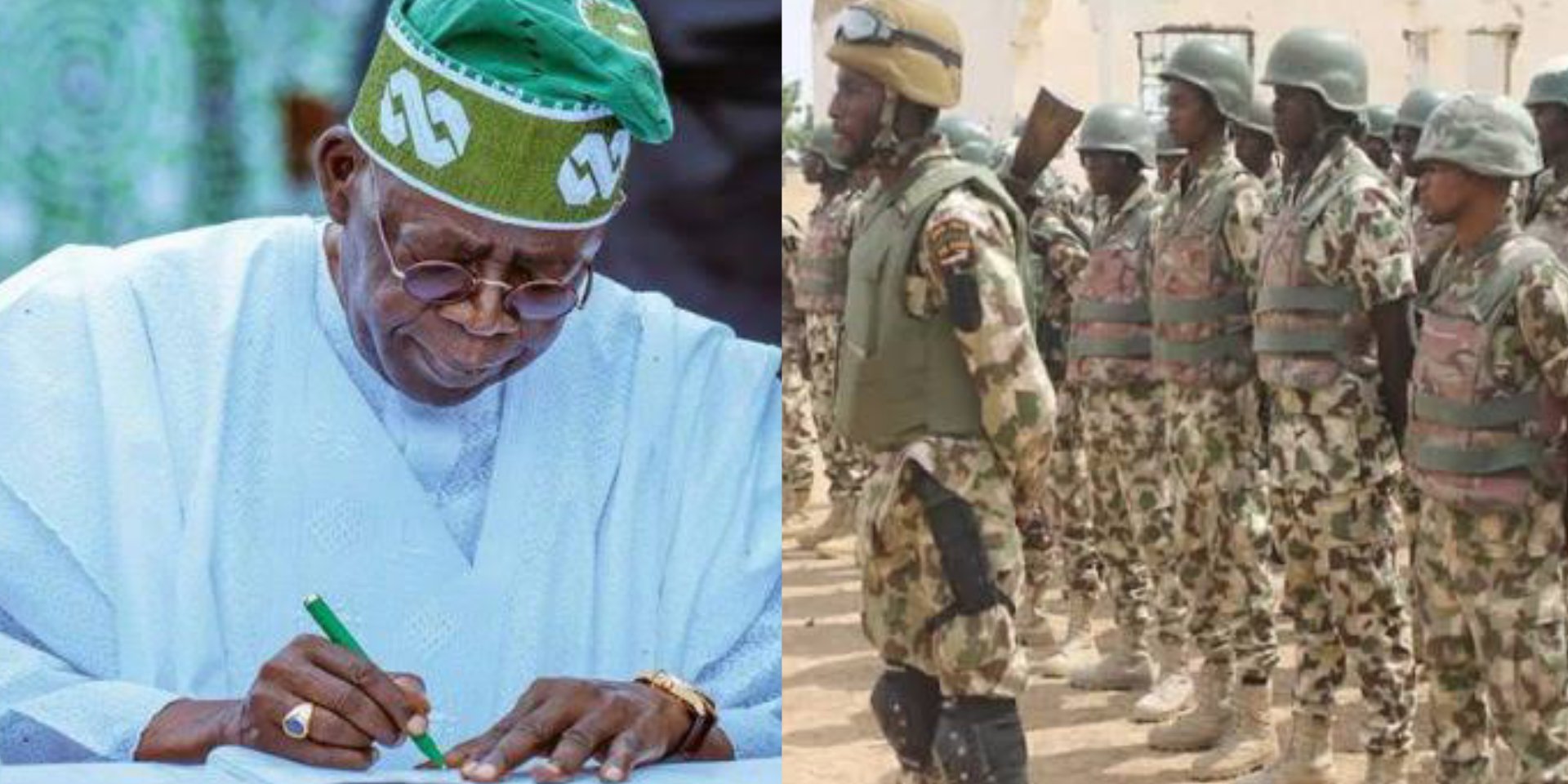
Abuja, Nigeria – December 9, 2025 – The Nigerian Senate has granted approval for President Bola Ahmed Tinubu’s request to deploy Nigerian troops to the Republic of Benin, marking a significant regional intervention aimed at stabilising the neighbouring country following a recent coup attempt.
Tinubu’s Request
President Tinubu formally submitted a letter to the Senate seeking consent for the deployment of Nigerian troops. The letter, read during plenary by the Senate President, cited constitutional provisions that allow the President, in consultation with the National Defence Council, to deploy the armed forces abroad, followed by timely Senate approval.
The letter emphasized the urgent need for military assistance to help restore constitutional order in Benin Republic after an attempted military coup.
According to the President’s submission, Beninese authorities had requested Nigeria’s support to stabilise key government institutions, safeguard civilians, and prevent further escalation of the crisis.

“Considering the strategic partnership between Nigeria and the Republic of Benin, and our shared commitment to regional security, I hereby seek the Senate’s consent for the deployment of our Armed Forces in support of the Beninese government,” the President stated in the communication.
Senate Approval
In response, the Nigerian Senate led by Godswill Akpabio deliberated on the matter and granted consent for the deployment, describing the intervention as a “peace mission” in line with Nigeria’s regional and constitutional responsibilities. Senators highlighted the urgent nature of the Beninese crisis and underscored the importance of upholding democratic governance in West Africa.
The approval permits the Nigerian Air Force to operate within Beninese airspace and for ground forces to assist local troops in stabilising the country. The deployment is framed as limited in scope, focused on restoring constitutional order rather than conducting independent military operations.
Background and Context
The intervention follows a coup attempt in Benin in which a faction of soldiers reportedly attempted to seize government control, briefly taking over the national TV station and attacking military facilities. The Beninese government formally requested Nigeria’s assistance, highlighting the urgent need to restore stability.
The deployment aligns with Nigeria’s role as a regional leader under the Economic Community of West African States (ECOWAS), and signals the country’s commitment to defending democracy and preventing the spread of political instability in the region.
Legal and Regional Significance
The operation has drawn attention to Nigeria’s constitutional framework for foreign military deployment. While the President holds authority to deploy troops abroad, Senate approval is a critical requirement under Section 5, Subsection 5, of the 1999 Constitution (as amended). This ensures legislative oversight over interventions beyond Nigeria’s borders.
Analysts suggest the Senate’s swift approval may serve as a precedent for future interventions where Nigeria’s involvement is requested to maintain regional stability. However, some legal experts have raised concerns over the interpretation of “imminent threat” to Nigeria and the potential implications for domestic accountability.
Looking Ahead
As Nigerian forces integrate with Beninese military units, attention will focus on the effectiveness of the stabilisation mission and its impact on regional democracy. Observers also note that the operation could shape Nigeria’s foreign policy and its role in responding to crises in West Africa.
By combining constitutional authority, regional solidarity, and rapid legislative consent, Nigeria has taken a decisive step in supporting a neighbouring democracy in turmoil, reinforcing its position as a key actor in West African security and governance.
