


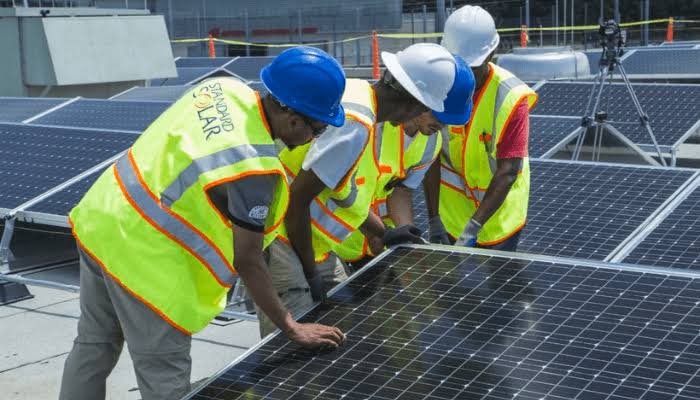
The Federal Government of Nigeria has partnered with private sector investors to boost local battery production and expand access to cheaper, cleaner fuel alternatives.
The initiative aims to bridge the country’s energy gap, create jobs, and localize technology production. The government has taken decisive steps to promote local lithium battery and solar component production, with plans to attract investors and set up local factories.
The CEO of the Energy Commission of Nigeria, Mustapha Abdullahi, revealed that the government is in talks with investors to scale up production and generate employment opportunities. “Nigeria is very rich in terms of mineral resources. We have lithium in almost every state in the country. And it baffles us why Nigeria is still importing lithium batteries,” he said. The commission has also launched a pilot solar panel factory and plans to ban the importation of lithium batteries and solar panels once local production increases.
Abdullahi further stated that the government is committed to integrating renewable energy into the country’s energy mix. “The President wants to give 30 per cent of our energy mix to be renewable from renewable energy. That means our strategy is on solar, is on wind, and is on hydro, not on gas anymore.” This move is expected to reduce reliance on petrol and imported technology, lower energy costs, and create thousands of jobs for youths.

The Presidential Compressed Natural Gas Initiative has made significant progress in providing Nigerians with cheaper fuel alternatives, with over 100,000 cars converted to CNG and a target of one million conversions by 2027. Jide Awolowo, Investment Facilitation Coordinator for the initiative, said, “We have converted over 100,000 cars. What the PICNG is supposed to do is move people away from petrol. So as you know, once the fuel subsidy was removed, petrol prices became much more expensive.” The initiative has also attracted over $1 billion in investments from the private sector and created employment opportunities in the CNG sector.
The government’s efforts to promote renewable energy and local technology production are expected to have a significant impact on the country’s energy sector. With a strong push to manufacture lithium batteries domestically, Nigeria is taking a significant step towards a greener and more sustainable energy future. The initiative is also expected to create career pathways for youths in innovative technologies and provide economic opportunities.
