


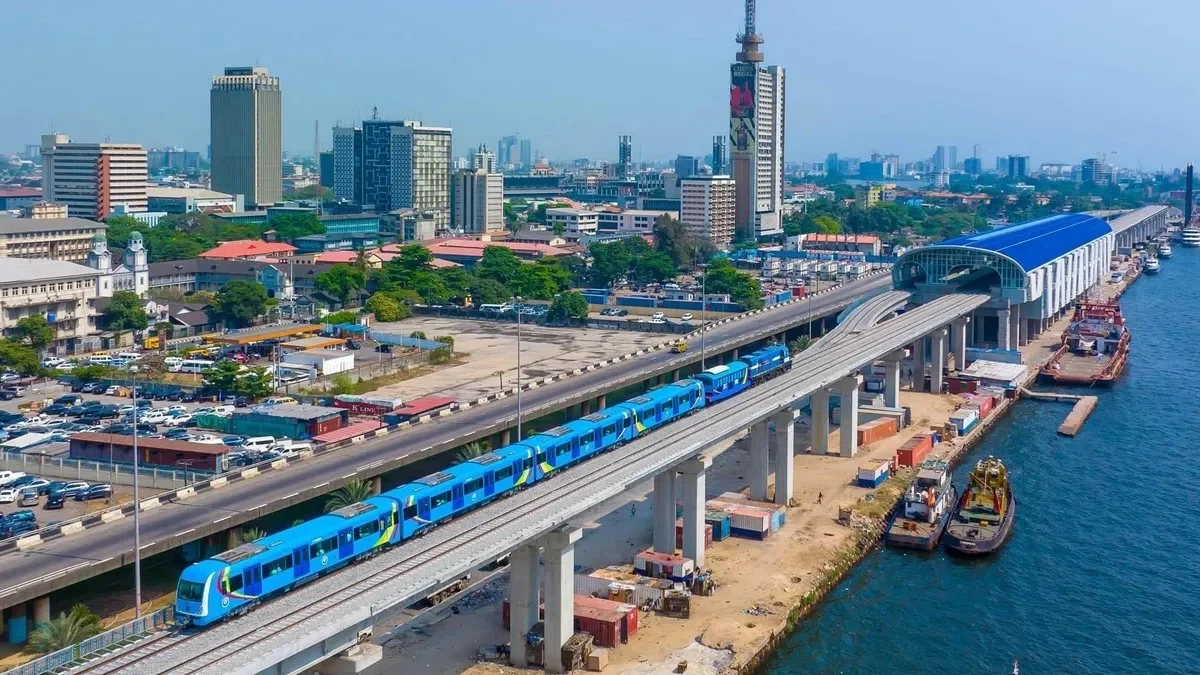
Nigeria Embarks On ₦97.2 Trillion High-Speed Rail Project To Transform Transport.
The Federal Government of Nigeria, in collaboration with De-Sadal Nigeria Limited and China Liancai Petroleum Investment Holdings Limited, has unveiled plans for a monumental ₦97.2 trillion ($60 billion) high-speed rail and gas infrastructure project. Announced on Tuesday, 12 August 2025, in Abuja, the initiative aims to revolutionise transportation and bolster economic growth across the nation.
The consortium, led by De-Sadal Nigeria Limited, presented proof of funds to Senator George Akume, Secretary to the Government of the Federation, in a ceremony attended by key officials, including Transportation Minister Sa’idu Alkali and Minister of State for Petroleum Resources (Gas), Ekperikpe Ekpo. Samuel Uko, CEO of De-Sadal Nigeria Limited, outlined the project’s ambitious scope, with the first phase focusing on connecting four major cities—Lagos, Abuja, Kano, and Port Harcourt—through a 1,600-kilometre high-speed rail network.

The ₦89.1 trillion ($55 billion) first phase, funded primarily by the Asian Development Investment Bank, is expected to be completed within 36 months, with sections operational even sooner. “Once we complete segments, such as Lagos to Lokoja, commuters in those states can start using the trains,” Uko explained. The rail system will be powered by a complementary gas infrastructure project, ensuring reliable energy supply and promoting sustainable operations.
Senator Akume assured that the government would rigorously verify the financial commitments, emphasising Nigeria’s business-friendly environment under President Bola Tinubu’s administration. “This is a standard procedure to ensure the project’s viability,” he noted. Transportation Minister Alkali highlighted the project’s alignment with the government’s goal of delivering safe, affordable transport, with the Infrastructure Concession Regulatory Commission (ICRC) having approved the outline business case.
The initiative also addresses Nigeria’s vast gas reserves, with Ekpo confirming the availability of over 210 trillion cubic feet of proven reserves to support the rail’s energy needs. This integrated approach aims to save Nigeria approximately ₦2.75 trillion annually by reducing reliance on costly fuel transportation logistics, building on efforts like Dangote Refinery’s recent petrol price reduction from ₦850 to ₦820 per litre.
Public response has been overwhelmingly positive, with commuters and businesses anticipating reduced travel times and costs. “A high-speed rail connecting Lagos to Abuja will change how we do business,” said Chinedu Okeke, a trader in Kano. However, some stakeholders have called for transparency to ensure the project benefits all regions equitably.
Spanning 4,000 kilometres upon completion, the rail network is poised to position Nigeria as a leader in African transportation infrastructure. As the project progresses, it promises to enhance connectivity, drive economic development, and reduce carbon emissions, aligning with global sustainability goals. The Federal Government has urged stakeholders to support this transformative venture, with the next steps involving the submission of a full business case to the Federal Executive Council.
