


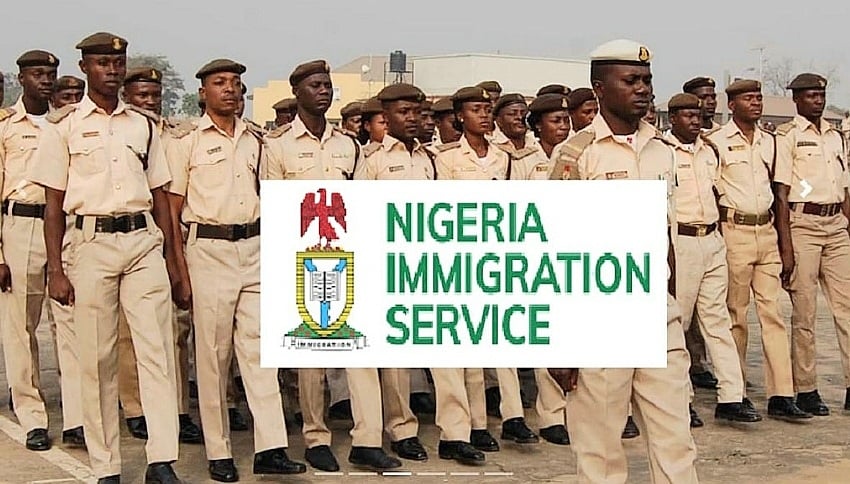
The Comptroller-General of the Nigeria Immigration Service (NIS), Kemi Nandap, has ordered the suspension—described officially as a temporary relief of duties—of commanding officers along the Lagos–Seme border corridor. This decisive action follows viral online reports and videos alleging extortion and misconduct by immigration personnel.
Nandap also directed an immediate and comprehensive investigation into the allegations, signaling a strong institutional response aimed at enforcing discipline and restoring public trust.
Background of the Lagos–Seme Border Corridor
The Lagos–Seme corridor links Nigeria to the Republic of Benin through the Seme land border in Lagos State. It is one of the busiest and most strategically important cross-border routes in West Africa.
The corridor facilitates:
- Heavy volumes of commercial goods
- Cross-border trade within the ECOWAS region
- Daily movement of travelers and migrants
However, it has long been associated with complaints of harassment, bribery demands, and operational inefficiencies by border officials, making it a persistent pressure point in Nigeria’s border management system.


Nature of the Allegations
Recent allegations emerged through widely circulated online videos and reports showing immigration personnel:
- Demanding money from travelers and transport operators
- Engaging in harassment and intimidation
- Violating established operational and ethical standards
These incidents reignited longstanding public concerns about systemic extortion along the corridor and drew significant national attention.
Official Response by the Nigeria Immigration Service
In a statement signed by the Service’s Public Relations Officer, Akinsola Akinlabi, the NIS confirmed that:
- Affected commanding officers have been temporarily relieved of their duties
- An immediate investigation has been launched to identify all officers involved
- Disciplinary measures will be applied swiftly and appropriately
The statement emphasized that the Comptroller-General:
“unequivocally condemns the actions depicted in these reports, as such conduct is unacceptable and stands in direct violation of the core values, ethics, and operational standards of the Service.”
Although the exact number of officers and affected commands was not disclosed, the Service stressed that the probe would ensure accountability for all culpable personnel.
Institutional Position and Public Engagement
The NIS reaffirmed its commitment to:
- Professional, transparent, and efficient service delivery
- Integrity and discipline in border operations
- Facilitating lawful migration without harassment
It further declared that it “will not condone any act that undermines public trust or tarnishes the integrity of the Service.”
Members of the public were encouraged to report misconduct via:
- Official social media handles (@nigimmigration on X, Instagram, Facebook)
- 24-hour contact lines: 09121900655, 09121556359, 09121477092
Historical Context and Policy Background
The Lagos–Seme border has previously been at the center of national policy actions.
Under the administration of Muhammadu Buhari, the border was shut between 2019 and 2020 as part of efforts to curb:
- Smuggling
- Illegal cross-border trade
- Security threats
While the closure aimed to strengthen border control, it attracted widespread criticism due to its economic impact on trade and livelihoods. The border was later reopened, but operational challenges—including allegations of extortion—have persisted.
Leadership and Reform Agenda
Since assuming office in January 2024, Kemi Nandap has emphasized discipline, accountability, and institutional reform.
Earlier in the year, during the decoration of newly promoted comptrollers, she charged officers to:
- Uphold the integrity of the Service
- Maintain professionalism in all operations
- Serve as ambassadors of ethical conduct
The current disciplinary action aligns with her stated commitment to reform and zero tolerance for misconduct.
Implications of the Suspension
a. Operational Impact
- Temporary disruption of leadership structures along the corridor
- Likely redeployment or appointment of interim commanders
b. Accountability and Deterrence
- Signals that senior officers are not immune to disciplinary action
- Reinforces a zero-tolerance stance on corruption
c. Public Confidence
- May help rebuild trust among traders, travelers, and transport operators
- Encourages greater public cooperation in reporting misconduct
Broader Challenges
Despite the decisive intervention, several systemic issues remain:
- Deep-rooted culture of informal payments at border points
- Weak oversight and monitoring mechanisms
- High traffic pressure along the corridor
- Need for sustained institutional reforms
Addressing these challenges will require more than disciplinary actions, including structural and policy-level improvements.
Conclusion
The suspension of Lagos–Seme border commanders marks a significant step by the Nigeria Immigration Service toward addressing persistent allegations of corruption within its ranks. By combining immediate disciplinary action with a commitment to investigation and reform, the Service has demonstrated responsiveness to public concerns.
However, the long-term success of this intervention will depend on the transparency of the investigation, enforcement of sanctions, and the implementation of sustainable reforms aimed at eliminating systemic misconduct along one of West Africa’s most critical border corridors.