


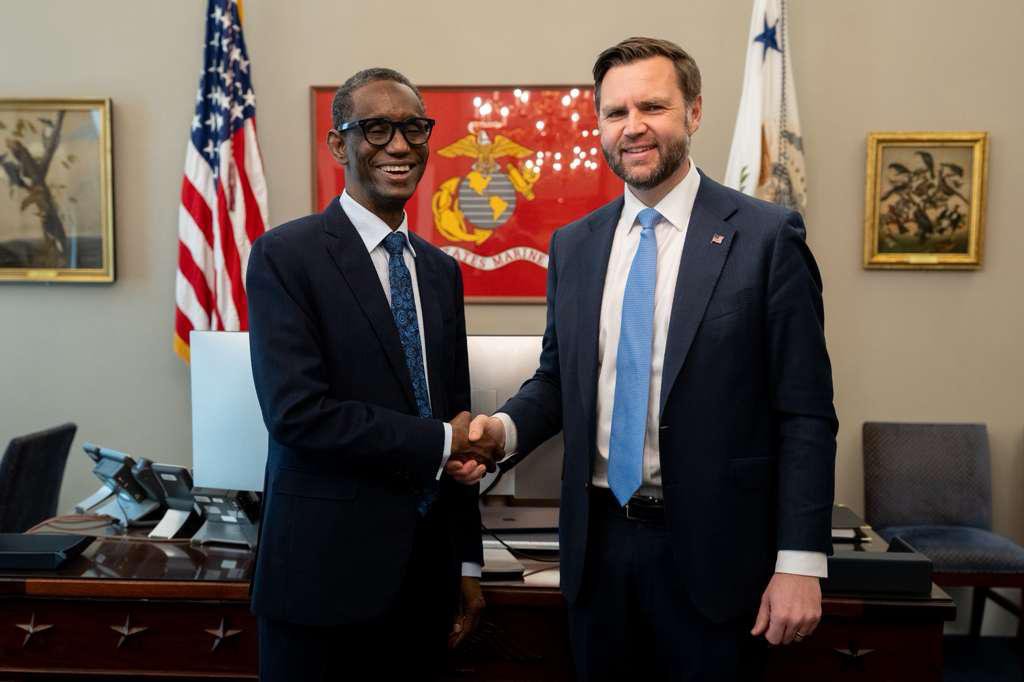
Nigeria and the United States are ramping up collaboration on security, counterterrorism, and regional stability, marking a significant step in strategic partnership.
During a three-day working visit to the U.S. from May 4 to May 6, Nigeria’s National Security Adviser, Mallam Nuhu Ribadu, engaged in a series of high-level discussions with key U.S. officials. He conveyed President Bola Ahmed Tinubu’s strong commitment to nurturing Nigeria’s long-standing strategic ties with the United States.
Ribadu met with U.S. Vice President J. D. Vance, Acting National Security Advisor Marco Rubio, Undersecretary for Political Affairs, Allison Hooker, and Assistant Secretary of War, Daniel Zimmerim.
These meetings served as a platform for both nations to assess the current state of Nigeria–U.S. relations and to bolster ongoing collaboration in areas like counterterrorism, defense cooperation, intelligence sharing, regional security, economic resilience, and democratic governance.


Ribadu highlighted the critical need for sustained cooperation to tackle the emerging security challenges facing West Africa and the broader Sahel region, particularly issues like terrorism, violent extremism, transnational organised crime, and cyber threats.
He reaffirmed Nigeria’s commitment to partnering with international allies to promote peace, stability, democratic governance, and economic development throughout Africa. Ribadu also emphasized Nigeria’s role as a regional leader and a frontline state in counterterrorism efforts across the Lake Chad Basin and West Africa.


The discussions also touched on the evolving security landscape in the Sahel, the necessity for enhanced regional cooperation, and the importance of strengthening institutional capacities to effectively respond to complex and asymmetric threats.
During a meeting with Under Secretary for Political Affairs, Allison Hooker at the U.S. Department of State, NSA Ribadu, took a moment to express Nigeria’s gratitude to the U.S. government for its ongoing support and collaboration across various sectors. He particularly highlighted areas like security assistance, intelligence sharing, defense capacity building, humanitarian aid, and counterterrorism efforts.
Ribadu reaffirmed Nigeria’s dedication to following through on the agreed roadmap set by the Nigeria–U.S. Joint Working Group (JWG), which aims to foster structured bilateral cooperation on strategic and security issues.
The two sides took the time to review the progress made under the JWG framework. They talked about practical steps to boost the implementation of agreed initiatives, such as intelligence sharing, military collaboration, counterterrorism support, border security, strategic communications, and enhancing the capabilities of Nigerian security institutions.
Discussions also underscored the need for maintaining open lines of communication and strengthening institutional coordination between the two nations to tackle shared security challenges.
The NSA seized the opportunity to update U.S. officials on the ongoing reforms and operational strategies being implemented by the Nigerian government to bolster national security, stabilise affected communities, and tackle the root causes of insecurity.
He stressed the President Bola Tinubu’s administration’s comprehensive approach, which blends both kinetic and non-kinetic strategies, including community engagement, economic development, deradicalisation initiatives, and regional partnerships.
U.S. officials praised Nigeria’s ongoing leadership in regional peace and security efforts and recognised Nigeria’s significance as a strategic partner for the United States in Africa as giant in the continent. Both parties reaffirmed their mutual commitment to democratic values, regional stability, economic collaboration, and the promotion of sustainable peace and security throughout West Africa and the Sahel for tangible overall growth.
The meetings wrapped up with both sides agreeing to strengthen their bilateral ties through ongoing diplomatic discussions, improved defense and security collaboration, and the successful execution of current initiatives under the Joint Working Group framework.
Both Nigeria and the United States shared a hopeful outlook on the future of their strategic partnership. They reiterated their commitment to working together closely to promote mutual interests and tackle shared global and regional challenges.