


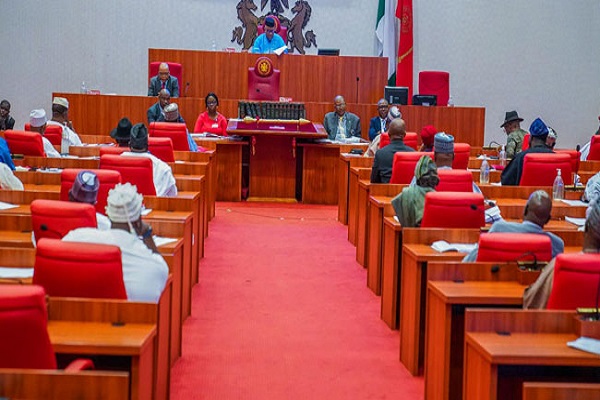
Nigerian Senate Urges Local Governments To Tap Capital Market For Infrastructure Funding.
The Nigerian Senate has called on Local Government Areas (LGAs) to explore the capital market as a viable means to fund critical infrastructure projects, moving away from reliance on federal allocations. The directive, issued by the Senate Committee on Capital Market and Institutions, aims to address Nigeria’s growing infrastructure deficit through innovative financing solutions such as municipal bonds and Sukuk.
Osita Izunaso, chairman of the committee, made the announcement ahead of a national stakeholders’ summit on municipal bonds and Sukuk, set to take place in Uyo, Akwa Ibom. The summit, themed “$1 Trillion Nigerian Economy: Infrastructure Financing through the Capital Market,” will bring together representatives from government, regulatory bodies, the private sector, and the investment community to discuss sustainable funding strategies. Izunaso highlighted that municipal bonds and Sukuk, widely used in countries like the United States and Malaysia, offer LGAs a market-based alternative to traditional funding, enabling them to deliver essential projects in roads, healthcare, housing, transport, water supply, and education.


The push for capital market financing comes as LGAs face increasing pressure to meet developmental needs amid limited federal revenue. Emomotimi Agama, Director-General of the Securities and Exchange Commission (SEC), endorsed the initiative, stating, “Nigeria’s infrastructural gap can be effectively addressed through capital market funding.” He noted that the summit aims to raise awareness about the opportunities these financial instruments provide for both governments and investors, offering stable returns while supporting local development.
The Senate’s call aligns with broader efforts to strengthen fiscal autonomy at the local level. By accessing the capital market, LGAs could reduce dependency on federal allocations, create jobs, and accelerate Nigeria’s ambition to achieve a $1 trillion economy. Agama emphasised the growing popularity of the Nigerian bond market, with both government and corporate institutions increasingly turning to it to raise funds for critical projects and business expansion. “These instruments are long-term debt tools that enable development while providing investors with reliable returns,” he added.
The initiative has sparked optimism among stakeholders, who see it as a step towards modernising local governance and boosting economic growth. However, challenges such as regulatory frameworks, investor confidence, and financial literacy at the local level will need to be addressed to ensure successful implementation. The Uyo summit is expected to provide a platform for crafting actionable strategies to overcome these hurdles.
As Nigeria grapples with infrastructure demands, the Senate’s push for LGAs to tap into the capital market signals a transformative approach to local development, promising greater financial independence and sustainable progress for communities across the nation.