


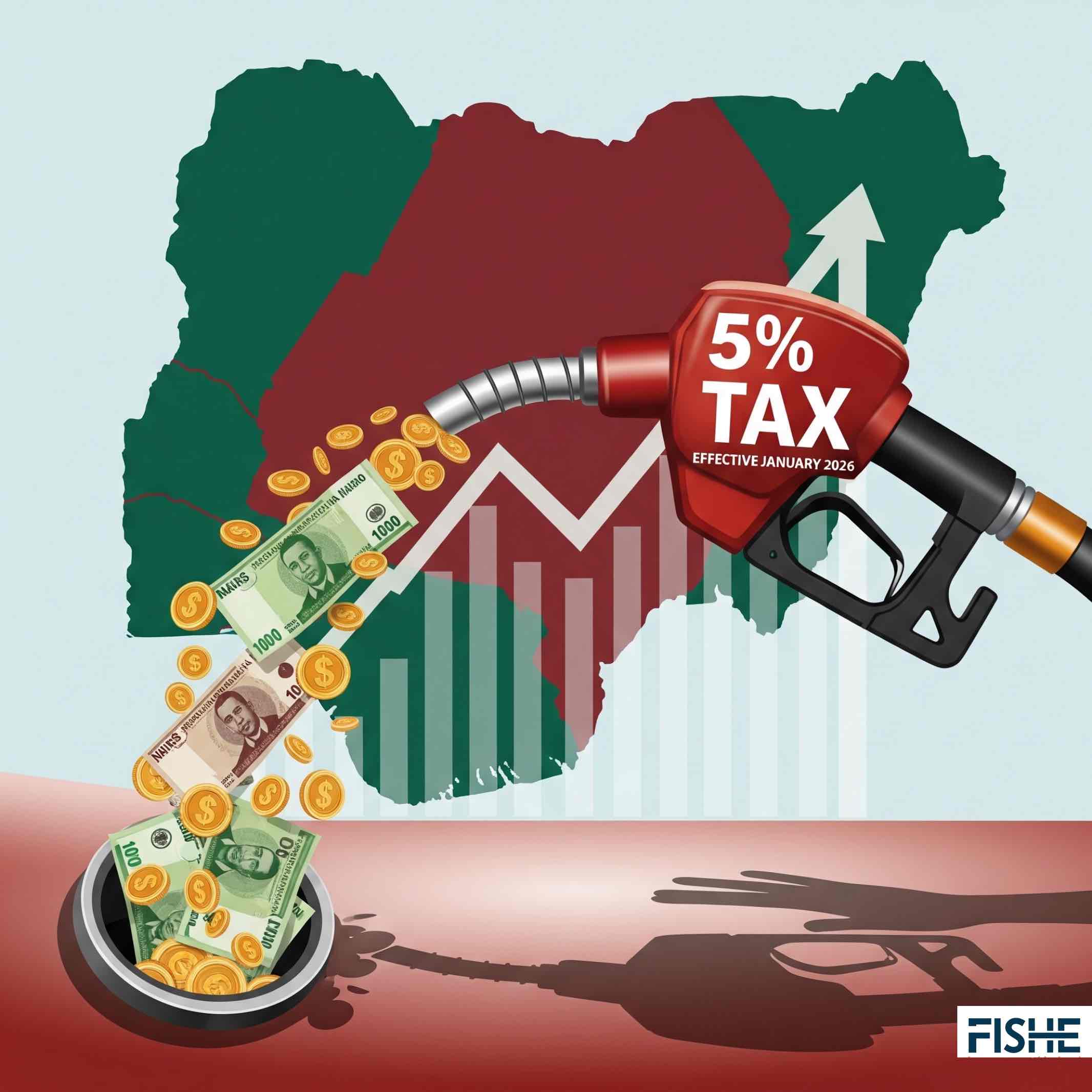
Abuja, September 4, 2025 — In the wake of dawn yester, the Federal Government of Nigeria as part of a sweeping overhaul in tax policy, approved a 5% surcharge on all fossil fuel purchases, set to go into effect on January 1, 2026. The levy, introduced under the new Nigeria Tax Administration Act, will apply at the earliest point of sale, supply, or payment.
Vetting The Scope and Application of the Surcharge
The 5% surcharge will affect a wide range of petroleum products; including petrol, diesel, aviation fuel, and other fossil-based fuels. However, exemptions have been carved out for household kerosene, cooking gas (LPG), compressed natural gas (CNG), and a range of renewable energy sources such as solar, wind, and hydropower.
Projected Revenue Impact
According to projections, the federal government could net ₦796 billion annually from petrol alone, based on 2024 data showing 18.75 billion litres consumed at an average pump price of ₦850 per litre. The figure does not account for diesel, aviation fuel, or other taxable fossil fuels, potentially pushing real annual revenue even higher.
This surcharge will be collected monthly by the Federal Inland Revenue Service (FIRS), which is slated to be renamed the Nigeria Revenue Service by 2026. Implementation details will be issued through regulations from the Minister of Finance.


Government Justification
The administration says the new levy is part of a broader strategy to bolster non-oil revenue, stabilize government finances, and reduce fiscal dependence on volatile oil markets. These reforms are geared toward modernizing Nigeria’s tax system and promoting transparency.
Stakeholder Reactions & Public Backlash
Strong Public Pushback
Consumers from various sectors such as transport operators, farmers, civil society groups, have condemned the surcharge as untimely and regressive, especially amid recent subsidy removal and inflation spikes. Some have warned of potential protests if the policy is enacted without safeguards. The Joint Drivers Welfare Association described it as “anti‑people,” while human rights advocates labeled it unfair.
Industry Concerns
Oil marketers and industry associations have warned that the surcharge will inevitably result in higher pump prices. Marketers, already operating on slim margins, say they will have to pass the costs onto consumers. The Association of Nigerian Refineries Petroleum Marketers, while cautiously supportive, insists that the revenue must be tied directly to road infrastructure improvements and managed with transparency.
Civil Society Concerns
ActionAid Nigeria and other NGOs have voiced deep concerns over the surcharge, arguing it disproportionately hurts the poor and informal sector workers. They demanded a clear framework to ensure proceeds are channeled into social and developmental projects, rather than being diverted or misused.
Environmental Angle
Some analysts view the surcharge as a fiscal nudge toward cleaner energy adoption. Early estimates suggest a modest 2–3% drop in petrol usage, but critics note that without substantial investment in renewables or improved electricity infrastructure, Nigerians might just turn to generators, a costly and polluting alternative.
Summary Table
| Aspect | Details |
|---|---|
| Policy Launch Date | January 1, 2026 |
| Surcharge Rate | 5% on fossil fuel sales at point of sale, supply, or payment |
| Exemptions | Kerosene (household), LPG, CNG, renewable energy products |
| Estimated Revenue | ₦796 billion/year from petrol; total likely higher |
| Purpose | Drive non-oil revenue, diversify economy, strengthen tax base |
| Backlash | Strong resistance from consumers, marketers, civil groups |
| Implementation Body | FIRS (to become Nigeria Revenue Service) |
| Concerns | Consumer hardship, lack of transparency, fairness |
| Environmental Note | Mixed, may encourage alternatives but lacks infrastructure plan |
My Thoughts Looking Ahead
For the surcharge to succeed, or at least be politically palatable; authorities must:
-
Clarify how revenue will be used (e.g., infrastructure, renewable energy).
-
Engage in broad consultations with stakeholders and civil society.
-
Provide economic cushioning, especially for vulnerable groups.
-
Tie the levy to real development outcomes, such as road repairs or energy investments, to rebuild public trust.