

Close Menu
Fishe News
  • Home
  • Entertainment
  • National
  • International
  • Tech
  • Politics
  • Sports
  • PMNI
  • More
    • Business
    • Culture
    • Education
    • History
    • Health
  • Featured
    • Fishe Travel
    • Fishe Media
    • Fishe TV
Facebook X (Twitter) Instagram
Trending
  • Lagos State Reintroduces Monthly Environmental Sanitation Programme
  • Chevron Appoints Emmanuelle Garinet, To Lead Exploration In Sub-Saharan Africa And The Americas
  • The Six Focal Dimensions Of Leadership: A Holistic Framework For Personal Mastery, Organisational Excellence, And National Resilience — Tolulope A. Adegoke, PhD
  • FBNQuest Secures Appointment As Transaction Advisor For Project BRIDGE
  • Tinubu Inaugurates A Task Force To Formulate Fresh Reforms In Nigeria’s Petroleum Industry
  • NDPC Cautions Content Creators Against Violating Citizens’ Privacy
  • “Comprehensive List Of 114 Nigerian Universities Authorised To Offer Law Programmes”
  • Zimbabwe President Hosts Rugby Africa Chief To Boost World Cup 2027 Plans
X (Twitter) Instagram
Fishe NewsFishe News
Subscribe
Sunday, March 15
  • Home
  • Entertainment
  • National
  • International
  • Tech
  • Politics
  • Sports
  • PMNI
  • More
    • Business
    • Culture
    • Education
    • History
    • Health
  • Featured
    • Fishe Travel
    • Fishe Media
    • Fishe TV
Fishe News
Home»National

Nigeria’s Currency Woes: CBN Recognizes Coins, But Lower Denomination Notes Lose Relevance

Editor FrancisBy Editor FrancisApril 16, 2024 National No Comments3 Mins Read
Share Facebook Twitter LinkedIn Email WhatsApp

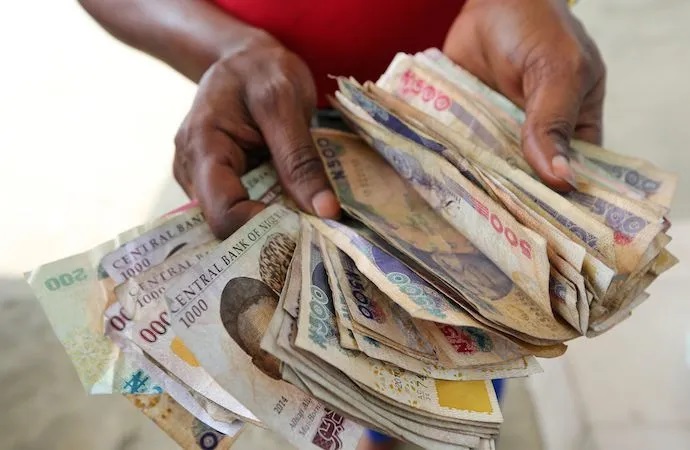
Across major markets, prices of goods are moving away from the lower denomination of the Naira currencies as inflation bites harder.

Not too long ago, a sachet of pure water cost N5, while N20 gained popularity as the denomination used to “settle” police officers at checkpoints.

However, in the past couple of years, these notes have struggled to get items they could be attached to.

A market survey by Daily Post showed that more than half of Nigeria’s legal tenders cannot make purchases.



Despite this, the Central Bank of Nigeria, CBN, recognizes the following denominations; 50 kobo, N1 and N2 which are coins, and N5, N10, N20 and N50 which are printed on polymer materials.

A sachet of pure water now sells for N30. Retailed sugar no longer sells for N10, while candies like Tom Tom are retailed at two pieces for N50. To further compound the woes of these notes, goods are now rounded up to 50 or 100, which further makes these currencies irrelevant.

In the past six months, the Naira has depreciated considerably. At one point, it was about N1,900 to a single dollar until the intervention by the CBN with the naira now trading at about N1050 to a dollar.

The implication of it is that N1000, which is Nigeria’s highest denomination, is less than a single dollar.

Anyone with $1000 is a millionaire in naira based on the current exchange rate, and anyone with $1 has more than N1,000.

Despite the recent surge in the value of naira, prices of commodities have not shown any significant signs of climbing down.

Experts believe that Nigeria’s inflation is a product of many factors, with FX being one of the numerous factors.

But despite this, the Nigerian government is still printing some of the lower denomination currencies at a huge cost.

According to reports, in 2016, CBN had to temporarily halt the printing of N5, 10, N20 and N50 due to the cost of production.

The report said it costs N1000 to print each lower denomination because Nigeria Security Printing and Minting plc (NSPM) is unable to print on polymer.

Now experts are calling on the CBN to discontinue the printing of the lower denominations and review the currencies in line with realities.

Abiodun Ayangbemi, an economist, told newsmen that the CBN must discontinue the printing of the lower denomination because the majority of those currencies have failed the basic principles of money— means of exchange and store of value.

“The monetary authorities cannot continue to print those denominations when there is basically nothing to use them for,” he said.

Lekan Olaleye, a monetary policy expert, asked the federal government to take a copy of the re-denomination policy adopted by Ghana some years back.

He argued that the CBN should remove two zeros from the existing notes.

It would be recalled that Ghana had in 2007, re-denominated the Cedis by striking out four zeros from their currency and producing the new Ghana Cedis.

A former CBN Governor, Sanusi Lamido had in 2012 announced a plan to introduce N5000 notes. In the same vein, there was also a plan to coin the lower bank notes of N5, N10 and N20.

However, the policy was met with a strong outcry from the public, who condemned the plan. Thus, the government shelved the plan.

Years after the botched plan, prices of goods and services have spiked beyond the 2012 level.

(Daily Post)

#naira
Share. Facebook Twitter LinkedIn WhatsApp
Editor Francis
  • Website

Keep Reading

Lagos State Reintroduces Monthly Environmental Sanitation Programme

The Six Focal Dimensions Of Leadership: A Holistic Framework For Personal Mastery, Organisational Excellence, And National Resilience — Tolulope A. Adegoke, PhD

FBNQuest Secures Appointment As Transaction Advisor For Project BRIDGE

Tinubu Inaugurates A Task Force To Formulate Fresh Reforms In Nigeria’s Petroleum Industry

NDPC Cautions Content Creators Against Violating Citizens’ Privacy

“Comprehensive List Of 114 Nigerian Universities Authorised To Offer Law Programmes”

Add A Comment

Comments are closed.

Here is spotlighting many benefits of journeying with either Lagos State’s Blueline or Redline rails for a hassle-free day, week, month and year. Thank God for the Igbega Eko. Together we rise.
https://youtu.be/V67GV8wgyjw

Latest Posts

  • Lagos State Reintroduces Monthly Environmental Sanitation Programme
  • Chevron Appoints Emmanuelle Garinet, To Lead Exploration In Sub-Saharan Africa And The Americas
  • The Six Focal Dimensions Of Leadership: A Holistic Framework For Personal Mastery, Organisational Excellence, And National Resilience — Tolulope A. Adegoke, PhD
  • FBNQuest Secures Appointment As Transaction Advisor For Project BRIDGE
  • Tinubu Inaugurates A Task Force To Formulate Fresh Reforms In Nigeria’s Petroleum Industry
Featured
About Fishe

FISHE was founded with the goal of helping clients thrive in today’s highly competitive marketing environment. While other companies rush to abandon traditional marketing in favour of digital techniques, we’ve bolstered our offline marketing capabilities while also equipping our team with seasoned professional knowledge to support our clients’ digital needs.

Through creative designs, we enhance our clients’ products and services the right way that would attract their target audience, thus, making the perception of their company a reality.

  • LTV 8, Agidingbi Road, Alausa, Ikeja, Lagos.
  • +234 806 003 7277
  • info@gofishe.com
FISHE, Your Best Plug For Bus Stop Shelter Ad

LATEST POSTS

Lagos State Reintroduces Monthly Environmental Sanitation Programme

March 15, 2026

Chevron Appoints Emmanuelle Garinet, To Lead Exploration In Sub-Saharan Africa And The Americas

March 15, 2026

The Six Focal Dimensions Of Leadership: A Holistic Framework For Personal Mastery, Organisational Excellence, And National Resilience — Tolulope A. Adegoke, PhD

March 15, 2026

FBNQuest Secures Appointment As Transaction Advisor For Project BRIDGE

March 15, 2026

Tinubu Inaugurates A Task Force To Formulate Fresh Reforms In Nigeria’s Petroleum Industry

March 14, 2026
Featured

Subscribe to Updates

Get the latest news from FISHE about politics, economy, health and business, etc

Facebook X (Twitter) Instagram Pinterest
© 2026

Type above and press Enter to search. Press Esc to cancel.