


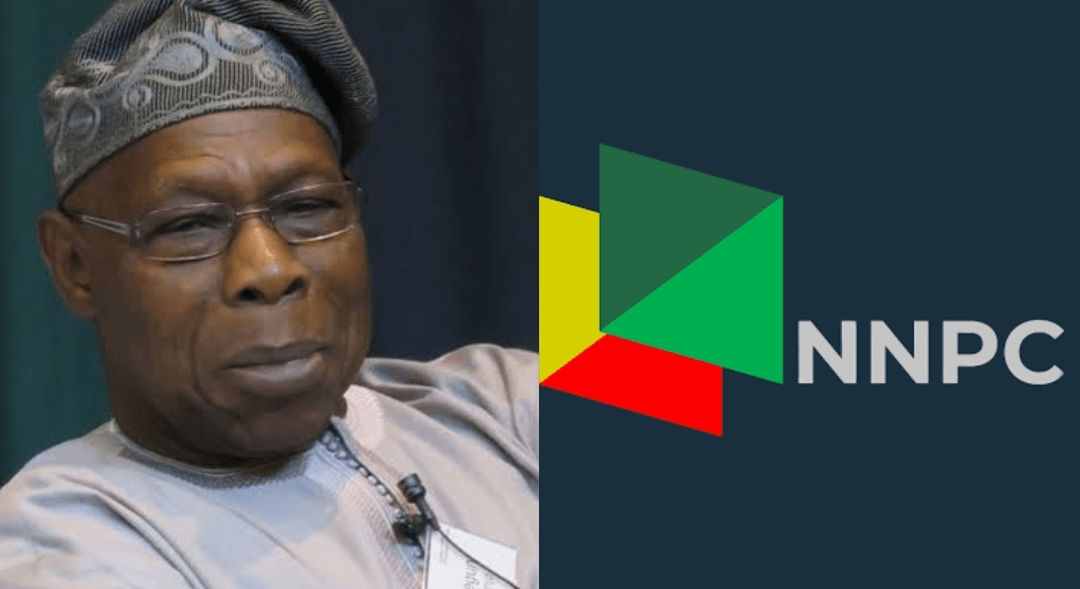
The debate over the viability of Nigeria’s state-owned refineries has resurfaced following renewed comments by former President Olusegun Obasanjo, who insists the facilities “will never work again.”
His remarks, delivered during an interview on Sony Irabor Live, come at a time when the Nigerian National Petroleum Company Limited (NNPC), is actively seeking technical partners to manage the Port Harcourt, Warri, and Kaduna refineries.
Obasanjo’s position reflects not just personal opinion but a long-standing critique of state-led oil infrastructure—one rooted in history, policy reversals, and institutional weaknesses.
Background: Nigeria’s Troubled Refining Sector
Nigeria owns four major refineries:
- Port Harcourt (two units)
- Warri
- Kaduna
Combined capacity: 445,000 barrels per day


Despite this:
- Facilities have remained largely idle or underperforming
- Nigeria imports most of its refined petroleum
- Billions of dollars have been spent on Turnaround Maintenance (TAM), with little success
This contradiction—being a crude oil giant but a fuel importer—sits at the heart of Obasanjo’s criticism.
Obasanjo’s Core Argument: Why the Refineries “Will Never Work”
Obasanjo’s recent interview reinforces a position he has maintained for years.
Public-Private Partnership (PPP), as the Only Viable Model
He pointed to the success of Nigeria LNG Limited as evidence:
- Private sector: 51%
- Government: 49%
According to him, NLNG remains one of the few Nigerian energy projects not crippled by government interference.
Failed Attempt to Bring in Shell Plc
Obasanjo revealed that during his presidency, he:
- Invited Shell to take equity or operate the refineries
- Even offered zero-equity operational control
Shell declined, citing:
Key Reasons
- Low profitability in downstream operations
- Small refinery sizes (60,000–100,000 bpd vs global 250,000+ bpd standard)
- Poor maintenance culture
- High corruption risk
This rejection by a major international oil company reinforced doubts about the refineries’ viability.
Corruption and Mismanagement
Obasanjo emphasized:
- “Too much corruption around our refineries”
- Use of “quacks and amateurs” for maintenance
These issues have led to:
- Repeated failed rehabilitation cycles
- Loss of investor confidence
The Dangote Deal That Was Reversed
A major turning point involved Aliko Dangote:
- Offered $750 million for 51% stake in two refineries
- Payment was made under Obasanjo’s administration
However, the deal was reversed by Umaru Musa Yar’Adua after pressure from NNPC.
Obasanjo described this as a critical policy mistake, warning that:
- The assets would eventually be worth less than $200 million as scrap
Present Reality: NNPC’s Ongoing Struggles
Under current leadership, NNPC has acknowledged serious limitations.
Role of Bayo Ojulari
The current Group CEO has:
- Admitted refineries operate below international standards
- Confirmed products are commercially uncompetitive
Failed Rehabilitation Cycle
- Port Harcourt and Warri refineries reopened in 2024
- Both were later shut down again


New Strategy
NNPC now aims to:
- Finalise technical partners by June 2026
- Shift from government control to externally managed operations
The Dangote Refinery Factor
The emergence of the Dangote Refinery has dramatically changed the landscape.
Key Features
- Capacity: 650,000 barrels/day
- Privately owned and efficiently run
Strategic Impact
Dangote himself has stated:
- NNPC refineries may never function effectively
He also confirmed:
- His refinery project was partly motivated by the reversal of the Yar’Adua-era deal
Financial Implications and National Cost
Obasanjo revealed:
- Nigeria has spent $16 billion on refineries
- Just $4 billion less than the cost of Dangote’s refinery
This raises key questions:
- Why has massive spending produced no results?
- Could Nigeria have built multiple modern refineries instead?
Structural Issues Behind the Failure
Institutional Weakness
- Poor governance within NNPC
- Lack of accountability
Political Interference
- Decisions driven by pressure rather than economics
- Example: reversal of privatisation
Technical Limitations
- Aging infrastructure
- Substandard maintenance practices
Economic Distortions
- Fuel subsidy regime discouraged efficiency
- State ownership reduced competitiveness
Comparative Insight: Why NLNG Works
Unlike NNPC refineries:
- NLNG operates under private-sector discipline
- Transparent governance structure
- Profit-driven model
This reinforces Obasanjo’s argument that:
The issue is not refining itself, but who runs it and how
Counterarguments: Can the Refineries Still Work?
Despite pessimism, some argue:
Technical Partnerships Could Help
- Bringing in experienced operators may improve efficiency
Strategic Importance
- Local refining enhances energy security
- Reduces dependence on imports
Global Examples
- Some state-owned refineries function successfully under proper governance
However, these arguments depend heavily on implementation quality, which has historically been weak in Nigeria.
Critical Evaluation of Obasanjo’s Claim
Why His Argument Is Strong
- Backed by decades of failure
- Supported by industry players like Dangote
- Validated by investor reluctance (e.g., Shell)
Where It May Be Overstated
- Assumes reform is impossible
- Does not fully account for new hybrid models (PPP, equity partnerships)
Conclusion
Obasanjo’s statement that NNPC refineries “will never work again” is best understood as a systemic indictment rather than a literal impossibility.
The evidence suggests:
- The current state-owned model has failed repeatedly
- Policy inconsistency and corruption remain major barriers
- Private-sector participation offers a more viable path
With the rise of the Dangote Refinery and ongoing reforms at NNPC, Nigeria’s refining future is likely shifting away from traditional government-run systems.
Final Insight
The central question is no longer whether Nigeria can refine oil—but whether it can create the governance, transparency, and incentives required for refineries to succeed.
Obasanjo’s warning ultimately challenges Nigeria to confront a hard truth:
infrastructure alone does not guarantee performance—institutions do.