


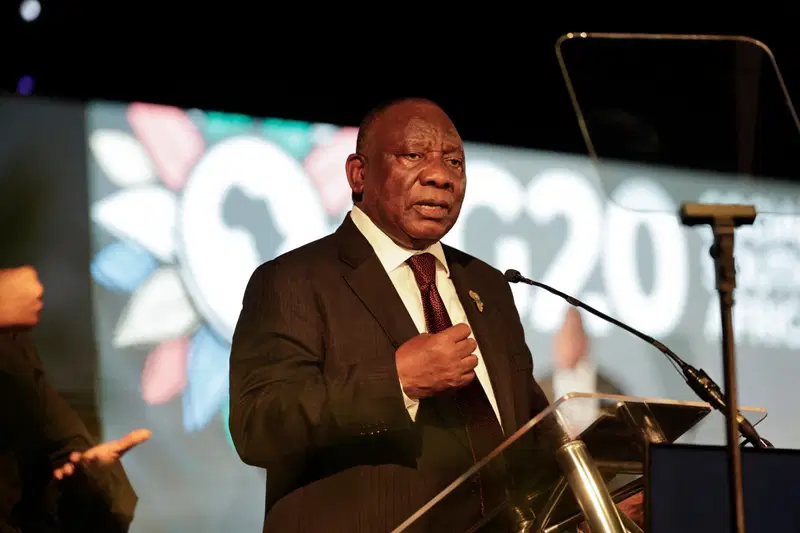
President Cyril Ramaphosa said that no country should be allowed to bully another, in a clear reference to the United States, which opted to boycott the G20 summit in South Africa this past weekend.
Washington had also demanded that South Africa refrain from issuing the traditional joint leaders’ statement after the meeting, which was attended by around 40 countries.
Speaking at a curtain-raiser event ahead of the November 22-23 summit in Johannesburg, Ramaphosa stressed, “It cannot be that a country’s geographical location or income or army determines who has a voice and who is spoken down to.” He added, “It basically means there should be no bullying of one nation by another,” highlighting South Africa’s stance against coercion in international relations.
Relations between South Africa and the United States had deteriorated over the course of the year due to a mix of foreign and domestic policy disagreements. The US embassy confirmed it would not attend the summit, citing that Pretoria’s G20 priorities “run counter to the US policy views and we cannot support consensus on any documents negotiated under your presidency.”

South Africa rejected the US position, stating that the absence of Washington would not undermine its role in the summit. Foreign Minister Ronald Lamola said Pretoria would press ahead with a leaders’ declaration regardless of the boycott. He emphasized, “We will not be told by anyone who is absent that we cannot adopt a declaration or make any decisions at the summit.”
South Africa’s G20 presidency chose “Solidarity, Equality, Sustainability” as its theme. The summit brought together 19 countries along with the European Union and African Union, representing 85 percent of global GDP and roughly two-thirds of the world’s population. The agenda focused on strengthening disaster resilience, improving debt sustainability for low-income countries, financing a just energy transition, and harnessing critical minerals for inclusive growth and sustainable development.
This G20 summit marked the first time the event was held on the African continent. Despite the absence of the United States, South Africa maintained that the summit proceeded successfully, with leaders discussing key global challenges and advancing cooperation among member countries.
