


Ten years ago, when residents of Flint, Mich., were exposed to toxic levels of lead in their drinking water, 1 in 20 children in the city had elevated blood lead levels that placed them at risk for heart disease, strokes, cognitive deficits and developmental delays — health effects that residents still grapple with to this day.
It was only after activists rallied, organized and advocated relentlessly that national attention focused on Flint, and officials committed nearly half a billion dollars to clean up Flint’s water.
Today, there is a lead poisoning crisis raging on a far greater scale, and hardly anyone is talking about it.
In low- and middle-income countries, home to more than 1.5 billion of the world’s children, 1 in 2 children has elevated levels of lead in their blood. That’s 10 times the rate of poisoning at the height of the crisis in Flint.

Yet the yearly global funding for tackling lead poisoning in developing countries totals just $15 million — the cost of a single 60-second ad at the Super Bowl, and a small fraction of what is spent on diseases with similar health burdens.
Today, USAID, UNICEF and Open Philanthropy are coming together to change that. Together, we are launching the Partnership for a Lead-Free Future, with more than 50 countries and organizations coming together to move toward a lead-free future for every child. We’ve mobilized more than $150 million — more than 10 times the current global investment each year.
As the leader of the world’s largest development agency and the head of one of the world’s biggest philanthropies, never in our careers have we seen such a compelling, low-cost opportunity to make such a massive impact on a major global killer.
One reason for the paucity of funding is the assumption that taking on lead poisoning requires mass investments in infrastructure repairs or costly environmental cleanup operations, like in the United States. President Joe Biden has dedicated $15 billion to replacing toxic lead water service pipes, a significant source of exposure here.
But in many low- and middle-income countries, lead is not just a legacy issue: It is still being used in widely available consumer products such as house paint, spices and makeup. Addressing these sources doesn’t require billions of dollars.
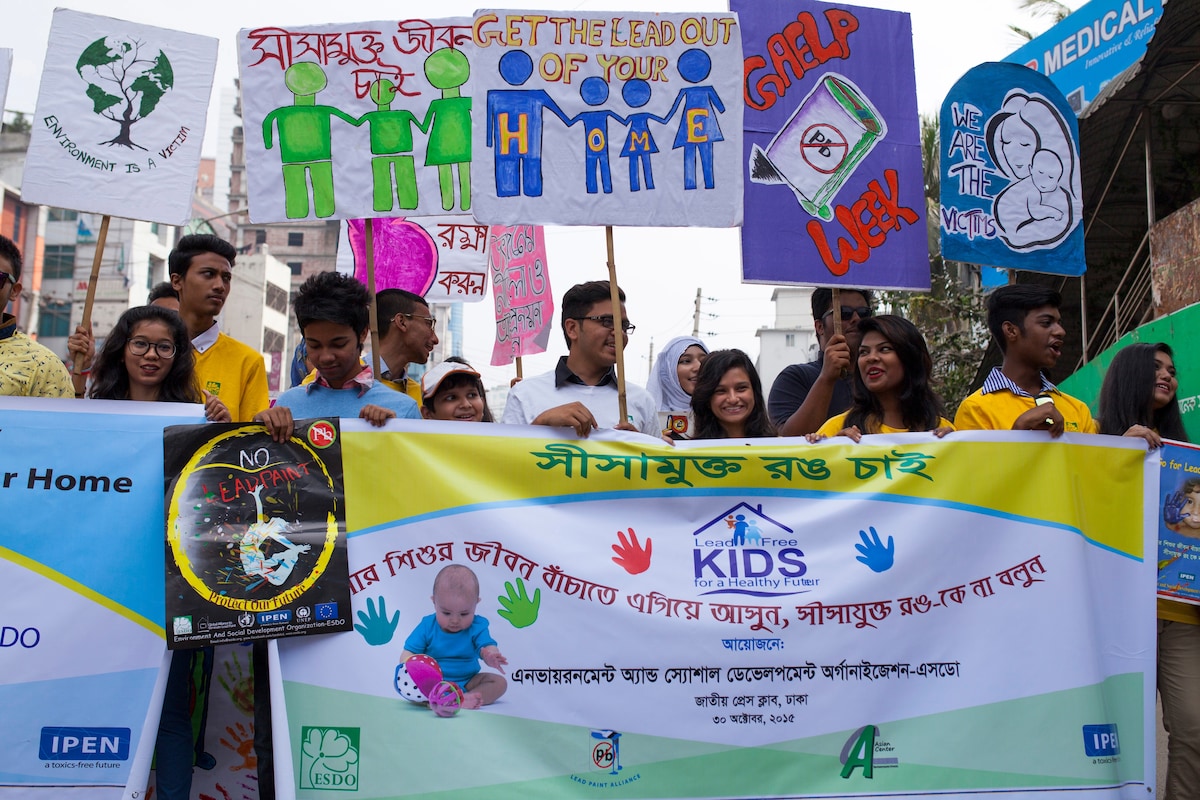
For example, from 2019 to 2021, Bangladesh eliminated lead in virtually all of its turmeric for a couple million dollars — in part by posting fliers outside bazaars that showed citizens what lead-tainted spices looked like, empowering them to demand better. Also in two years, and with just $300,000 in donor funding, Malawi led a campaign to start enforcing a law against lead paint that spurred customers to contact the manufacturers and pressure them to end the practice. Half of the market with lead-based paint is now lead-free, and the rest of the companies have committed to phasing lead out by the end of the year. And in just the eight months since we began a concerted push to galvanize awareness and support for this global issue, six countries have committed to regulating lead in paint for the first time.
Another source of lead abroad is the result of unsafe industrial practices during battery recycling, mining and electronic waste disposal that leach lead into the environment.
These practices can be more expensive to address — but regardless of the source, our efforts can follow the same dependable strategy that was used in advanced economies to take on lead poisoning: measure, regulate, replace, enforce.
The most powerful example of that strategy is the campaign to get lead out of gasoline — which was long the largest source of lead poisoning in the world. After studies in the 1970s traced elevated blood lead levels back to leaded gasoline, governments in high-income countries began introducing and enforcing regulations to outlaw it, pushing companies to find lead-free alternatives to products and practices.
In 2002, a U.N.-led campaign helped low- and middle-income countries do the same. This initiative, operating on a modest budget of $6 million, played a crucial role in phasing out leaded gasoline in roughly 50 countries over the next decade. By 2021, every nation on the planet had banned leaded gasoline — a landmark public health victory that continues to save more than 1 million lives every year.
The partnership will work to scale up this effective playbook. Given that so many communities have no idea how much damage lead is doing every day, and many governments don’t know the magnitude or source of the lead poisoning problem in their countries, we will first focus on running national blood surveys and testing consumer products to determine sources of lead poisoning.
Next we’ll work with governments that lack the regulations they need to begin taking on the problem — in 50 of the 81 countries where USAID has missions, governments lack regulations against lead paint. We will get these governments tools like model laws to help them pass regulations and laboratory infrastructure to help them detect violations so laws can be enforced. And given how many affordable alternatives have already been developed for lead-based products, we will support the private sector in transitioning to these alternatives by brokering connections with suppliers and experts.
In the face of so many intractable problems that dominate the headlines, it can sometimes feel futile to try to make a difference in 2024. But when it comes to lead, it shouldn’t.
In Flint, Bangladesh and Malawi, it was parents and neighbors and friends whose activism helped direct national attention and funding to lead mitigation efforts and pushed governments and companies to act.
Each of us can contribute to building a global movement to do the same around the world.
