


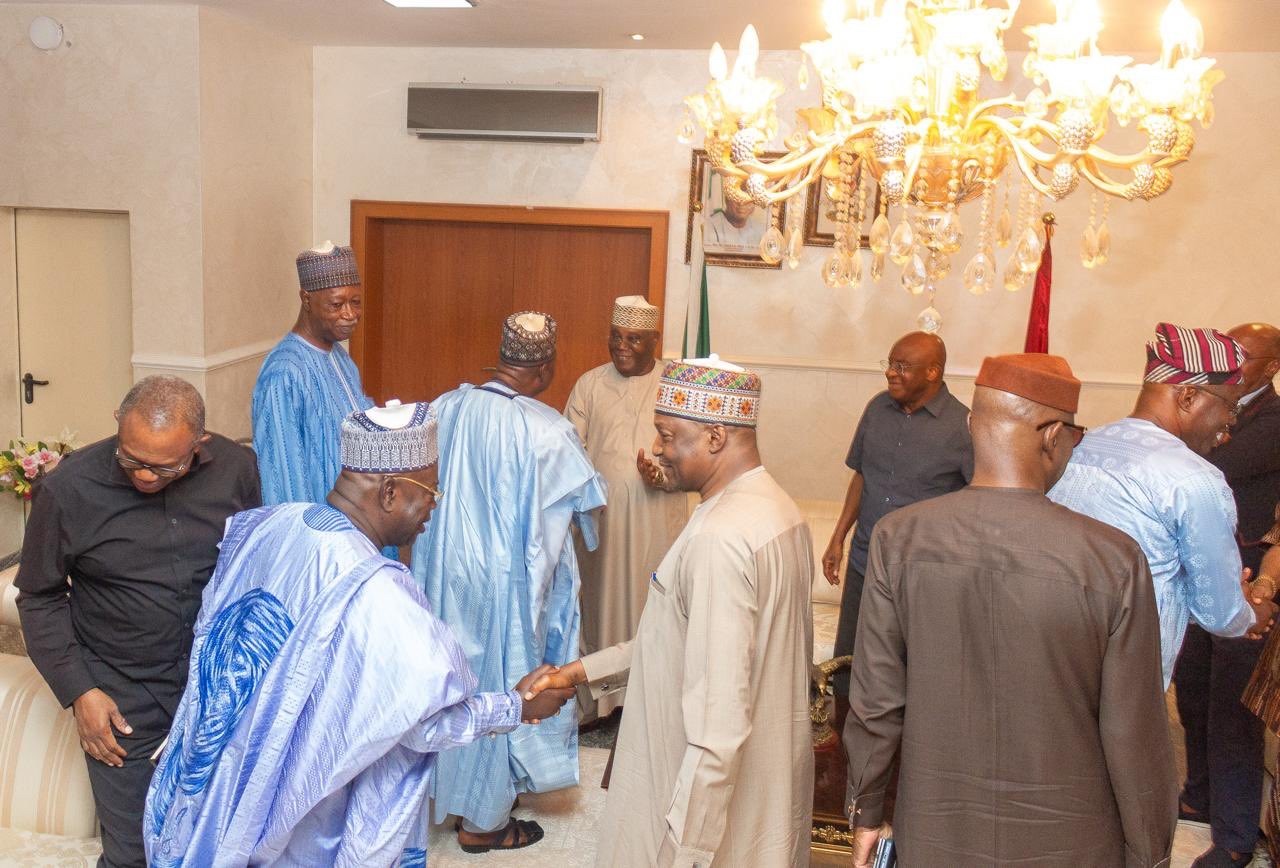
In a significant development within the opposition politics, leaders of the African Democratic Congress (ADC), and a faction of the Peoples Democratic Party (PDP), led by Jerry Gana, convened a high-level stakeholders’ meeting.
The gathering brought together prominent political figures across party lines, signaling a possible shift toward broader opposition collaboration ahead of future elections.
Context of the Meeting
The meeting comes at a politically sensitive time, shortly after a protest in Abuja. The protest reportedly began at the Maitama Roundabout and proceeded to the headquarters of the Independent National Electoral Commission (INEC).
This backdrop of civic agitation underscores growing political tensions and public demand for electoral reforms, transparency, and accountability.


Key Participants
The stakeholders’ meeting witnessed the presence of several influential political actors:
From ADC and Allied Stakeholders
- David Mark – National Chairman of ADC and former Senate President
- Atiku Abubakar – Former Vice President of Nigeria
- Rabiu Musa Kwankwaso – Former Governor of Kano State
- Peter Obi – Labour Party presidential candidate in the last election
- Abubakar Malami – Former Attorney-General of the Federation
- Babachir Lawal – Former Secretary to the Government of the Federation
- Rotimi Amaechi – Former Governor of Rivers State
- Aminu Tambuwal – Former Governor of Sokoto State
From PDP (Turaki-led faction)
- Seyi Makinde – Governor of Oyo State
- Jerry Gana – Factional National Chairman
- Adolphus Wabara – Former Senate President
- Babangida Aliyu – Former Governor of Niger State
- Members of the PDP National Working Committee


Notable Absence
- Bala Mohammed – Governor of Bauchi State, who was expected but did not attend
Purpose of the Meeting
1. Coalition Building and Opposition Realignment
The presence of leaders across multiple political parties suggests:
- Ongoing discussions about forming a united opposition front
- Exploration of alliances beyond traditional party structures
2. Strengthening Party Structures
Both ADC and PDP factions aim to:
- Reinforce internal organisation
- Expand grassroots support
- Improve coordination ahead of elections
3. Addressing National Political Concerns
The meeting also reflects:
- Concerns over electoral credibility
- Calls for institutional reforms
- Broader discussions on governance and national unity
Key Themes and Discussions
Unity Among Opposition Leaders
The convergence of figures such as Atiku Abubakar, Peter Obi, and Rabiu Kwankwaso highlights a rare moment of political alignment, suggesting:
- A willingness to set aside past rivalries
- Recognition of the need for collective political strength
Electoral Strategy and Reform
Discussions likely included:
- Lessons from recent elections
- Strategies to improve voter outreach
- Advocacy for reforms within INEC processes
Crisis Within PDP
The participation of a faction led by Jerry Gana indicates:
- Ongoing internal divisions within the PDP
- Efforts by certain blocs to redefine leadership and direction
Implications for Nigeria’s Political Landscape
1. Emergence of a Broad Opposition Coalition
If sustained, this collaboration could:
- Challenge the dominance of ruling political forces
- Reshape electoral competition
2. Increased Political Engagement
The involvement of high-profile leaders may:
- Energize supporters
- Increase public interest in opposition politics
3. Internal Party Realignments
- PDP may experience further factional negotiations or restructuring
- ADC could gain prominence as a coalition platform
Conclusion
The joint stakeholders’ engagement between the ADC and the Turaki-led PDP faction marks a potentially pivotal moment in Nigeria’s political evolution. The presence of influential leaders across party lines, combined with the broader context of public protests and electoral concerns, suggests a growing momentum toward opposition unity and reform.
However, the success of this initiative will depend on the ability of these actors to move beyond dialogue and implement concrete strategies that resonate with the Nigerian electorate.