


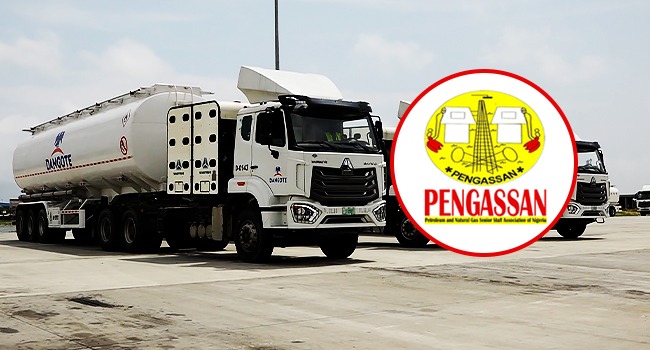
Petrol stations across the country were shut on Tuesday as the strike by the Petroleum and Natural Gas Senior Staff Association of Nigeria (PENGASSAN) entered its second day.
Checks around Abuja city centre and suburbs showed most filling stations closed in compliance with the directive of the union leadership. The industrial action has brought the country’s petrol supply to a grinding halt, with many Nigerians struggling to cope with the lack of fuel.
The strike has also grounded key government agencies in the petroleum sector, including the Nigerian National Petroleum Company Limited (NNPC Ltd.), the Nigerian Upstream Petroleum Regulatory Commission (NUPRC), and the Nigerian Midstream and Downstream Petroleum Regulatory Authority (NMDPRA).
The crisis has spilled into the power sector, with electricity generation dropping below 3,500 megawatts on Tuesday morning. Grid data showed that by 6pm, allocation to distribution companies had fallen to 3,656MW, with Abuja DisCo receiving 509MW, Ikeja Electric 502MW, and Eko DisCo 427MW. Most gas-fired plants were off the grid, with Delta (404MW) and Odukpani NIPP (209MW) serving as the main suppliers. The power shortage is expected to worsen the situation, with many businesses and industries forced to shut down due to lack of power.


The face-off between PENGASSAN and the $20 billion Dangote Refinery reportedly stems from the disengagement of about 800 workers by the company. The union is demanding the reinstatement of the sacked workers and resolution of welfare issues. The strike is expected to continue until the dispute is resolved, and it remains to be seen how the government will intervene to resolve the situation. The PENGASSAN strike is a major blow to the country’s already struggling economy, and it is unclear when the situation will return to normal.
The strike has caused widespread disruptions to daily life, with many Nigerians struggling to access basic necessities like fuel and power. The lack of petrol has led to a surge in prices on the black market, making it even more difficult for people to afford. The power shortage has also affected critical infrastructure, including hospitals and water treatment plants.
The Nigerian Independent System Operator (NISO) has deployed contingency measures to avert a nationwide blackout, including increased hydropower generation, real-time load balancing, and selective load shedding. Despite these efforts, the power shortage is expected to have a significant impact on the country’s economy and daily life. The situation is being closely monitored, and efforts are being made to resolve the dispute as soon as possible.