


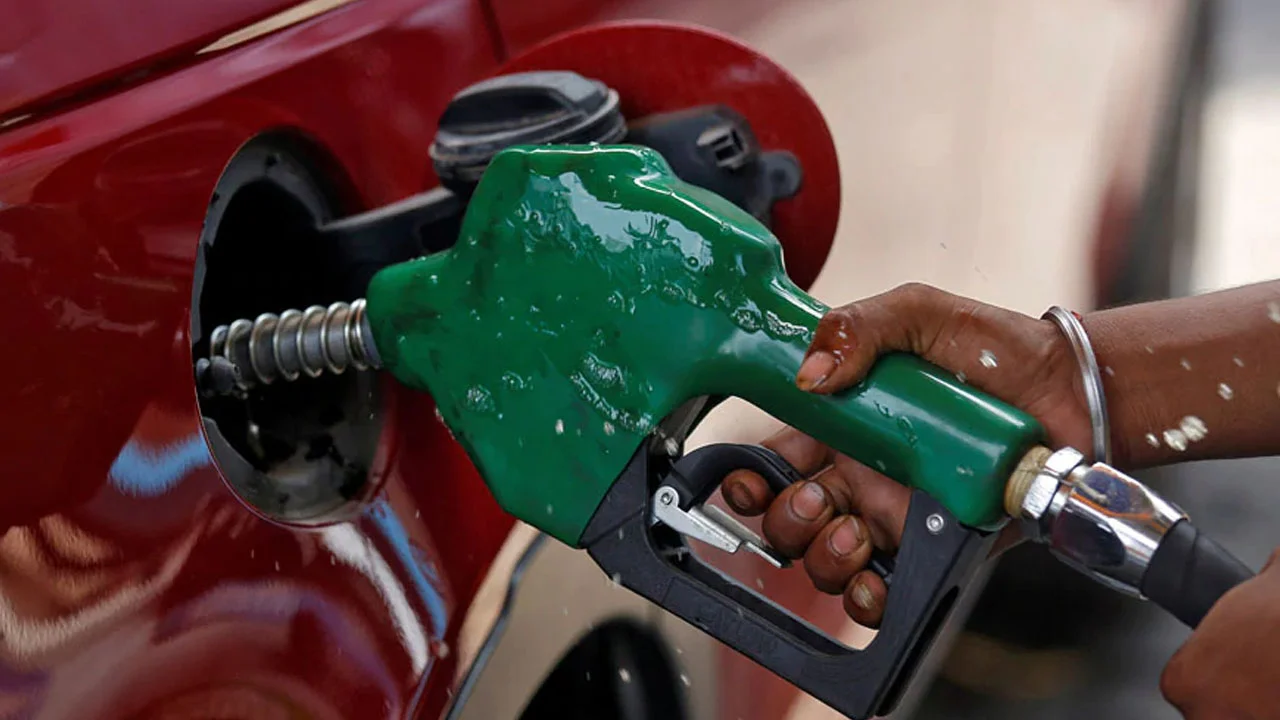
In a significant move that is already rippling through Nigeria’s fuel market, the Dangote Petroleum Refinery & Petrochemicals has increased its Premium Motor Spirit (PMS), — commonly referred to as petrol gantry price to ₦875 per litre from the previous ₦774 per litre, representing a ₦101 increase at the refinery gate.
Why the Price Was Increased
According to a senior official from the refinery, the adjustment was driven by recent volatility in global crude oil markets and rising replacement costs. The refinery stated that the review became necessary due to shifts in global crude fundamentals, which directly impact the cost structure of producing petrol.
This upward revision comes amid a sharp rise in international crude oil prices, which recently climbed above $80 per barrel — a level that increases refining costs even for domestic producers. Some reports link the crude surge to geopolitical tensions in the Middle East, particularly the escalating conflict involving the United States, Israel, and Iran, which has disrupted global oil supply dynamics.
Immediate Downstream Effects
The price hike at Dangote’s gantry is expected to have a direct impact on petrol pump prices across Nigeria. In fact, within less than 24 hours of the refinery’s adjustment, retail outlets controlled by partners such as MRS Oil Nigeria Plc and the Nigerian National Petroleum Company Limited (NNPCL), raised their pump prices — in some cases to around ₦975 per litre in Abuja and roughly ₦960 per litre in Lagos.

Several other marketers also adjusted their rates upward, reflecting a rapid transmission of the refinery cost shock down the supply chain. This suggests that citizens are likely to experience higher fuel prices at the pump in the coming days.
Market Reactions and Concerns
Industry watchers and economic analysts have expressed concerns over the potential inflationary effects of the petrol price rise. Since petrol price forms a significant part of transportation and goods distribution costs, increases at the pump could push up the cost of living overall.
Furthermore, the refinery’s temporary suspension of petrol loading operations, which accompanied the price change — alarmed several private depot owners who reportedly halted petrol sales during trading hours, hinting at stress in supply-side logistics.
Broader Economic Context
The Dangote Refinery, one of the largest single-train facilities in the world — was expected to help stabilise fuel prices in Nigeria by reducing reliance on imports and lowering foreign exchange expenditure. However, the recent price change shows that local refining margins are still highly sensitive to global crude prices, especially when Nigeria’s currency and global oil benchmarks fluctuate sharply.
Analysts warn that if crude oil prices continue to climb, for example, approaching $90 per barrel — additional price increases for both petrol and diesel may follow, putting further pressure on households and businesses.
What This Means for Nigerians
-
Higher transport costs: As petrol prices rise, the cost of commuting and goods delivery could increase, affecting daily budgets.
-
Inflationary pressure: With fuel underpinning many sectors of the economy, overall inflation might rise.
-
Sector sensitivity: The price shift underscores how domestic markets — even with local refining — remain tied to global energy dynamics.
Petrol Price Trend in Nigeria (Approx. Aug 2024 – Jan 2026)
Data Points Used (Approximate)
| Month/Year | Average Petrol Price (₦/litre) |
|---|---|
| Aug 2024 | 830.5 (approx) |
| Mar 2025 | 1,261.7 (peak) |
| Apr 2025 | 1,239.33 |
| Jun 2025 | 1,037.66 |
| Jul 2025 | 1,024.99 |
| Nov 2025 | 1,061.35 |
| Jan 2026 | 1,034.76 |
Insights from the Trend
-
Petrol prices rose sharply through late 2024 and early 2025, peaking around March–April 2025.
-
After the peak, average prices moderated through mid-2025, partly due to market adjustments and possibly refined product supply from domestic sources.
-
By late 2025 and early 2026, prices remained elevated compared to 2024 levels but showed a gentle downward tendency.
Summary
The ₦101 increase in petrol’s ex-depot price by the Dangote Petroleum Refinery to ₦875 per litre marks a major development in Nigeria’s fuel market. While attributed to global crude price volatility and replacement costs, this adjustment is already affecting retail pump prices and could have broader economic consequences if international oil prices remain elevated.
