


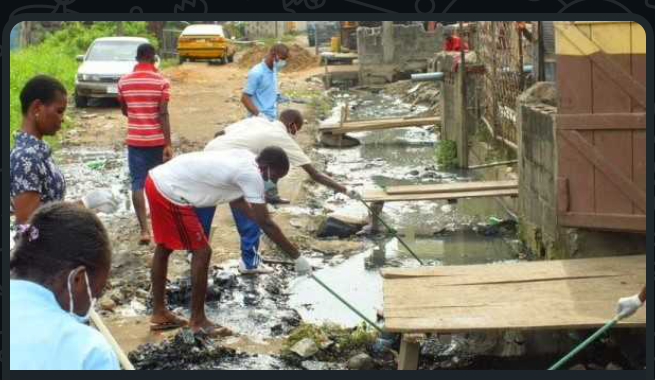
Poor Sanitation Fuels Spread Of Communicable Diseases, Warns Nigerian Minister.
The Nigerian Minister of Environment, Malam Balarabe Lawal, has highlighted poor environmental sanitation as a key driver of preventable communicable diseases across the country. Speaking at a press conference in Abuja on 26 June 2025, ahead of the 2025 National Environmental Sanitation Day (NESD), the minister stressed the urgent need for improved sanitation and hygiene practices to curb outbreaks of diseases such as cholera, typhoid fever, and monkeypox.
Represented by Dr Bahijjahtu Abubakar, Director of Pollution Control and Environmental Health, Lawal underscored that unsanitary environments create fertile ground for vector-borne diseases, particularly in developing nations like Nigeria. “Diseases such as cholera, dengue fever, and even COVID-19 have shown us the critical need for better access to sanitation and hygiene,” he said, noting that this year’s NESD theme, “Clean Environment is a Healthy Environment: Get Involved,” calls for collective action to address the sanitation deficit.

The minister’s remarks align with global health data, with the World Health Organisation (WHO) estimating that 1.4 million deaths annually are linked to inadequate water, sanitation, and hygiene, with unsafe sanitation alone accounting for 564,000 deaths, primarily from diarrhoeal diseases. In Nigeria, over 3.5 million children suffer from diarrhoeal diseases each year, a figure Lawal described as “unacceptably high.”
Marked annually on 28 June since its establishment in 2005 by former President Muhammadu Buhari, NESD serves as a platform to raise awareness about sanitation as a cost-effective means to prevent diseases and meet Sustainable Development Goals (SDGs) 3 (Good Health and Well-being) and 6 (Clean Water and Sanitation). Lawal urged all levels of government, communities, and individuals to prioritise sanitation, emphasising that a clean environment is fundamental to public health and economic development.
Dr Edwin Isotu-Edeh, WHO’s representative in Nigeria, echoed the minister’s concerns, noting that one in four deaths in Nigeria could be prevented by addressing environmental risk factors, including poor sanitation. “Access to safe sanitation is a fundamental human right,” he stated, citing World Health Assembly Regulations. He called for increased investment in sanitation infrastructure and multi-sectoral collaboration to tackle Nigeria’s sanitation challenges.
Nigeria faces significant hurdles in achieving adequate sanitation coverage. According to the WHO/UNICEF Joint Monitoring Programme, millions of Nigerians lack access to improved sanitation facilities, with open defecation remaining a persistent issue, particularly in rural areas. This contributes to the spread of neglected tropical diseases (NTDs) such as schistosomiasis and trachoma, alongside widespread diarrhoeal illnesses that disproportionately affect children under five.
The Nigerian Water and Sanitation Programme estimates that poor sanitation costs the country at least $3 billion annually in lost productivity and healthcare expenses. Experts argue that simply building toilets is insufficient without community education and demand creation. “Providing latrines without first educating communities on hygiene has repeatedly failed,” noted Ene Baba-Owoh, National Coordinator of Clean-Up Nigeria, who called for stronger partnerships with stakeholders to address deteriorating sanitation.
Lawal highlighted ongoing efforts by the Federal Ministry of Environment, including the validation of the 2005 National Environmental Sanitation Policy, which covers pest control, school sanitation, and safe excreta disposal. He announced plans for a National Environmental Sanitation Response Intervention in Kubwa, Abuja, a cholera hotspot, to include sanitary inspections, water source disinfection, and community sensitisation to combat open defecation.
The minister urged the media and stakeholders to promote hygiene awareness, stressing that sanitation must become an integral part of daily life. “This is a collective responsibility,” he said, calling for sustained efforts to reduce Nigeria’s disease burden and build a healthier future.
As Nigeria prepares to commemorate NESD on 28 June, the government’s renewed focus on sanitation signals a critical step towards addressing a public health crisis that affects millions. With concerted action, experts believe Nigeria can make significant strides in reducing preventable diseases and improving quality of life for its citizens.
