


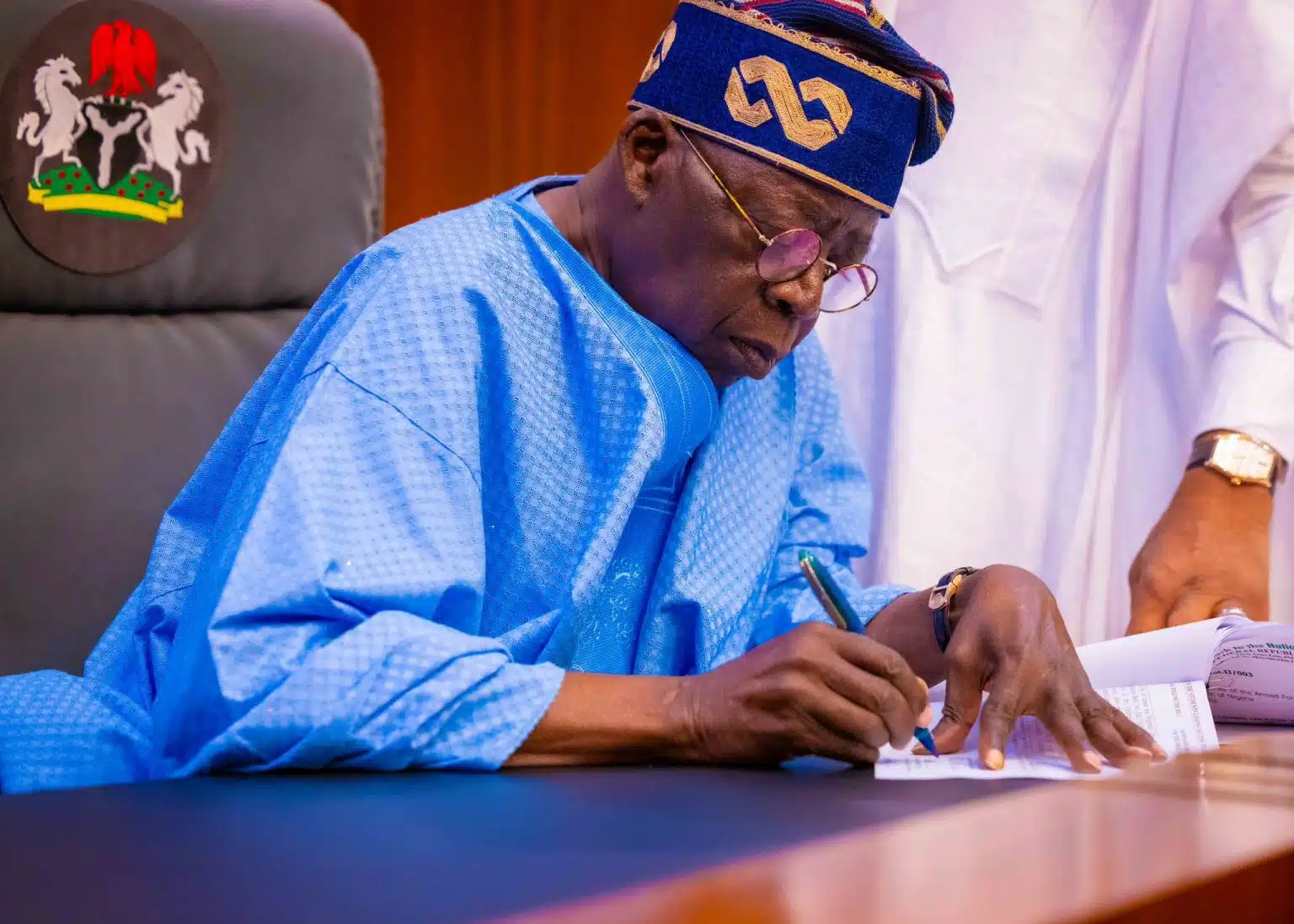
President Bola Ahmed Tinubu has forwarded a sweeping list of non-career ambassadorial nominees to the Senate, renewing Nigeria’s long-deferred diplomatic staffing overhaul. The new list features high-profile names from the military, politics, and social circles — including former senior officials and notable public figures.
Stick with me as I dive into who made the list this round!
-
Ibok‑Ete Ekwe Ibas — the immediate past Sole Administrator of Rivers State and a former Chief of Naval Staff. He is now being considered for a non-career ambassadorial posting.
-
Abdulrahman Dambazau — retired Lieutenant General, ex-Chief of Army Staff and former Minister of Interior, also nominated as a non-career ambassador.
-
Ita Enang — former senator, included among the non-career ambassador nominees.

-
Chioma Ohakim — former First Lady of Imo State, likewise nominated for a non-career ambassadorial role.
This fresh batch comes barely a week after the President transmitted previous names — including former electoral and political office-holders like Reno Omokri and Mahmud Yakubu — to the Senate for consideration.
In total, the latest list reportedly comprises 65 ambassadorial nominees: 34 career (professional diplomats), and 31 non-career (political or special-purpose), candidates.
What’s Next: Senate Confirmation & Diplomatic Reset
The nominations have been formally sent to the Senate, where the list was read at plenary and referred to the relevant committees for vetting and confirmation.
If confirmed, these appointees will fill long-vacant ambassadorial slots across Nigeria’s missions abroad — a diplomatic reset long overdue after two years of vacancies, which many argued had weakened Nigeria’s foreign representation and global standing.
Reactions: Praise, Criticism, and Questions Over Credibility
The list has drawn widespread criticism. Some contend the nominations amount to political patronage rather than a genuine drive to strengthen Nigeria’s diplomacy.
-
The main opposition party, Peoples Democratic Party (PDP), called the inclusion of certain figures a threat to Nigeria’s global image.
-
Civil-society voices and former foreign-service insiders argue that the move undermines professional diplomacy: many trained career diplomats have reportedly been demoralised — having spent years preparing for representation roles only for outsiders to be nominated instead.
-
Some critics singled out former electoral officials and partisan actors on the list, arguing their inclusion sends the wrong signal about the impartiality and integrity of Nigeria’s foreign-service appointments.
Supporters, however, say the appointments bring breadth of experience — especially from security and administrative backgrounds — to the diplomatic corps, potentially bolstering Nigeria’s foreign advocacy.
Significance: Why This Diplomatic Shake-Up Matters
-
After more than two years with most embassies run by junior chargés d’affaires, the new nominations mark a major attempt to restore full diplomatic representation.
-
With a mix of career diplomats and politically connected non-career appointees, the move shows the administration balancing technical diplomatic needs with political patronage and reward networks.
-
Given our global standing and emerging economic, security, and geopolitical challenges, restoring and re-energising our foreign missions could influence trade, diplomacy, diaspora relations, and foreign investment.
What to Watch
-
The pace and outcome of Senate confirmations — who gets approved, who doesn’t — will determine whether this list becomes the diplomatic reality or remains a controversial footnote.
-
Public and civil-society reaction to postings — especially whether non-career ambassadors can meet expectations of professionalism, integrity, and representation abroad.
-
Long-term impact on the country’s diplomatic culture: whether this mix of political and professional representation revitalises the foreign-service or entrenches patronage.
