

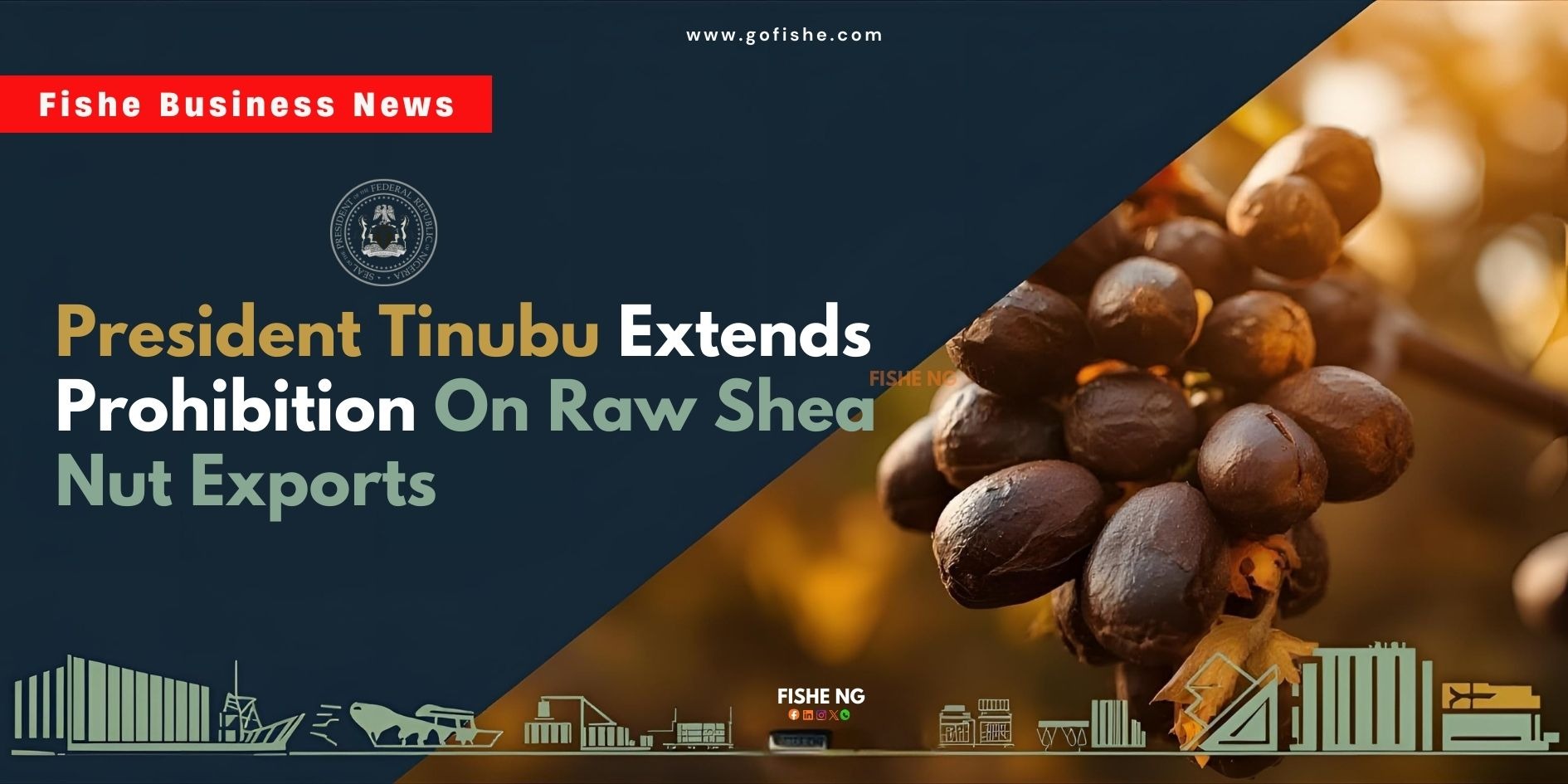
President Bola Ahmed Tinubu has approved the extension of the ban on the export of raw shea nuts for an additional year, from February 26, 2026, to February 25, 2027.
The decision reaffirms the administration’s commitment to industrialisation, domestic value addition, and the broader economic transformation goals outlined in the Renewed Hope Agenda.
Strengthening Nigeria’s Shea Value Chain
The extension of the ban is aimed at accelerating the development of Nigeria’s shea industry by ensuring that more shea nuts are processed locally into higher-value products such as shea butter and its derivatives.
Shea nuts are oil-rich fruits harvested from the shea tree, which grows widely across Nigeria’s Savanna belt. When processed, the nuts yield shea butter — a globally sought-after commodity known for its moisturising, anti-inflammatory, and antioxidant properties.


Shea butter is widely used in:
-
Cosmetics and skincare products
-
Hair care formulations
-
Pharmaceutical preparations
-
Edible cooking oil and confectionery products
While raw shea nuts command relatively low prices in international markets, processed shea butter can fetch 10 to 20 times more than unprocessed nuts. By extending the export restriction, the Federal Government aims to capture more value domestically and reduce the loss of potential revenue associated with exporting raw agricultural commodities.

Coordinated National Framework for Industrialisation
To ensure effective implementation, President Tinubu has authorised the two ministers of the Federal Ministry of Industry, Trade and Investment and the Presidential Food Security Coordination Unit (PFSCU), to coordinate a unified, evidence-based national framework.
This framework will:
-
Align industrialisation, trade, and investment strategies
-
Strengthen the shea nut value chain from farm to finished product
-
Promote investor confidence and regulatory clarity
-
Enhance Nigeria’s competitiveness in global markets
The approach reflects a shift from fragmented interventions to a structured, data-driven strategy designed to build long-term resilience within the sector.
Adoption of Nigerian Commodity Exchange Export Framework
President Tinubu also approved the adoption of an export framework established by the Nigerian Commodity Exchange(NCX).
Under the new directive:
-
All existing waivers permitting direct export of raw shea nuts are withdrawn.
-
Any excess supply of raw shea nuts may only be exported through the NCX framework.
-
Exports must comply strictly with the approved national guidelines.
The NCX-led framework is expected to improve transparency, price discovery, traceability, and quality control in the shea export market. By centralising export channels, the government aims to curb informal trade practices while ensuring that local processors receive priority access to raw materials.
Financing Support for Production and Processing
In further support of the policy, the President directed the Federal Ministry of Finance to provide access to a dedicated NESS Support Window. This will enable the Federal Ministry of Industry, Trade and Investment to pilot a Livelihood Finance Mechanism.
The initiative is expected to:
-
Strengthen production capacity among smallholder collectors
-
Expand access to finance for processors
-
Improve equipment and processing technology
-
Enhance job creation, particularly for women in rural communities
Shea nut collection and processing in Nigeria are predominantly undertaken by women in rural areas. Increased access to structured financing and market opportunities is projected to significantly improve livelihoods in shea-producing communities.
Advancing Inclusive Growth and Global Competitiveness
The extension of the export ban is part of a broader economic policy direction focused on:
-
Promoting inclusive growth
-
Expanding local manufacturing
-
Strengthening agro-industrial value chains
-
Increasing non-oil export earnings
By encouraging domestic processing, the Federal Government seeks to position Nigeria not merely as a supplier of raw commodities, but as a competitive exporter of high-value, finished agricultural products.
The Tinubu administration has reiterated its resolve to implement policies that transform Nigeria’s agricultural potential into industrial strength, ensuring sustainable economic growth and improved prosperity for citizens.