


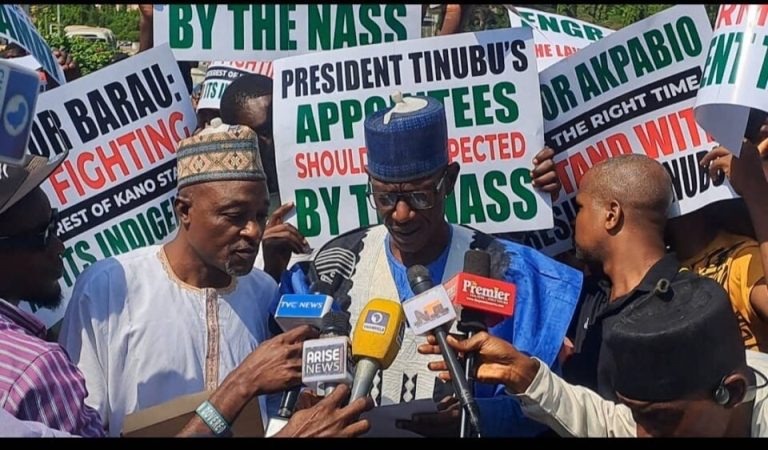
A coalition of civil society groups and grassroots organisations has mobilised a protest at the precincts of the Nigerian National Assembly (NASS), in Abuja to demand the prompt confirmation of Abdullahi Garba Ramat as Chairman/CEO of the Nigerian Electricity Regulatory Commission (NERC).
President Bola Ahmed Tinubu nominated Ramat earlier in 2025. His name was vetted by the Senate Committee on Power on 22 October 2025, along with two other nominees. The confirmation has, however, been delayed, prompting public frustration and the demonstration.
The Protest
-
The demonstrators, under banners from groups such as the Empowerment for Unemployed Youth Initiative (EUYI) and others, gave the Senate a 48-hour ultimatum to confirm Ramat or risk nationwide mobilisation.
-
One group from Kano, the Grassroots Initiative Concept, wrote an open letter to the Senate and President Tinubu, stating surprise and concern at the stalling of the confirmation despite Ramat’s nomination being listed on the Order Paper.

-
Protesters argue the delay is not due to any merit issue with Ramat but attributed to “political machinations” and vested interests undermining the reform agenda in the power sector.


What The Senate Says
-
The Senate, via its Committee on Media & Public Affairs, responded to the allegations. It denied claims that the Senate accepted a US $10 million bribe to block the nomination.
-
It emphasised that the screening and confirmation delay is due to “public and private complaints” lodged against Ramat. The Senate states it cannot proceed until concerns are resolved.
Why It Matters
-
Power Sector Reform Hinge: The role of NERC is pivotal in Nigeria’s electricity sector, regulating tariffs, licensing, market competition, consumer protection, and more. A substantive leader is deemed necessary to drive the reform agenda under the Renewed Hope agenda of the administration.
-
Institutional Integrity: The process of nomination and confirmation is a key part of Nigeria’s democratic checks and balances. Delaying or circumventing it raises concerns about the institutional credibility of both executive nominations and legislative oversight.
-
Stakeholder Confidence: Investors, operators, consumers—all look for stability and legality in regulatory leadership. A leader operating without confirmation or with contested legitimacy could undermine confidence in the sector.
Issues & Tensions
-
While Ramat is praised by the protesting groups as a technocrat with experience (electrical engineering background, prior leadership roles, fellow of COREN, Harvard alumnus) – his critics point to unresolved complaints and the Senate’s duty to vet carefully.
-
The tension between speed (to enable reforms), and due process (to ensure legitimacy), is at the core here. The protestors say delay equals sabotage; the Senate argues process must be followed.
-
The broader political dimension: some groups claim the delay reflects regional/party bargaining rather than objective evaluation.
Potential Implications
-
If Confirmed Quickly: This could signal alignment between executive reform agenda and legislative action; the power sector may receive a clearer leadership impetus.
-
If Further Delayed or Blocked: It could deepen stakeholder frustration, slow reform momentum, lead to regulatory uncertainty, and possibly more protests or public backlash.
-
For Governance Norms: How this plays out could set a precedent for future high-profile regulatory appointments, either reinforcing the role of the Senate as gatekeeper, or highlighting executive frustration with legislative gridlock.
In Synopsis
The protest at the National Assembly by civil society organisations reflects mounting impatience with what is perceived as an unjustifiable delay in confirming Ramat as NERC Chairman.
On one hand, the reform-hunger in the power sector; on the other hand, legislative caution and public concern about transparency and suitability of appointments. How quickly and cleanly the Senate acts may influence not just the electricity sector but wider perceptions of governance and institutional efficiency in Nigeria.