


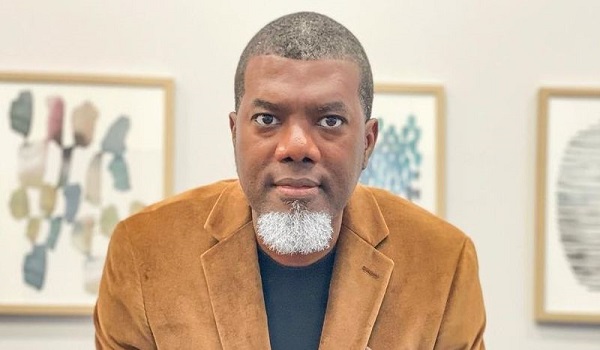
Reno Omokri Criticises Peter Obi For Silence On Simon Ekpa’s Conviction.
Former presidential aide Reno Omokri has publicly called out Peter Obi, the Labour Party’s 2023 presidential candidate, for his silence following the conviction of Simon Ekpa, a Nigerian-born Finnish separatist, in Finland. Ekpa, aged 40, was sentenced to six years in prison by the Päijät-Häme District Court on Monday, 1 September 2025, for terrorism-related offences, aggravated tax fraud, incitement to commit crimes for terrorist purposes, and violations of Finland’s Lawyers Act.

Omokri, in a series of posts on X, accused Obi of selective outrage, highlighting what he perceives as double standards in the former Anambra governor’s public statements. He pointed out that Obi was quick to demand the arrest and prosecution of Fuji musician Wasiu Ayinde, known as K1 De Ultimate, following an altercation with ValueJet airline staff. Yet, Obi has remained silent on Ekpa’s conviction, despite the severity of the charges, which included promoting terrorist acts and involvement with a terrorist organisation between August 2021 and November 2024.
“If Simon Ekpa had been convicted in Nigeria, Peter Obi would have accused President Tinubu of intolerance and victimising him because of his ethnicity,” Omokri stated on X. “Now, he refuses to comment on Simon Ekpa’s conviction in Finland. Maybe he is in mourning!” He further challenged Obi to address the issue publicly, writing, “If Peter Obi is bold enough to talk about Simon Ekpa’s conviction today, the way he quickly spoke about the incident involving K1 De Ultimate, I will give everything I am wearing to one random follower.”
The court’s ruling detailed how Ekpa exploited his significant social media following to incite violence and unrest in Nigeria’s South-East, aiming to promote the secessionist cause of Biafra through illegal means. Ekpa, a former municipal councillor in Lahti, was found to have equipped armed groups with weapons and explosives, contributing to instability in the region. His actions were linked to numerous deaths, injuries, and the destruction of businesses and infrastructure, particularly through the enforcement of violent “sit-at-home” protests.
Omokri’s criticism also referenced Obi’s past remarks on the trial of Nnamdi Kanu, the detained leader of the proscribed Indigenous People of Biafra (IPOB), where Obi had suggested that Kanu’s trial “doesn’t make sense.” Omokri argued that Obi’s silence on Ekpa, contrasted with his vocal stance on other issues, raises questions about his consistency. “Peter Obi never commented on Simon Ekpa’s arrest by the Finnish government on terrorism charges, although he speedily commented when Dele Farotimi was arrested for criminal defamation,” Omokri noted.
The conviction of Ekpa has been widely welcomed by the Nigerian government, with the Minister of Information and National Orientation, Mohammed Idris, describing it as a “major victory” in the fight against terrorism. The Indigenous People of Biafra, however, distanced itself from Ekpa, with spokesperson Emma Powerful stating that Ekpa has no ties to the group or its leader, Nnamdi Kanu. IPOB accused the Nigerian government of attempting to link Ekpa to Kanu to undermine the latter’s ongoing trial.
Omokri’s remarks have sparked debate online, with some accusing him of politicising the issue, while others echo his call for Obi to address the conviction. The controversy underscores the polarised discourse surrounding Biafra separatism and the role of public figures in commenting on such matters. As the nation grapples with the implications of Ekpa’s conviction, Omokri’s challenge to Obi highlights ongoing tensions in Nigeria’s political landscape.
