


Bill Scales Second Reading
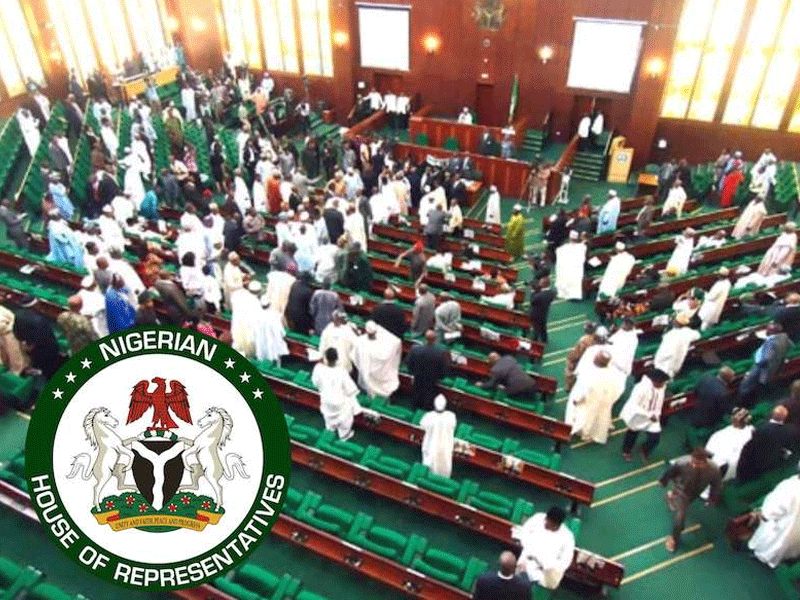
A bill proposing a single, non-renewable six-year tenure for the governor and deputy governors of the Central Bank of Nigeria (CBN), on Thursday scaled second reading at the House of Representatives.
The proposed legislation seeks to amend Section 8(2) of the CBN Act 2007, which currently provides for a five-year tenure, renewable once, for the leadership of the apex bank.
Ending Renewable Tenure at the Apex Bank
Under the proposed amendment, the CBN governor and deputy governors would serve one six-year term with no option for reappointment. Lawmakers argue that the change would strengthen the bank’s independence, insulate monetary policy from political influence, and promote institutional stability.
Ban on Foreign Currency for Domestic Transactions
The bill also seeks to prohibit the use of foreign currency in local transactions, except through authorised channels, as part of efforts to curb dollarisation and reinforce the naira as Nigeria’s sole legal tender.


In addition, the legislation proposes the unification of exchange rates, a move aimed at enhancing transparency and efficiency in the foreign exchange market.
Sponsors and Legislative Intent
The bill is sponsored by Jesse Okey-Joe Onuakalusi, representing Oshodi/Isolo Federal Constituency, and Julius Ihonvbere, the Majority Leader of the House.
According to the sponsors, the proposed amendments are designed to modernise CBN operations, strengthen legislative oversight, and align the bank’s corporate governance framework with global best practices.
Separation of Powers at the CBN
One of the major governance reforms in the bill is the separation of the roles of CBN governor and board chairman, a move intended to prevent the concentration of power and ensure effective professional oversight of the apex bank.
Limits on Ways and Means Financing
The bill seeks to cap Ways and Means advances to the Federal Government at 10 percent of the previous year’s actual revenue, a measure aimed at curbing fiscal indiscipline and preventing inflationary financing.
Checks on Currency Redesign and Demonetisation
To avoid policy shocks, the proposed law requires the CBN governor to provide 90 days’ notice, conduct an impact assessment, and brief the National Assembly before implementing any currency redesign or demonetisation programme.
Strengthening Monetary Policy and Transparency
The amendment also proposes reforms to the Monetary Policy Committee (MPC), by introducing independent external experts to improve decision-making.
It further mandates the CBN to conduct regular stress tests, deploy macro-prudential tools to enhance financial stability oversight, and publish quarterly reports on monetary policy decisions, economic forecasts, and financial stability indicators.
Lessons from Past Controversies
Lawmakers linked the proposed reforms to controversies surrounding the tenure of former CBN governor Godwin Emefiele, who was accused of harbouring presidential ambitions while in office.
The bill also draws lessons from the controversial naira redesign carried out months before the general election, which led to widespread cash shortages and disrupted economic activities nationwide.
Debate on the Floor
Leading the debate, Onuakalusi described the bill as a set of “structural and forward-looking reforms” aimed at protecting the Nigerian economy, restoring confidence in monetary policy, and strengthening accountability at the apex bank.
He noted that the bill expressly prohibits the CBN governor and deputy governors from engaging in partisan politics.
Unanimous Support in the House
The bill received overwhelming support from lawmakers, with members unanimously voting in favour following a voice vote called by Deputy Speaker Benjamin Kalu.
The legislation will now proceed to the committee stage for further scrutiny.
Senate Consideration
In February 2024, a similar bill seeking to impose a single, non-renewable six-year tenure for the CBN governor and deputy governors also scaled second reading at the Senate, signalling growing momentum for comprehensive reform of the apex bank’s legal framework.