


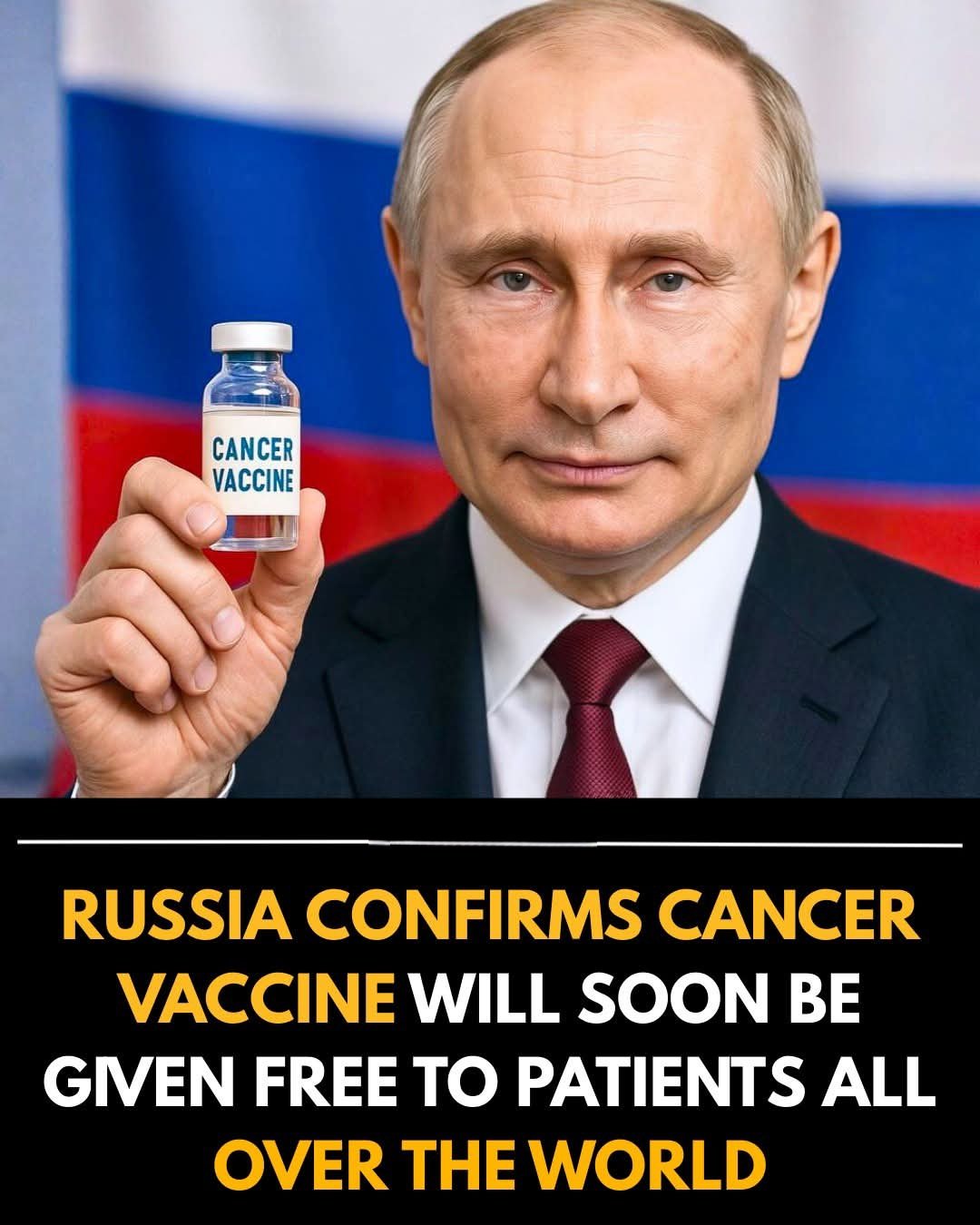
In December 2024, Russia authorities announced that they have developed a novel mRNA‑based cancer vaccine, which they plan to distribute free of charge to cancer patients worldwide.
-
The development was confirmed by Radiology Medical Research Center under the Russian Ministry of Health.
-
The vaccine is described as a therapeutic — not preventive — treatment, meaning it is intended for patients who already have cancer, rather than to immunize healthy people.
-
Cost estimates for production reportedly run at about 300,000 rubles (roughly US $2,800–3,000), per dose — but the state claims it will cover this, making it free for patients.

The vaccine is built on the same mRNA‑based technological approach that underpinned some COVID‑19 vaccines.
How It Is Supposed to Work
According to Russian reports:
-
The vaccine is “personalised”: It uses genetic analysis of a patient’s own tumor to identify tumor‑specific mutations (neoantigens). Those neoantigens — unique proteins expressed on the surface of the patient’s cancer cells — are then used to build a custom mRNA vaccine that trains the immune system to recognize and destroy the malignant cells.
-
Once administered, the patient’s immune system is meant to mount a targeted response: immune cells learn to identify the tumor‑specific antigens as “foreign,” enabling them to attack and eliminate cancer cells.
-
Proponents argue this approach — if successful — could avoid many of the harmful side effects of traditional treatments such as chemotherapy or radiation, because it harnesses the patient’s own immune system rather than damaging healthy cells indiscriminately.
In principle, this is part of a broader shift in oncology toward immunotherapy and personalized medicine: treatments tailored to the genetic profile of an individual’s cancer, rather than one‑size-fits-all protocols.
What Evidence Exists — And What’s Still Unclear
What we know (or have been told)
-
Russian officials say preclinical trials (on animals or cell models), showed that the vaccine suppressed tumor growth and prevented metastasis.
-
According to some recent news reports (as of 2025), early clinical testing — in a small number of human patients — reportedly resulted in significant reduction of tumor size (e.g. 60–80% shrinkage) and halted tumor expansion.
-
No major severe side effects have been publicly reported (so far), in those initial tests.
What remains uncertain, and why many experts urge caution
-
The vaccine appears not to be a “one‑size‑fits-all” cure for all cancers. Reports indicate it is — at present — being developed for specific cancer types (initially colorectal cancer, with possible future extension to others, such as glioblastoma and melanoma).
-
The claims of “100% efficacy” circulated by some outlets are widely regarded as exaggerated or misleading. Independent fact‑checks note there is no publicly available, peer‑reviewed evidence demonstrating complete cure or universal efficacy.
-
Long‑term outcomes remain unknown. Early results (tumor shrinkage, halted growth), are encouraging — but cancer outcomes depend heavily on long-term survival, relapse rates, immune memory, metastasis risk, and many other factors that require years of follow-up.
-
Regulatory approval and large-scale deployment remain pending. As of now, the reports refer to “preclinical trials” or very small human tests. There is no public record in internationally recognized scientific literature demonstrating large‑scale, randomised clinical trials, which is the standard for validating new cancer therapies.
-
Distribution outside Russia — globally — appears speculative. While Russian officials have spoken about the vaccine being “free for patients,” there are no confirmed plans (publicly available), for international distribution or access, much less logistical details about manufacturing, transport, regulatory clearance in other countries, cold‑chain requirements, quality control, or adaptation to different populations.
Because of these uncertainties, many health experts and fact‑checkers stress that while the announcements are promising, they should be viewed as early-stage hope — not a guaranteed cure.
Why the Buzz — And Why People Are Hopeful
The idea of a cancer vaccine resonates strongly, especially given how devastating many cancers remain worldwide, and how expensive — and side‑effect prone — traditional treatments like chemotherapy, radiation, and surgery often are.
-
A personalized immunotherapy that harnesses the patient’s own immune system could revolutionise oncology, potentially offering more effective treatments with fewer side effects.
-
For countries with limited access to advanced cancer care, such a therapy — if shown truly effective and made affordable — could democratise access to cancer treatment globally.
-
The approach aligns with cutting-edge trends in medicine: precision therapies tailored to genetic and molecular characteristics of patients’ tumors (rather than generic drugs).
For many patients — especially in low- and middle-income countries — the prospect of an affordable, effective cancer treatment is understandably a source of hope.
Why We Must Stay Skeptical (For Now)
While the reported early results are exciting, there are several structural and scientific reasons to remain cautious:
-
Lack of Published Data: As of now, there is no peer-reviewed scientific publication from Russian researchers detailing large-scale trials, methodology, long‑term results, or independent replication. Without this, the claims remain unverified.
-
Cancer’s Complexity: “Cancer” is not one disease but many — different types, subtypes, genetic variants. A vaccine or immunotherapy that works for one form (e.g. colorectal cancer), may not work for another (e.g. pancreatic, lung, or brain cancers).
-
Regulatory and Logistical Hurdles: To roll out a vaccine worldwide would require regulatory approvals in multiple countries, scalable manufacturing, cold‑chain logistics, quality control, and often adaptation to local conditions (e.g. different genetic backgrounds, co‑morbidities).
-
Real-world Efficacy vs Controlled Trials: Even if early trials are successful, real-world use often reveals unforeseen challenges: variable patient responses, immune evasion by tumors, long-term safety issues, cost and distribution barriers — especially in low‑resource settings.
-
Risk of Overhyping: Even among scientists working on immunotherapies, it’s rare to speak of “cures” — more often, the goal is to transform cancer into a manageable chronic condition, or to extend survival. Overstating results can raise false hopes and risk undermining trust if promised breakthroughs don’t materialise.
What to Watch Next — Key Milestones
If you’re following developments around this vaccine, here are key milestones to watch for:
-
Publication of Peer‑reviewed Clinical Trial Data — this is essential for evaluating safety, efficacy, long-term outcomes.
-
Clear Regulatory Approvals — in Russia and any country that might consider offering it to patients.
-
Details on Which Cancers are Targeted — whether it’s limited to certain types (e.g. colorectal, melanoma), or expanded to others.
-
Long-term Follow-up Results — relapse rates, survival rates, immune memory, quality-of-life measurements.
-
Plans (if any) for International Distribution — manufacturing capacity, cost, logistics, and access in countries outside Russia.
Conclusion — Hope With Caution
The announcements from Russia about a free, mRNA‑based cancer vaccine represent perhaps one of the most ambitious claims in contemporary oncology news. On paper — and in early reported results — the idea is immensely promising. The notion of personalized immunotherapy, delivered affordably (or free), to cancer patients worldwide captures a powerful hope: that the inequities in cancer care — especially in low‑ and middle‑income countries — could one day shrink.
But the history of medical science is littered with “breakthroughs” that failed to hold up under rigorous testing. At present, the lack of publicly available, peer‑reviewed data; the early, small-scale nature of the trials; and the absence of clear regulatory and logistical pathways for global distribution all suggest that we are not yet witnessing a definitive “cure.”
In short: this Russian vaccine might — if validated — one day mark a breakthrough. For now, it remains a promising development in progress, deserving of careful optimism — not blind faith.
