

In a decisive move to uphold regional stability and the rule of law, the United States announced sanctions today against the Rwandan Defense Force (RDF), and four senior RDF officers for their direct operational support to the March 23 Movement (M23), and affiliated armed groups operating in eastern Democratic Republic of the Congo (DRC), highlighting U.S involvement in the region.
This action comes just months after the historic signing of the Washington Accords for Peace and Prosperity, underscoring U.S commitment to accountability and regional security.
Violations of the Washington Accords
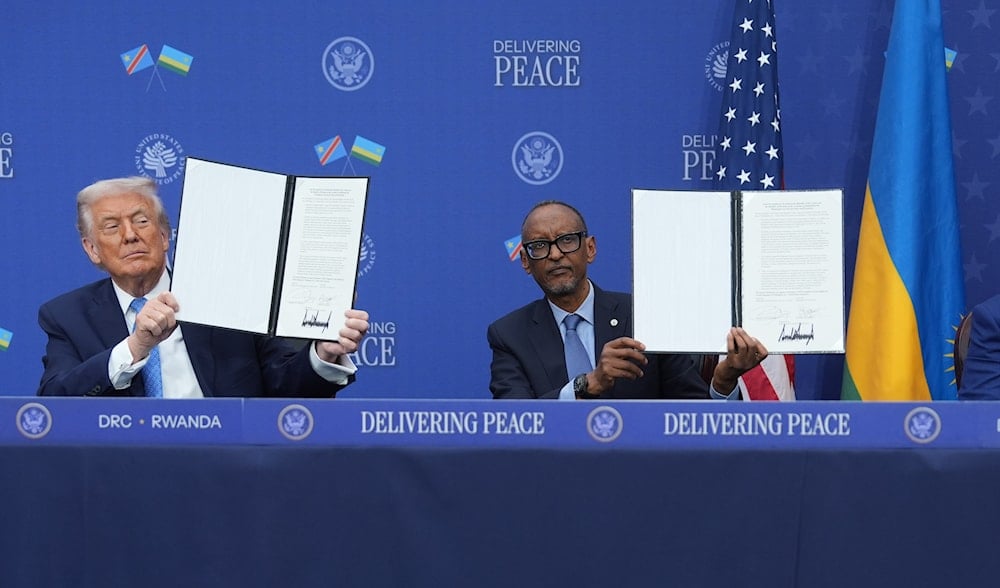
On December 4, 2025, President Donald J. Trump presided over the signing of the Joint Declaration of the Washington Accords, alongside DRC President, Félix Tshisekedi and Rwandan President, Paul Kagame.
The agreement represented a landmark commitment to ending hostilities, fostering economic cooperation, and promoting shared prosperity across the Great Lakes region.

However, shortly after the accords, M23 fighters—backed by the RDF—captured the strategic Congolese city of Uvira. M23 is already a U.S. and United Nations-sanctioned entity, notorious for widespread human rights abuses, including extrajudicial killings and targeted violence against civilians, particularly women and children.
The U.S. government has determined that the continued support from Rwanda’s military and senior leadership directly facilitated M23’s territorial gains and enabled these grave violations.
U.S. Sanctions and Accountability Measures
The sanctions imposed today target both the RDF as an institution and four senior officers responsible for operational support to M23. These measures aim to hold accountable those undermining the Washington Accords and to signal that violations of international commitments have consequences.
Sanctions include asset freezes and restrictions on U.S. financial transactions, effectively isolating the violators from the international economic system.
The U.S. Department of State emphasized that this action is consistent with longstanding American policy to promote peace and security in the DRC and the wider Great Lakes region. By penalising those who breach the accords, the United States seeks to reinforce adherence to international law and protect civilians from further harm.
A Firm Stand for Regional Peace
The Washington Accords were hailed as a turning point for the Great Lakes region, promising a new era of cooperation between Rwanda, the DRC, and neighbouring countries. President Trump and his administration have repeatedly affirmed that the United States is prepared to employ all available tools—diplomatic, economic, and otherwise—to ensure that the signatories honor their commitments.
Today’s sanctions are a clear demonstration of U.S. resolve: peace, stability, and prosperity must take precedence over destabilising military actions. The United States continues to engage with regional partners to prevent further violations, support humanitarian relief, and promote sustainable development in areas affected by conflict.
Looking Ahead
U.S. officials reaffirmed that sanctions are not punitive measures against the people of Rwanda but targeted actions against those obstructing the path to peace. Moving forward, the United States will continue to monitor compliance with the Washington Accords closely and work with the international community to ensure that perpetrators of violence are held accountable.
As the Great Lakes region seeks to heal from decades of conflict, today’s sanctions send a resounding message: commitments to peace are binding, and violations will have tangible consequences. The United States remains steadfast in its support for a stable, secure, and prosperous future for all citizens in the DRC and across the region.
