


The debate surrounding alleged mass killings of Christians in Nigeria has intensified sharply, following a series of escalating actions and statements from top U.S. political leaders after President Donald Trump formally designated Nigeria as a Country of Particular Concern (CPC)—citing what he called the mass murder of Christians.
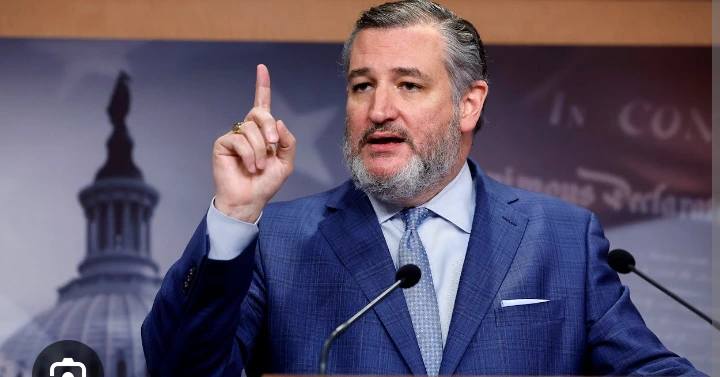
U.S. Senator Ted Cruz has now outlined the next step: targeted sanctions against Nigerian government officials allegedly complicit in the violence.
The move marks one of the most forceful U.S. interventions in Nigeria’s internal security affairs in decades, reflecting deepening concern in Washington over recurrent religiously linked violence in Africa’s most populous nation.
Trump’s Warning: Military Intervention Not Off the Table
Trump’s CPC designation was accompanied by a startling warning: the United States military could intervene in Nigeria if necessary, targeting Islamic extremist groups said to be responsible for killing thousands of Christians in multiple states across the country. He specifically pointed to groups like Boko Haram, factions of the Islamic State West Africa Province (ISWAP), and violent extremist herder militias, accusing them of orchestrating widespread atrocities with insufficient resistance from the Nigerian government.


This declaration sent shockwaves through diplomatic circles, as foreign military involvement has long been considered a red line for Nigerian sovereignty.
Ted Cruz: “The Next Step Is Targeted Sanctions”
Speaking in an interview with Fox News, Senator Ted Cruz offered the clearest roadmap yet for what Washington intends to do next.
According to Cruz, the U.S. will pursue targeted sanctions on Nigerian government officials who are aiding, enabling, or ignoring terrorism and religious persecution.
“The next step is putting targeted sanctions on particular government officials; government officials who are complicit in what is happening,” Cruz said.
He emphasized that the problem is not limited to extremist groups alone, but includes state-level legal systems and political actors who, in his view, perpetuate or tolerate anti-Christian persecution.
Sharia and Blasphemy Laws Under Scrutiny
Cruz highlighted a particularly contentious issue: the existence of Sharia and blasphemy laws in 12 northern Nigerian states.
“There are twelve states in Nigeria that have Sharia and blasphemy laws. Those laws are used to persecute Christians, those laws are used both to go directly after Christians by the government,” Cruz asserted.
His comments reflect concerns long raised by international religious freedom organizations, who argue that blasphemy laws, especially when enforced by Sharia courts, have been used to imprison or condemn Christians, reformist Muslims, and minority groups.
Several high-profile cases—such as death sentences for alleged blasphemy, mob killings sparked by accusations, and prolonged detentions—have fueled these criticisms.
Accusation of Government Complicity
Cruz went further, accusing the Nigerian government not merely of negligence, but of willful inaction:
He claimed that the government is “walking the other way while Boko Haram murder and commit horrible atrocities on these Christians.”
This accusation aligns with earlier criticisms from U.S. lawmakers who argue that Nigeria has failed to curb extremist violence in rural regions, where armed groups have carried out church burnings, village raids, mass kidnappings, and targeted assassinations.
What Targeted Sanctions Could Mean
If enacted, these sanctions could include:
-
Travel bans for Nigerian political and military officials
-
Asset freezes for individuals linked to abuses
-
Restrictions on foreign banking access
-
Suspension of security cooperation with implicated states or agencies
Such measures would mark one of the most confrontational U.S. foreign policy actions toward Nigeria since the 1990s.
A Diplomatic Crossroads
Cruz’s proposal, combined with Trump’s CPC designation and warnings of possible military intervention, places Nigeria at a complex crossroads:
-
U.S.–Nigeria relations could be strained, especially as Aso-villa tilts towards rejecting the genocide framing.
-
Domestic tensions in Nigeria may intensify, particularly between religious communities.
-
International human rights debates may sharpen around definitions of genocide, persecution, and state responsibility.
Still, supporters of the measures argue that strong action is overdue.
Conclusion: A Global Spotlight on Nigeria’s Crisis
Senator Ted Cruz’s latest comments represent a significant escalation in America’s response to the ongoing violence in Nigeria. As he pushes for targeted sanctions and greater accountability, and as Trump signals that even military action is possible, global attention is increasingly turning toward how Nigeria handles extremist violence and religious persecution.
Whether these actions lead to meaningful protection for vulnerable Christian communities—or trigger major diplomatic fallout—remains to be seen. But it is clear that the United States is now treating the situation not as a local conflict, but as a matter of urgent international concern.