


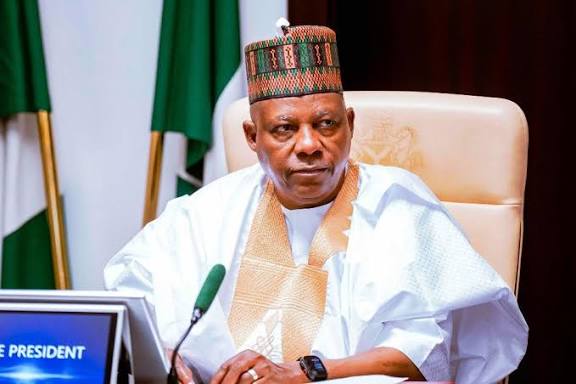
Vice President Kashim Shettima has emphasized that Nigeria must urgently revive and modernize its railway network if it intends to maintain its position as Africa’s leading logistics hub.
Speaking in Abuja on Monday while declaring open the second International Railway Conference, Shettima called for stronger collaboration, networking, and partnerships among stakeholders, stressing that the opportunities in the railway sector cannot be overlooked.
“The challenge ahead of us is to lead this race as the logistics hub of Africa by reviving and revitalising our railway services,” he said. “We must be conscious of our place as the anchor of West Africa’s economy and home to the continent’s largest population as we prepare for the adoption of modern railway infrastructure. This awakening inspired projects such as the Kano–Maradi railway modernisation, which opens new gateways for trade under the African Continental Free Trade Area.”
The Vice President tied this effort to the administration’s Renewed Hope Agenda, saying it is critical to reduce over-reliance on road transport, which has caused congestion, rapid infrastructure deterioration, and higher accident rates. He added that railways offer safer, cheaper, and more environmentally friendly options that can cut carbon emissions and support sustainable development.


Shettima further noted that modernisation projects such as Lagos–Kano, Kano–Maradi, and Port Harcourt–Maiduguri railways were designed with private sector participation in mind, insisting that their sustainability and efficient utilisation were as important as their timely completion.
He restated the Tinubu administration’s commitment to linking cities across Nigeria through roads and railways to enhance industrial growth. “Our aspiration is for a nation where industries can convey their products to the market, and where raw materials can move seamlessly from primary producers to industries without hindrance,” he said.
Declaring the conference open, Shettima described the gathering as an invaluable platform to develop practical strategies to achieve these goals. He also commended the Federal Ministry of Transportation, De-Sadel Nigeria Limited, and the Abuja Chamber of Commerce and Industry for their role in convening the event and reconnecting Nigeria with global partners in the rail sector.