

When President Bola Ahmed Tinubu slipped and fell during a public appearance in Türkiye, the moment was fleeting. The noise it generated in Nigeria was not. Within hours, laughter, mockery, concern, anger, and political point-scoring filled the airwaves and the internet. A man stumbled, but a nation revealed itself.
The fall did not injure the president. Yet it touched a raw nerve in the public psyche, reopening questions about leadership, aging, power, and empathy in a society already stretched thin by economic and political strain.
A Human Moment in an Inhumane Age
A slip is one of the most human things imaginable. It is sudden, unplanned, and indiscriminate. It does not consult status, title, or ideology. In that sense, President Tinubu’s fall was not remarkable. What was remarkable was how eagerly it was seized upon.
Many laughed—some lightly, some cruelly. Memes multiplied. Videos were slowed, replayed, and adorned with captions meant to wound rather than amuse. In the rush to score political points, the simple truth was forgotten: age comes for everyone, and gravity respects no office.


Those who laughed the loudest should remember this—time is patient, and it is undefeated. The legs that are steady today will one day tremble. The steps that seem effortless now may one day require care. And it is worth hoping that when that day comes, they will not be met with the same merciless laughter they once offered so freely.
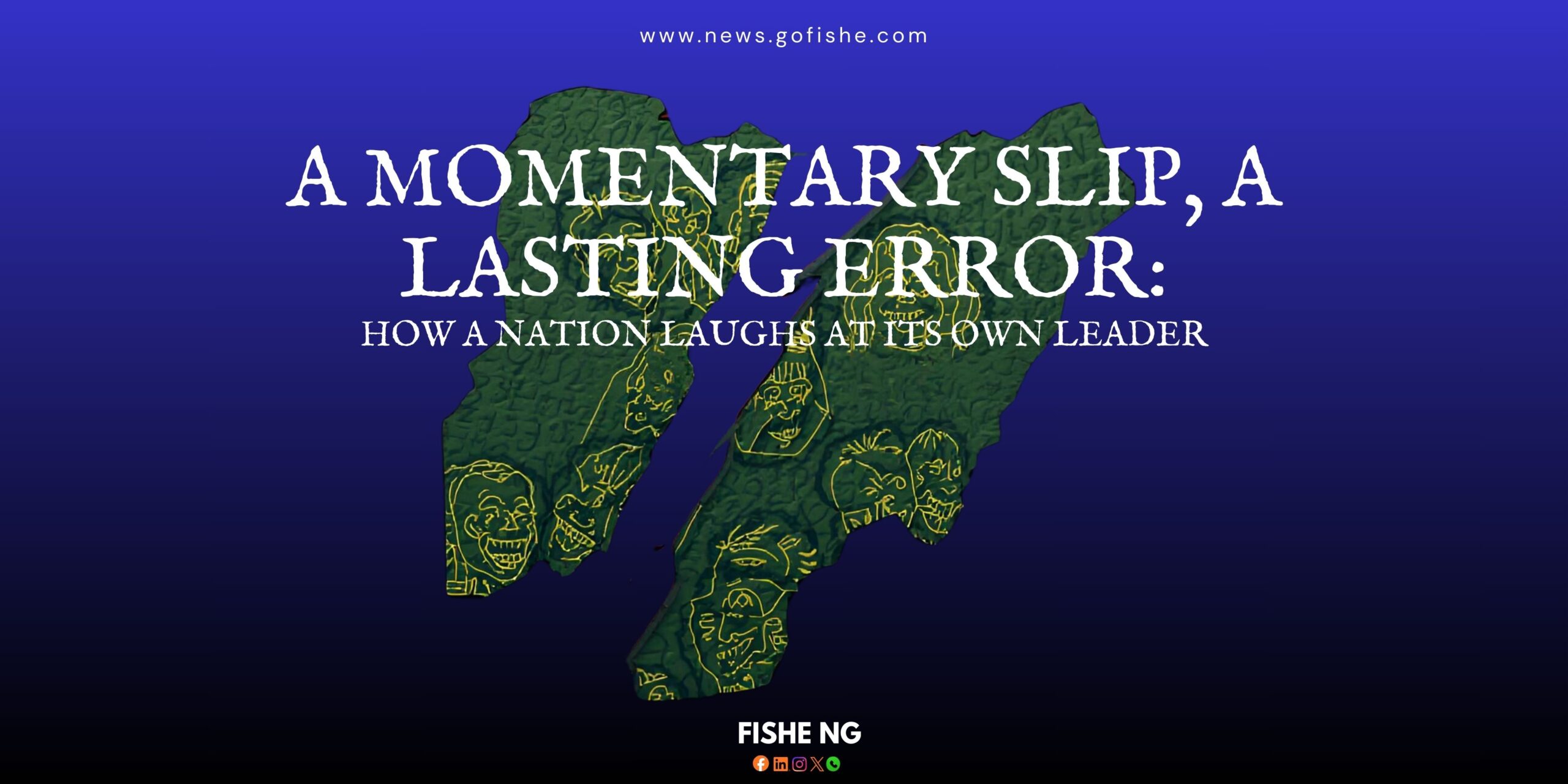

Mockery, Mortality, and Power
In a democracy, leaders must endure scrutiny and satire. That is not in question. But there is a difference between mocking power and mocking frailty. One strengthens society; the other hollows it out.
President Tinubu’s age has long been part of public debate, often raised as a political argument. Yet aging is not a crime, nor is it unique to leadership. To laugh at a fall is, in some ways, to laugh at the future version of oneself. Today’s mocker is tomorrow’s mocked—if not publicly, then quietly, in the mirror.
A nation that forgets this risks losing not just respect for its leaders, but compassion for itself.
The Deeper Anger Beneath the Laughter
The hullabaloo was not really about the fall. It was about hunger, inflation, insecurity, and broken trust. The laughter was sharp because the pain beneath it is sharp. For many Nigerians, the fall became a symbol—fair or not—of a country struggling to keep its balance.
But symbolism can be dangerous when it replaces fairness. A momentary slip does not explain complex national failures, nor does it absolve citizens of the responsibility to criticise intelligently rather than instinctively.
On Foreign Soil, At Home in Judgment
That the incident occurred in Türkiye added salt to the wound. Some felt national embarrassment; others dismissed that concern entirely. Yet dignity is not preserved by pretending leaders are immune to age or accident. Nor is it preserved by turning a human moment into a national sport of ridicule.
True dignity lies in proportion—in knowing when to laugh, when to criticise, and when to pause.
A Word to the Laughing Crowd
Those who laughed should laugh less loudly and think a little longer. Life is a long road, and no one walks it without missing a step. If fate is kind, they will grow old. If fate is very kind, they will grow old with dignity. And if fate is ironic—as it often is—they may one day stumble in public view.
When that day comes, may they not be judged only by that moment.
Conclusion
President Tinubu slipped in Türkiye. Nigeria roared in response. The fall was human; the reaction was revealing. Nations, like people, are judged not by whether they stumble, but by how they respond to stumbles—especially those of others.
To mock endlessly is easy. To govern wisely is hard. To age with grace is harder still. And to remember that today’s laughter may echo back at us tomorrow—that is the humility a nation must learn, if it hopes to save itself from its own errors.