

Close Menu
Fishe News
  • Home
  • Entertainment
  • National
  • International
  • Tech
  • Politics
  • Sports
  • PMNI
  • More
    • Business
    • Culture
    • Education
    • History
    • Health
  • Featured
    • Fishe Travel
    • Fishe Media
    • Fishe TV
Facebook X (Twitter) Instagram
Trending
  • Tinubu Inaugurates A Task Force To Formulate Fresh Reforms In Nigeria’s Petroleum Industry
  • NDPC Cautions Content Creators Against Violating Citizens’ Privacy
  • “Comprehensive List Of 114 Nigerian Universities Authorised To Offer Law Programmes”
  • Zimbabwe President Hosts Rugby Africa Chief To Boost World Cup 2027 Plans
  • Chevron Appoints Emmanuelle Garinet, To Lead Exploration In Sub-Saharan Africa And The Americas
  • Tinubu Polytechnic, Epe University Receive ₦4bn Take-Off Grants From FG
  • FCCPC Reports Nigerians Are Most Exploited By Telecom And Energy Providers
  • “Petrol Price Hits ₦1,175 Per Litre As Dangote Responds To Crude Oil Surge Again”
X (Twitter) Instagram
Fishe NewsFishe News
Subscribe
Saturday, March 14
  • Home
  • Entertainment
  • National
  • International
  • Tech
  • Politics
  • Sports
  • PMNI
  • More
    • Business
    • Culture
    • Education
    • History
    • Health
  • Featured
    • Fishe Travel
    • Fishe Media
    • Fishe TV
Fishe News
Home»Business»Stories

Soviet Spacecraft Kosmos 482 Crashes Back To Earth After 53 Years In Orbit

Adejuyigbe FrancisBy Adejuyigbe FrancisMay 12, 2025 Stories No Comments3 Mins Read
Share Facebook Twitter LinkedIn Email WhatsApp

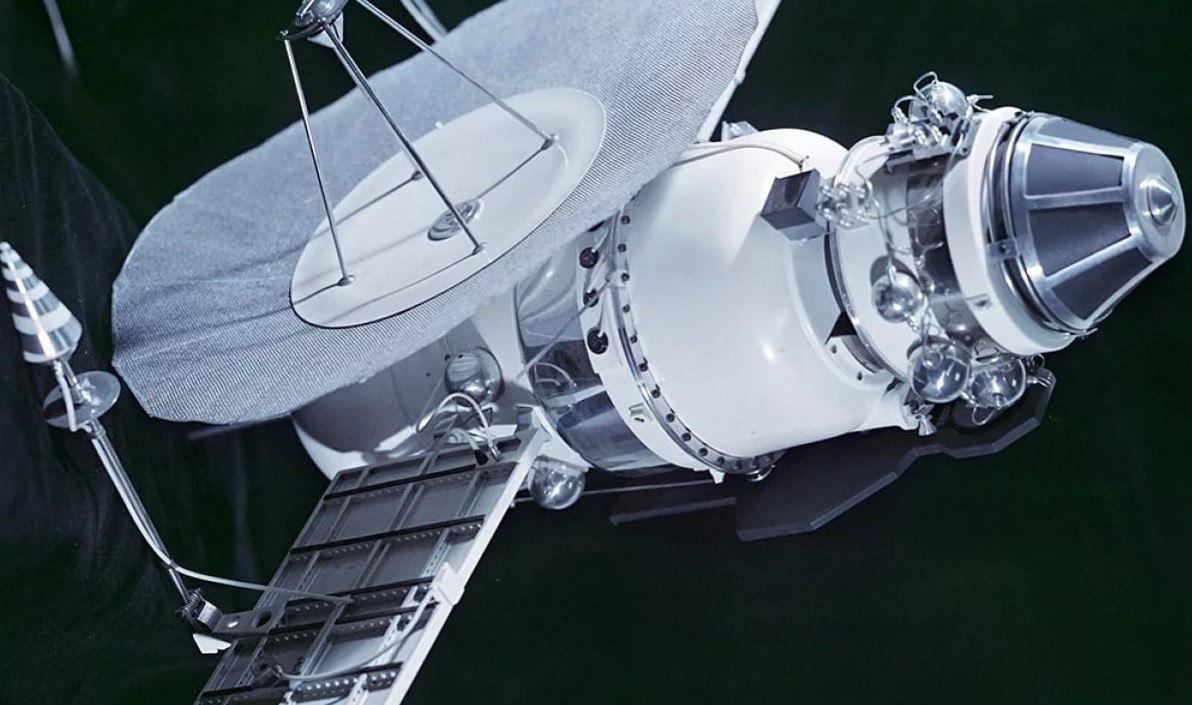
Soviet Spacecraft Kosmos 482 Crashes Back To Earth After 53 Years In Orbit.

After more than half a century adrift in space, the Soviet spacecraft Kosmos 482, originally intended for Venus, made an uncontrolled return to Earth on 10 May 2025, splashing down in the Indian Ocean west of Jakarta, Indonesia, at approximately 9:24 a.m. Moscow time (2:24 a.m. ET), according to Roscosmos, Russia’s state space agency.


Launched on 31 March 1972 as part of the Soviet Union’s Venera programme, Kosmos 482 was designed to land on Venus and study its harsh environment. A rocket malfunction, specifically a premature shutdown of one of its boosters, stranded the spacecraft in a highly elliptical Earth orbit, where it remained for 53 years. The probe, weighing approximately 495 kg and measuring 1 metre across, was built with a titanium heat shield to withstand Venus’s extreme temperatures and pressures—conditions far more hostile than Earth’s atmosphere. Experts believe it likely survived re-entry largely intact, though its final condition remains unconfirmed.



The spacecraft, a sister probe to the successful Venera 8, separated into four pieces after failing to achieve a Venus transfer trajectory. Two pieces decayed within days, while the main bus re-entered between 1972 and 1981. The descent craft, the last remaining fragment, was the focus of global attention as it spiralled back to Earth. Its orbit, ranging from 210 to 9,800 km, made precise predictions of its re-entry challenging, with potential landing zones spanning 52 degrees north to 52 degrees south latitude, encompassing much of the globe.


The European Space Agency (ESA) and EU Space Surveillance and Tracking (EU SST) closely monitored the descent, noting its last radar detection over Germany before it vanished, indicating re-entry likely occurred around 6:04–7:32 UTC on 10 May. The US Space Command had not confirmed the event by Saturday afternoon, reflecting the difficulty of tracking uncontrolled re-entries. The craft’s titanium shell and robust design raised concerns it could reach the surface, but with 70% of Earth covered by water, the risk to populated areas was low—likened to a 1-in-several-thousand chance of harm, far less than a lightning strike.


Kosmos 482’s return highlights the enduring legacy of the Soviet Venera programme, which achieved historic Venus landings, including the first surface images in 1982. It also underscores the growing issue of space debris, with over 1.2 million objects larger than 1 cm in orbit, and uncontrolled re-entries occurring frequently. Experts advocate for future spacecraft to be designed for controlled re-entries to minimise risks.


Social media posts on X reflected public fascination, with some noting the spacecraft’s durability and others speculating on its landing site, though no confirmed sightings or damage reports emerged. Under a UN treaty, any surviving wreckage belongs to Russia, but recovery from the ocean is unlikely.


This event, while a minor footnote in space exploration, evokes a nostalgic nod to the Cold War’s ambitious space race, when the Soviet Union pushed the boundaries of planetary exploration.


Sources: The New York Times, Live Science, AP News, ESA, NASA, Forbes, Scientific American, CNN

Exploration Kosmos 482 Orbit Soviet Spacecraft Venus
Share. Facebook Twitter LinkedIn WhatsApp
Adejuyigbe Francis
  • Website

Thought Leader, Idea Bank, Nation Builder.

Keep Reading

Tinubu Inaugurates A Task Force To Formulate Fresh Reforms In Nigeria’s Petroleum Industry

NDPC Cautions Content Creators Against Violating Citizens’ Privacy

“Comprehensive List Of 114 Nigerian Universities Authorised To Offer Law Programmes”

Zimbabwe President Hosts Rugby Africa Chief To Boost World Cup 2027 Plans

Chevron Appoints Emmanuelle Garinet, To Lead Exploration In Sub-Saharan Africa And The Americas

Tinubu Polytechnic, Epe University Receive ₦4bn Take-Off Grants From FG

Add A Comment

Comments are closed.

Here is spotlighting many benefits of journeying with either Lagos State’s Blueline or Redline rails for a hassle-free day, week, month and year. Thank God for the Igbega Eko. Together we rise.
https://youtu.be/V67GV8wgyjw

Latest Posts

  • Tinubu Inaugurates A Task Force To Formulate Fresh Reforms In Nigeria’s Petroleum Industry
  • NDPC Cautions Content Creators Against Violating Citizens’ Privacy
  • “Comprehensive List Of 114 Nigerian Universities Authorised To Offer Law Programmes”
  • Zimbabwe President Hosts Rugby Africa Chief To Boost World Cup 2027 Plans
  • Chevron Appoints Emmanuelle Garinet, To Lead Exploration In Sub-Saharan Africa And The Americas
Featured
About Fishe

FISHE was founded with the goal of helping clients thrive in today’s highly competitive marketing environment. While other companies rush to abandon traditional marketing in favour of digital techniques, we’ve bolstered our offline marketing capabilities while also equipping our team with seasoned professional knowledge to support our clients’ digital needs.

Through creative designs, we enhance our clients’ products and services the right way that would attract their target audience, thus, making the perception of their company a reality.

  • LTV 8, Agidingbi Road, Alausa, Ikeja, Lagos.
  • +234 806 003 7277
  • info@gofishe.com
FISHE, Your Best Plug For Bus Stop Shelter Ad

LATEST POSTS

Tinubu Inaugurates A Task Force To Formulate Fresh Reforms In Nigeria’s Petroleum Industry

March 14, 2026

NDPC Cautions Content Creators Against Violating Citizens’ Privacy

March 14, 2026

“Comprehensive List Of 114 Nigerian Universities Authorised To Offer Law Programmes”

March 14, 2026

Zimbabwe President Hosts Rugby Africa Chief To Boost World Cup 2027 Plans

March 14, 2026

Chevron Appoints Emmanuelle Garinet, To Lead Exploration In Sub-Saharan Africa And The Americas

March 14, 2026
Featured

Subscribe to Updates

Get the latest news from FISHE about politics, economy, health and business, etc

Facebook X (Twitter) Instagram Pinterest
© 2026

Type above and press Enter to search. Press Esc to cancel.