


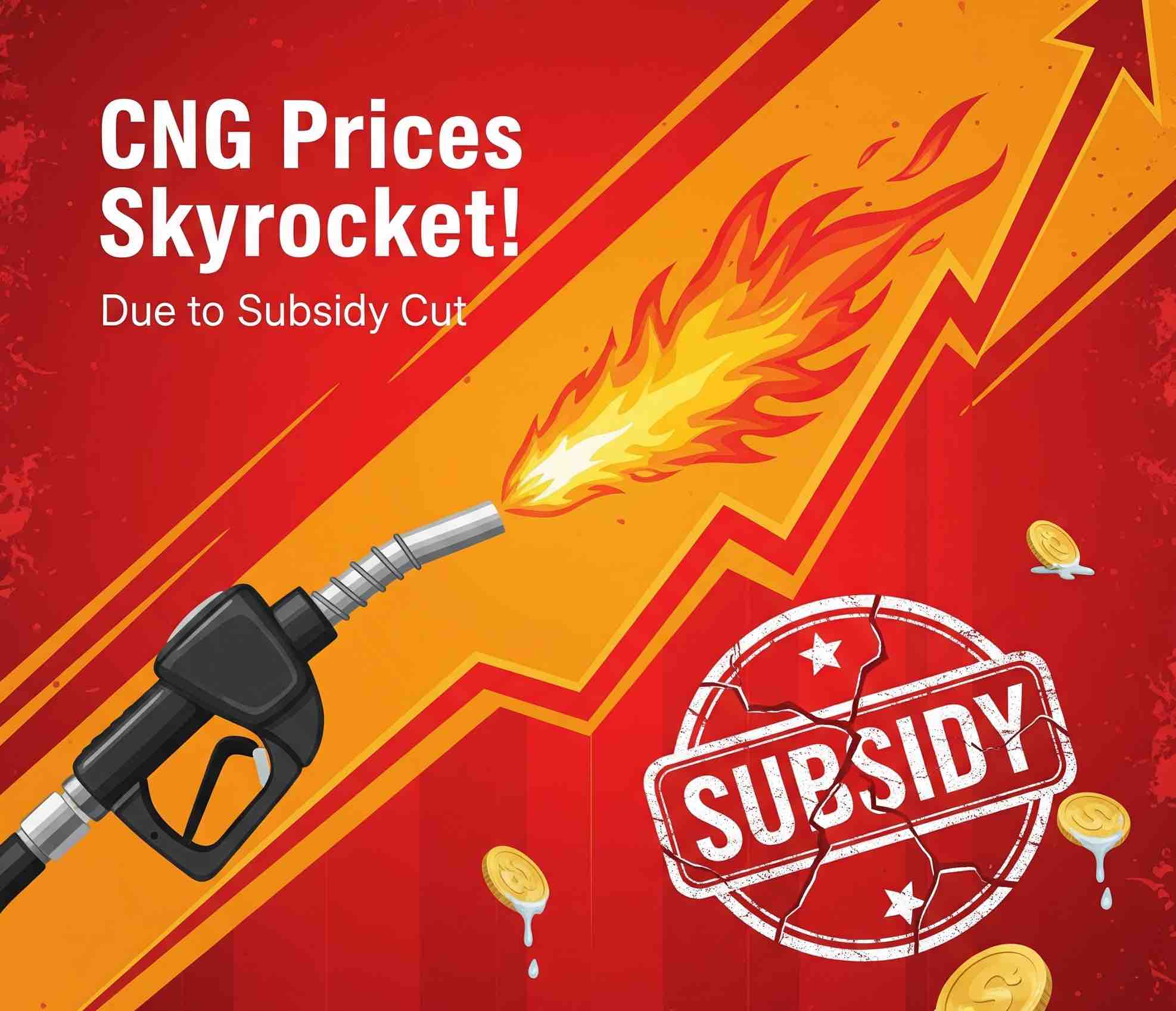
As of yesterday September 3, 2025, the cost of Compressed Natural Gas – (CNG), a fuel once heavily subsidized by the federal government of Nigeria, has nearly doubled, rising from around ₦230 to ₦450 per standard cubic metre (SCM), for trucks.
From Subsidy to Price Shock
Meanwhile, private car drivers and commercial transport operators are being charged a slightly lower rate of ₦380/SCM.
This comes amid a quiet rollback of subsidy support by the federal government, which has left many stations scrambling to adjust prices. Motorists across the country are now grappling with frustration, long queues, and renewed doubts about the touted affordability of CNG.
Motorists in Limbo
-
Drivers express disillusionment: Many had invested upwards of ₦1.5 million to convert their vehicles to CNG, only to be hit by the sudden hike and station shortages. One Lagos-based ride-hailing driver lamented how the “difference between CNG and petrol is not significant” anymore.

-
Long queues escalate frustrations: Reports mention lines stretching up to 1.5 km at CNG stations in Lagos, highlighting the lack of station infrastructure to meet rising demand.
-
Regional disparities emerge: In Benin City, motorists note that with only a few stations, waiting times are long, yet they still affirm that CNG offers better value than petrol.
Policy Background & the Road Ahead
The fuel subsidy removal in May 2023 led to skyrocketing petrol prices, from about ₦175 per litre to well over ₦600 naira, prompting the government to promote CNG as a cleaner, cheaper alternative. By early 2025, CNG prices were kept deliberately low as part of the Presidential CNG Initiative (PCNGI), leading to adoption by over 100,000 vehicles and the rollout of dozens of stations and conversion centres.
However, With Subsidies Now Scaled Back:
-
Retailers expect further price increases, with estimates potentially moving up between ₦500–₦600 per SCM to sustain operations and attract investors.
-
The federal government, through the PCNGI, remains focused on expanding infrastructure, aiming to increase refueling stations to reduce queues and improve reliability.
Why This Matters
| Impact Area | Details |
|---|---|
| Cost Burden on Motorists | Savings from CNG are eroding; financial viability of conversions is under threat. |
| Infrastructure Shortfalls | Insufficient stations and long queues are hindering user adoption and satisfaction. |
| Investment Signals | Unpredictable pricing undermines investor confidence and sector growth. |
| Policy Tensions | Without a balance between affordability and commercial viability, CNG’s potential may stall. |
Treading a Fine Line Conclusion
The recent escalation in CNG prices underscores a critical juncture for Nigeria’s energy strategy. While removing subsidies may align with fiscal goals, and encourage private sector involvement, it risks undoing the gains of early CNG adoption efforts.
For CNG To Emerge As A Sustainable Alternative:
-
Pricing must be stable and balanced: Affordable for consumers, yet profitable enough for infrastructure and service providers to expand.
-
Infrastructure must catch up: More stations, better distribution, and widespread accessibility are essential for scaling usage.
-
Policy clarity is vital: Long-term planning and transparent pricing frameworks will be key to rebuilding trust among motorists and investors alike.
Only with these aligned can Nigeria’s CNG program achieve its vision of cheaper, cleaner mobility for all.
