

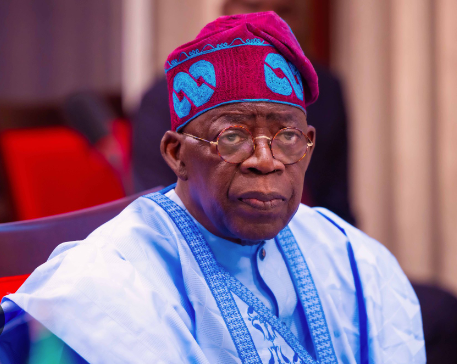
Tinubu Administration Champions Equitable Development Across Nigeria, Says FG.
The Federal Government has robustly defended President Bola Ahmed Tinubu’s administration, asserting that it has consistently prioritised fairness, justice, and equity in distributing projects, appointments, and opportunities across Nigeria’s six geopolitical zones. In a statement addressing recent misinformation, the government highlighted its commitment to balanced development, dismissing claims of regional bias.
The administration’s infrastructure agenda is a cornerstone of its equitable approach. Major projects span the nation, from the Lagos–Calabar Coastal Highway in the South to the Sokoto–Badagry Superhighway in the North. Data reveals the Northwest as the largest beneficiary, with over ₦5.97 trillion allocated, representing 40% of approvals. The South-South follows with ₦2.41 trillion, North Central with ₦1.13 trillion, South West (excluding Lagos) with ₦604 billion, South East with ₦407 billion, and North East with ₦400 billion. Of the total length of legacy road projects, the North accounts for 52%, while the South holds 48%.

Significant infrastructure initiatives include light rail projects in Kano and Kaduna, funded at ₦150 billion and ₦100 billion respectively, alongside metro line developments in Lagos and Ogun States. These projects are projected to generate over 250,000 jobs nationwide. The rehabilitation of the Eastern Corridor rail line from Port Harcourt to Maiduguri is also underway, complemented by the revival of over 1,000 primary healthcare centres nationwide.
In the North, key projects include the dualisation of the Sokoto–Gusau–Funtua–Zaria Road (₦824 billion), the Abuja–Kaduna–Kano Road (₦764 billion), and the Kano–Maradi rail line, which has progressed from 5% to 67% completion. In the South, developments such as the Lagos–Ibadan Road, the rehabilitation of major bridges in Lagos, and the Bodo–Bonny Road in Rivers (₦200 billion) underscore the government’s focus on southern infrastructure. The South East benefits from projects like the Enugu–Onitsha Road (₦202 billion) and the Second Niger Bridge Access Road (₦175 billion), while the South-South sees advancements like the Eleme–Onne Road (₦156 billion) and the East–West Road Section 2 (₦186 billion).
Beyond transport, the administration has revived the 255MW Kaduna Power Plant and advanced the AKK Gas Project, alongside oil and gas exploration in Bauchi and Gombe States. The establishment of five Regional Development Commissions and the Federal Ministry of Livestock Development further demonstrates a commitment to addressing diverse regional needs.
The government also emphasised equity in federal appointments, with President Tinubu selecting capable Nigerians from all regions based on competence and inclusivity. The Renewed Hope Agenda, it said, places inclusivity at its core, ensuring no part of the country is overlooked.
Mohammed Idris, the Honourable Minister of Information and National Orientation, described President Tinubu as a “fair, pragmatic, and consequential reformer” whose leadership is unifying and steadfast in its commitment to equity. The administration’s efforts, he assured, guarantee that every region of Nigeria is included in the nation’s development trajectory.
