


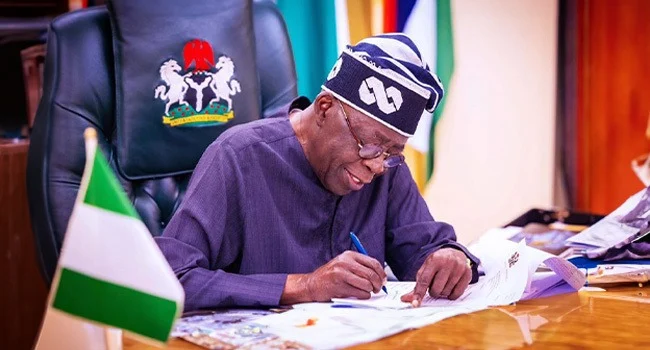
Nigeria’s petroleum sector remains the backbone of the economy, accounting for the bulk of export earnings, foreign exchange inflows, and government revenue. However, persistent challenges such as declining crude oil production, weak investment inflows, regulatory bottlenecks, and governance concerns have limited the sector’s full potential. In response, President Bola Ahmed Tinubu has approved the creation of a Presidential Petroleum Reform and Value Optimisation Task Force to design and coordinate a new wave of structural reforms in the petroleum industry.
The initiative represents a strategic move by the administration to deepen reforms, strengthen governance, attract investment, and reposition Nigeria as a competitive global energy player. The task force is expected to produce actionable policy blueprints and provide a roadmap for transforming the petroleum sector into a more efficient and transparent engine of economic growth.
Background to the Reform Initiative
Nigeria has undertaken several petroleum sector reforms in recent years, including the removal of fuel subsidies and the implementation of the Petroleum Industry Act (PIA).
Despite these efforts, the sector still faces significant structural challenges such as:
-
Underinvestment in exploration and production

-
Weak institutional coordination among regulators
-
Low production levels compared to capacity
-
Limited domestic refining capacity
-
Policy uncertainty affecting investor confidence
To address these issues, the Tinubu administration initiated further reforms aimed at boosting production, improving regulatory clarity, and attracting global investment into Nigeria’s oil and gas industry.
The newly established task force is therefore designed to consolidate ongoing reforms and accelerate the transformation of the petroleum sector through coordinated policy design and implementation strategies.
Composition of the Task Force
The Presidential Petroleum Reform and Value Optimisation Task Force is composed of experienced professionals drawn from finance, energy, and business sectors.
The task force is chaired by Fola Adeola, co-founder of Guaranty Trust Bank and founder of the Fate Foundation.
Other members include:
-
Ademola Adeyemi‑Bero
-
Osagie Okunbor
-
Abubakar Suleiman
-
Adaeze Aguele
-
Farouk Gumel
-
Phillipa Osakwe‑Okoye
-
Seyi Bella
The secretary of the task force is Mofoluwasho Fadayomi.
The group is structured as a technical reform body rather than a political or representative committee, meaning its members were selected primarily for their professional expertise and industry experience.
Mandate and Responsibilities of the Task Force
The task force has been established as a time-bound executive working group tasked with producing concrete reform plans and ensuring the alignment of existing initiatives in the petroleum sector.
Its responsibilities include:
-
Designing the next phase of structural reforms in Nigeria’s petroleum industry.
-
Coordinating ongoing reform initiatives across government agencies and regulatory bodies.
-
Engaging stakeholders such as industry operators, regulators, investors, and civil society organisations.
-
Developing actionable implementation strategies for petroleum sector transformation.
-
Reporting directly to the President with monthly progress reports.
An interim report is expected within three months, while the final report will be delivered within six months of the task force’s inauguration.
Key Reform Blueprints Expected from the Task Force
1. Implementation Toolkit for Immediate Structural Fixes
The first major deliverable is an implementation framework aimed at addressing urgent structural challenges in the petroleum sector.
This toolkit will include:
-
Draft legislative amendments
-
Executive policy instruments
-
Institutional restructuring proposals
The objective is to remove regulatory obstacles and improve operational efficiency across the sector.
2. Capital and Liquidity Acceleration Blueprint
The second reform blueprint focuses on unlocking between $5 billion and $10 billion in sectoral liquidity to stimulate investment in Nigeria’s petroleum industry.
Key objectives include:
-
Increasing capital inflows into upstream and downstream operations
-
Strengthening Nigeria’s attractiveness as a global energy investment destination
-
Protecting national economic interests while encouraging private sector participation
3. National Energy Transformation Strategy
The third blueprint will outline a ten-year strategic roadmap for Nigeria’s energy sector.
This strategy will establish measurable targets for:
-
Crude oil production levels
-
Foreign exchange earnings
-
Contribution of the petroleum sector to GDP
-
Cost competitiveness in global energy markets
The long-term plan aims to ensure the sustainability and resilience of Nigeria’s energy economy.
Government Directives Supporting the Task Force
To ensure the effectiveness of the reform initiative, President Tinubu has issued several directives to government institutions:
-
All ministries, departments, and agencies (MDAs), in the petroleum sector must provide full technical support to the task force.
-
Existing committees and working groups involved in sector reforms must align their activities with the task force.
-
Relevant documents, data, and institutional knowledge must be made available to the group.
These directives are intended to avoid duplication of mandates and improve coordination across the petroleum sector reform architecture.
Expected Impact of the Reform Initiative
1. Increased Investment in the Oil and Gas Industry
The reform strategy aims to attract new investments into Nigeria’s petroleum sector by improving regulatory clarity and unlocking capital for projects.
2. Improved Governance and Transparency
By restructuring institutions and strengthening oversight mechanisms, the reforms could reduce inefficiencies and improve accountability.
3. Enhanced Economic Growth
A more efficient petroleum industry could boost government revenue, foreign exchange earnings, and industrial development.
4. Strengthened Global Competitiveness
The reforms aim to position Nigeria as a competitive destination for global energy investment.
Conclusion
The establishment of the Presidential Petroleum Reform and Value Optimisation Task Force marks a significant step in the President Tinubu-led government’s effort to transform the petroleum sector. By bringing together industry experts to design and implement structural reforms, the Tinubu administration seeks to address long-standing challenges and unlock the sector’s full economic potential.
If successfully implemented, the reforms could lead to increased investment, improved governance, and stronger economic performance, ensuring that Nigeria’s petroleum resources contribute more effectively to national development and long-term economic sustainability.
