

Tinubu’s Economic Reforms Praised By WTO Chief Okonjo-Iweala.
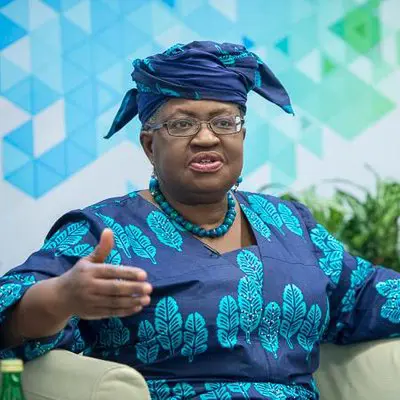
Dr. Ngozi Okonjo-Iweala, Director-General of the World Trade Organisation (WTO), has commended President Bola Tinubu for his administration’s efforts to stabilise Nigeria’s economy, describing the ongoing economic reforms as moving in the right direction. Speaking to journalists following a courtesy visit to the President at the Aso Rock Villa in Abuja on Thursday, 14 August 2025, Okonjo-Iweala highlighted the importance of these reforms as a foundation for future growth while urging the government to prioritise economic expansion and social safety nets.
Okonjo-Iweala, a former Nigerian Finance Minister and globally respected economist, noted that President Tinubu and his team have worked diligently to bring stability to an economy that has faced significant challenges. “You cannot improve an economy unless it’s stable,” she said, giving credit to the administration for creating a more predictable economic environment. She acknowledged that reforms, including the controversial removal of the petrol subsidy, have been critical steps toward achieving this stability.

However, the WTO chief stressed that stability alone is not enough. She called for a renewed focus on driving economic growth to create jobs and increase disposable income for Nigerians. “What is needed next is growth. We now need to grow the economy and put in place social safety nets to support those feeling the pinch of the reforms,” Okonjo-Iweala stated. She emphasised the need for targeted measures to cushion the hardships faced by vulnerable citizens, particularly in light of the economic strain caused by recent policy changes.
During her visit, Okonjo-Iweala also briefed President Tinubu on the launch of the Women Exporters Fund for the Digital Economy, a joint initiative by the WTO and the International Trade Centre (ITC) in Geneva. Supported by Nigeria’s First Lady, Senator Oluremi Tinubu, the programme aims to empower Nigerian women entrepreneurs in the digital export economy. Nigeria emerged as one of only four countries globally selected for this initiative, with 146 women entrepreneurs set to benefit. Sixteen established businesswomen will receive 18 months of technical and business support to scale their enterprises, while another 100 will each receive $5,000 and 12 months of mentorship to start or grow their businesses.
Okonjo-Iweala praised the Federal Ministry of Trade and Investment and the Nigerian Export Promotion Council for their roles in championing the initiative. She underscored the potential of women-led businesses to drive economic growth, stating, “This programme will put more money into households and boost the nation’s economy by empowering women to create jobs and expand their businesses.”
The WTO chief also raised concerns about Nigeria’s digital readiness, warning that the country risks missing out on its share of the $4.25 trillion global digital trade market due to a widening connectivity gap. With only 45% of Nigerians connected to the internet—well below the global average of 67%—she urged the government to prioritise reliable and affordable internet access and steady electricity to enhance Nigeria’s competitiveness in global trade.
Okonjo-Iweala’s remarks come just weeks before the end of her first term as WTO Director-General on 31 August 2025, with her second term set to begin on 1 September. As the first African and first woman to lead the 164-member global trade body, her endorsement of Tinubu’s reforms carries significant weight. Her visit and comments signal a positive outlook for Nigeria’s economic trajectory, provided the government can address the pressing needs for growth and social support.
The Tinubu administration has faced criticism for the immediate hardships caused by its reforms, particularly the removal of fuel subsidies, which has led to increased living costs. However, Okonjo-Iweala’s support suggests that these measures are laying the groundwork for long-term economic recovery. As Nigeria navigates this critical juncture, the focus on job creation, social safety nets, and digital inclusion will be key to ensuring that the benefits of these reforms reach all citizens.
