


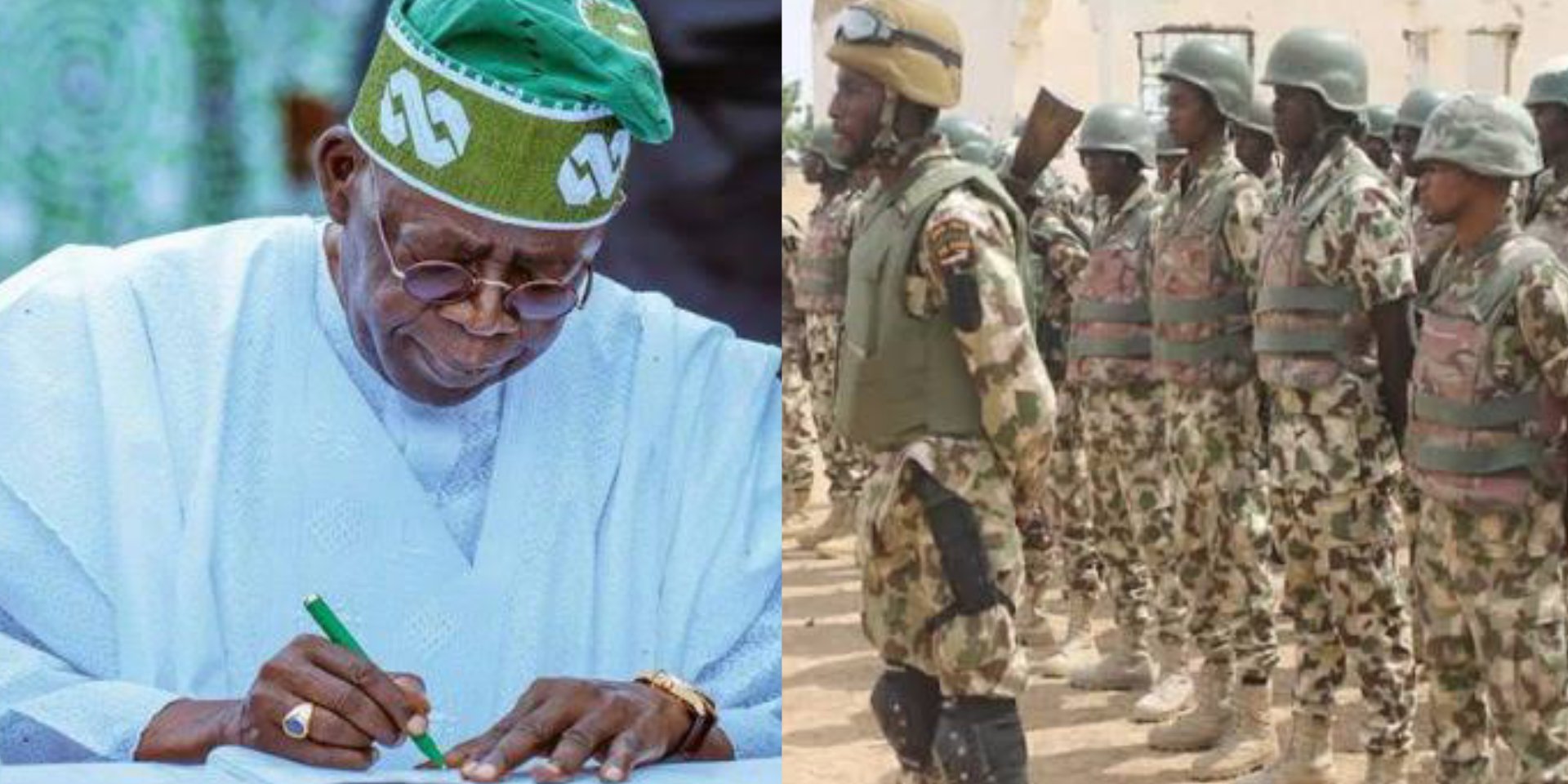
Throughout the history of every nation, there are pivotal moments when leaders choose to look ahead and prepare for future challenges rather than just reacting to the crises of the present. President Bola Ahmed Tinubu’s decision to expand the Nigerian Army from eight to twelve divisions is a prime example of such a moment.
This move goes beyond simply reorganising the Armed Forces; it represents a strategic shift in Nigeria’s security framework, designed to equip the military to tackle emerging threats with enhanced speed, coordination, and effectiveness.
In a time when we’re faced ongoing issues like terrorism, banditry, kidnapping, sabotage of oil infrastructure, communal strife, and cross-border crime, this expansion of the Army’s command structure demonstrates a commitment to bolstering institutional capacity before these security challenges grow even more intricate.
This is what proactive leadership looks like.

Building Strength Before Crisis Deepens
Great leaders know that you can’t just build national security when crises hit; it takes foresight, careful planning, and ongoing investment to truly make it work.
The decision to approve four more Army divisions and bring in 28,000 new recruits shows a clear recognition that our growing population, booming economy, and extensive territorial responsibilities demand a military that can respond quickly and operate efficiently.
Instead of waiting for security challenges to overwhelm our current forces, the Tinubu-led administration has chosen to enhance command capacity, improve how forces are distributed, and boost military readiness across the country.
This approach is all about being prepared rather than just reacting when trouble arises.
A New Command Structure for Modern Security Challenges
Military success today isn’t just about having more troops. It’s all about strong leadership, quick decision-making, smart use of intelligence, and the ability to adapt on the fly.
The new divisional headquarters being set up in Makurdi, Ilorin, Jalingo, and Benin City is a game changer. This move will decentralise command authority, putting senior leaders right where they need to be—close to the action, where security decisions often have to be made in a matter of minutes, not hours.
Every kilometre that separates commanders from the front lines can slow down crucial responses. And every extra layer of red tape can hinder swift action.
By relocating command headquarters nearer to the operational areas, the Nigerian Army is poised to enhance coordination, make better use of intelligence, and boost operational efficiency across various fronts.
Taking Security Closer to the People
One of the standout features of the new structure is its impressive nationwide distribution.
With twelve divisions thoughtfully placed across every geopolitical region, the military presence is now more balanced and agile. States that used to share overextended formations will now enjoy better operational focus and dedicated command oversight.
This geographical shift not only boosts surveillance but also fortifies territorial coverage, allowing for quicker mobilisation when threats arise.
For communities grappling with ongoing insecurity, a faster military response could be the key to stopping attacks before they happen, rather than just reacting after the damage is done.
A Stronger Army Means Stronger National Defence
The advantages for the Nigerian Army go well beyond just growing in size.
Bringing in 28,000 new recruits can significantly lighten the load for soldiers who have faced long deployments in various operational areas.
With a larger force, we can expect better troop rotation, less operational fatigue, and more chances for specialised training.
Additionally, the formation of new divisions opens up more leadership roles, career growth opportunities, and avenues for professional development for both officers and soldiers.
Just as crucial is the administration’s ongoing dedication to ensuring troop welfare, providing modern military equipment, and maintaining operational readiness.
History has shown time and again that soldiers who are well-equipped, well-trained, and highly motivated are the most valuable strategic asset any nation can have.
Protecting Nigeria’s Strategic Assets
Modern warfare goes far beyond just traditional battlefields.
Today, oil pipelines, gas facilities, power infrastructure, highways, bridges, communication networks, airports, and maritime assets have turned into prime targets for criminal organisations and hostile forces.
With the expanded Army structure, there’s a real opportunity to bolster the protection of these vital national assets, while also enhancing the military’s ability to assist other security agencies in safeguarding Nigeria’s economic lifelines.
After all, a secure economy starts with secure infrastructure.
Strengthening Border Security
Nigeria has an extensive network of land borders stretching for thousands of kilometres with our neighbouring countries, which brings about ongoing issues like illegal arms trafficking, cross-border insurgency, smuggling, and organised crime.
By establishing more divisions strategically throughout the country, we could greatly enhance border surveillance, improve operational coordination, and boost our rapid deployment capabilities.
Safeguarding our national borders goes beyond just a military duty; it’s a vital aspect of maintaining our national sovereignty.
Counter-Insurgency Gets a Strategic Lift
One of the most noticeable benefits of the expanded structure is how it can enhance counter-insurgency operations.
In the past, existing divisions have had to juggle massive operational responsibilities that spanned several states and tackled a variety of security challenges all at once.
With the new command setup, military units can now direct their resources to more manageable areas, which leads to better intelligence sharing, more effective operational planning, and ongoing efforts against criminal and terrorist threats.
When commands are focused, the results tend to be focused too.
Modernisation Beyond Numbers
What sets this initiative apart is that it goes beyond just establishing new headquarters.
It’s part of a larger defense modernisation effort that encompasses recruiting personnel, restructuring forces, acquiring military equipment, improving logistics, boosting troop welfare, and ensuring ongoing operational support.
These interrelated reforms acknowledge a crucial truth: military effectiveness relies on systems, technology, training, and leadership—not just on organisational charts.
Implementation Will Determine Success
While the announcement is certainly a big deal, the real challenge lies in putting it into action.
Building new headquarters, bringing in and training staff, equipping them with the latest technology, managing logistics, and securing ongoing funding will all demand a steady commitment over time.
Just as crucial will be the need for transparency, accountability, and effective management of public resources to make sure that this growth leads to real, tangible improvements in national security.
In the end, structural reform needs to produce operational results that we can see and measure.
A Defining Investment in National Security
President Tinubu’s decision to expand the Nigerian Army signals a strategic commitment to building institutional strength rather than relying on quick fixes.
This move reflects a belief that bolstering the Armed Forces is crucial for safeguarding Nigeria’s sovereignty, maintaining territorial integrity, and fostering a secure environment essential for economic growth and national progress.
- Security is the bedrock of all national ambitions.
- Without peace, development falters.
- Without security, investments waver.
- Without stability, prosperity remains out of reach.
The plan to expand the Nigerian Army to twelve divisions, along with increased recruitment and ongoing modernisation efforts, marks a significant step toward reinforcing that foundation.
If implemented with discipline, professionalism, and unwavering political support, this reform could emerge as one of the most impactful defense initiatives of this administration—strengthening the Armed Forces, boosting operational effectiveness, and equipping Nigeria to tackle today’s security challenges while confidently preparing for the future.
